Who was W.C. Handy?
William Christopher Handy (1873–1958) was a composer and bandleader who published some of the earliest blues songs ever written down as sheet music, including “Memphis Blues” (1912) and “St. Louis Blues” (1914). He worked in Memphis in the early 1900s, leading a band that played on and around Beale Street. He is widely described in music histories as the “Father of the Blues,” a title tied to his role in notating and publishing the form rather than inventing it outright.
Handy was born in Florence, Alabama. He trained as a musician, taught school for a time, and led touring brass and dance bands before settling into Memphis’s music scene. His Beale Street years were brief by comparison to his long career — he later moved to New York, where he ran a publishing company and kept composing into old age. He died in 1958.
His connection to Memphis rests on those few working years, not a lifetime spent in the city. That distinction matters for understanding the two places in Memphis that now carry his name.
What is Handy Park on Beale Street?
Handy Park is a small public plaza on Beale Street, between 3rd Street and Hernando, inside the Beale Street Historic District recognized by the National Park Service. It holds a statue of W.C. Handy and has long served as an open performance space for street musicians.
The park is not large. It functions more as a plaza than a park in the suburban sense — a paved gathering point with benches, shade trees, and room for a crowd to stop and listen. The Handy statue, commonly dated to around 1960, has stood there for decades as the park’s central feature.
Because Beale Street itself is built around live music, Handy Park has operated for years as an informal stage. Buskers and local bands have used it as a performance spot largely because it sits in the open, at street level, with no door or cover charge. That is the Handy Park most visitors encounter: a statue, a plaza, and whoever happens to be playing.
Handy Park and the W.C. Handy Home Museum — are they the same place?
No. They are two separate sites, several blocks apart, and the mix-up is common enough to be worth untangling directly.
Handy Park is the plaza with the statue, mid-street on Beale. The W.C. Handy Home Museum is a reconstructed house at 4th Street and Beale, built to represent where Handy is said to have lived during part of his Memphis years. The house was not originally on that corner at all — it was moved there.
| Feature | Handy Park | W.C. Handy Home Museum |
|---|---|---|
| What it is | Open-air plaza with a statue | A relocated and reconstructed house |
| Location | Beale Street, between 3rd and Hernando | Corner of 4th Street and Beale |
| Original site | Same site since the statue was installed | Elsewhere in Memphis, moved in the 1980s |
| Main use | Street performance space, public gathering spot | Small house-museum with exhibits |
| Admission | Free, open public space | Ticketed; confirm current hours and price with the operator |
The house is a shotgun house — a narrow, one-story style common across the South, with rooms set in a line and no interior hallway. According to historical markers tied to the site, the building originally stood elsewhere in Memphis and was moved to its current corner decades after Handy’s own residence there. It was never built on 4th and Beale; it was brought to 4th and Beale.

What does the W.C. Handy Home Museum hold?
The museum’s own materials describe it as a small house furnished to suggest the period, holding photographs, documents, and items connected to Handy’s career and to the broader Beale Street music scene he worked in. It is a modest interior, consistent with its scale as a shotgun house rather than a large institutional museum.
For current hours, admission, and what is on display at any given time, the operator’s own site is the only reliable source — practical details like these change and are not durable enough to repeat here as fixed facts.
Is Handy Park currently open?
Handy Park has been the subject of city renovation planning in recent years, and its public status has shifted during construction phases. Anyone planning to see the statue or expecting live performers there should check the City of Memphis’s own current information before visiting, since a plaza mid-renovation may have limited or altered public access.
This is the kind of detail that goes stale fast. A statue does not move, but fencing, scaffolding, and construction schedules do.
How does this fit into a visit to Beale Street?
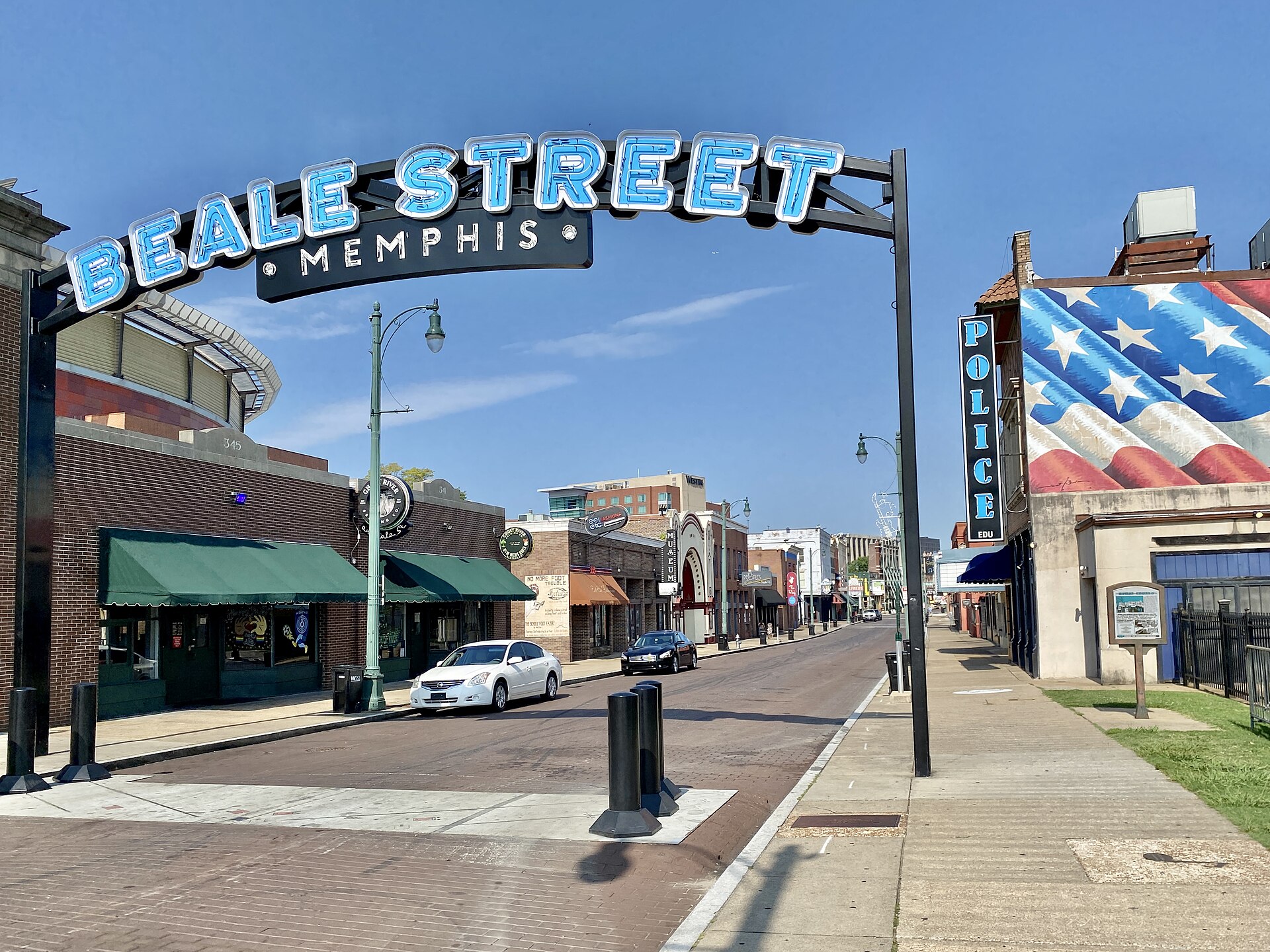
Handy Park and the Handy Home Museum are two stops among many on a street built around music history, not a single attraction with one address. Readers planning a fuller day around that history may find it useful to read about how Beale Street, Sun Studio, and Stax fit into a single day, or how a day can be built specifically around Memphis’s music sites.
For practical questions about eating on the street itself, see what to know about eating on Beale Street. Readers comparing Memphis’s various paid music attractions against what each actually includes can check how Memphis’s music attractions compare. A broader walking context for the downtown core, including Beale, is covered in the walking route through downtown Memphis.
For the landmarks and museums that make up the rest of the city’s historic record, the Landmarks & Sights archive and Museums & Galleries archive are the better starting points than any single page. General orientation for first-time planning lives at the Memphis guide hub.
Related reading
what the city is like to actually live in.
Access Memphis is an independent guide written from published, checkable sources. We have not visited the places described here and we do not publish personal recommendations or invented ‘local favourites’ — where something is singled out as notable, we say who says so. Opening times, fares, closures and prices change at short notice, so treat everything here as a starting point and confirm with the museum, operator or venue directly before building a day around it. We give no advice on visas, insurance, health or safety; use your own government’s official guidance for those.
Featured image: Photo by Warren LeMay from Chicago, IL, United States, source, CC BY-SA 2.0
