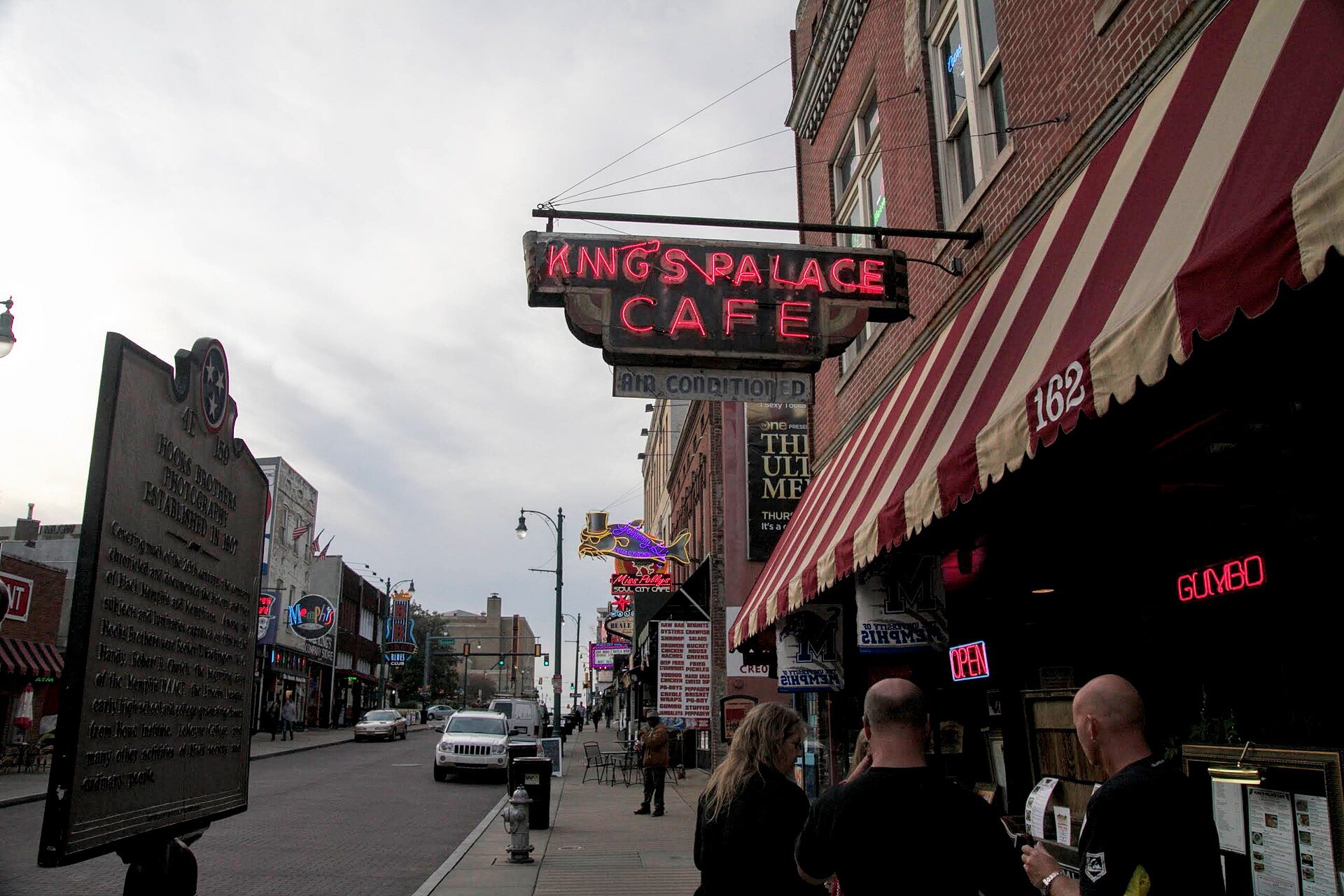
Beale Street Baptist Church is a congregation at 379 Beale Street. It was organized in 1866 by formerly enslaved Memphians. The building that still stands dates to the early 1870s. It is generally recognized as the oldest standing African American church building in the city. The church later housed Ida B. Wells’s newspaper office. It also hosted mass meetings during the 1968 Memphis sanitation strike.
Where does the church stand, and what is it known for?
The church sits at 379 Beale Street, inside the Beale Street Historic District. That district runs a few blocks east of the entertainment strip most visitors know. The National Park Service lists the wider Beale Street Historic District as a National Historic Landmark, a designation dating to 1966. Beale Street Baptist Church is one of the oldest buildings inside that district. It is also the only one from this era built as a church for a Black congregation, not converted to that use later.
Who founded the congregation, and when?
The congregation organized in 1866, a year after emancipation. Its founders were formerly enslaved residents of Memphis. They worshiped first in temporary quarters. Construction of the brick church now at 379 Beale Street ran through the late 1860s and into the early 1870s. Local history collections, including the Memphis and Shelby County Room, describe it as built largely by Black craftsmen. That detail matters. Few buildings from this period in Memphis were designed and built by African Americans for their own use.
What is the timeline of civil-rights-era uses of the building?
The church’s civil-rights significance is not one episode. It spans more than a century, from its founding by freedpeople through the 1968 sanitation strike. The list below sets out what happened, and when, so the building’s role can be traced rather than reduced to a single anecdote.
- 1866 — Formerly enslaved Memphians organize the congregation, within a year of the Civil War’s end.
- Late 1860s–early 1870s — The congregation builds the brick church still standing at 379 Beale Street, using Black craftsmen and tradesmen.
- 1889–1892 — Ida B. Wells becomes co-owner and editor of the Free Speech and Headlight. The paper’s office operates out of the church building.
- March 1892 — Three Black businessmen connected to the People’s Grocery — Thomas Moss, Calvin McDowell, and Will Stewart — are lynched outside Memphis. Wells investigates and condemns the killings in the Free Speech.
- May 1892 — After Wells publishes an editorial challenging the usual justification for lynching, a mob destroys the Free Speech’s printing office. Wells, traveling outside the city, never returns to live in Memphis.
- 1968 — During the Memphis sanitation workers’ strike, the church hosts mass meetings for strikers and supporters.
- Later 20th century — The congregation restores the building through several renovation campaigns, replacing interior finishes and systems while keeping the original brick exterior.
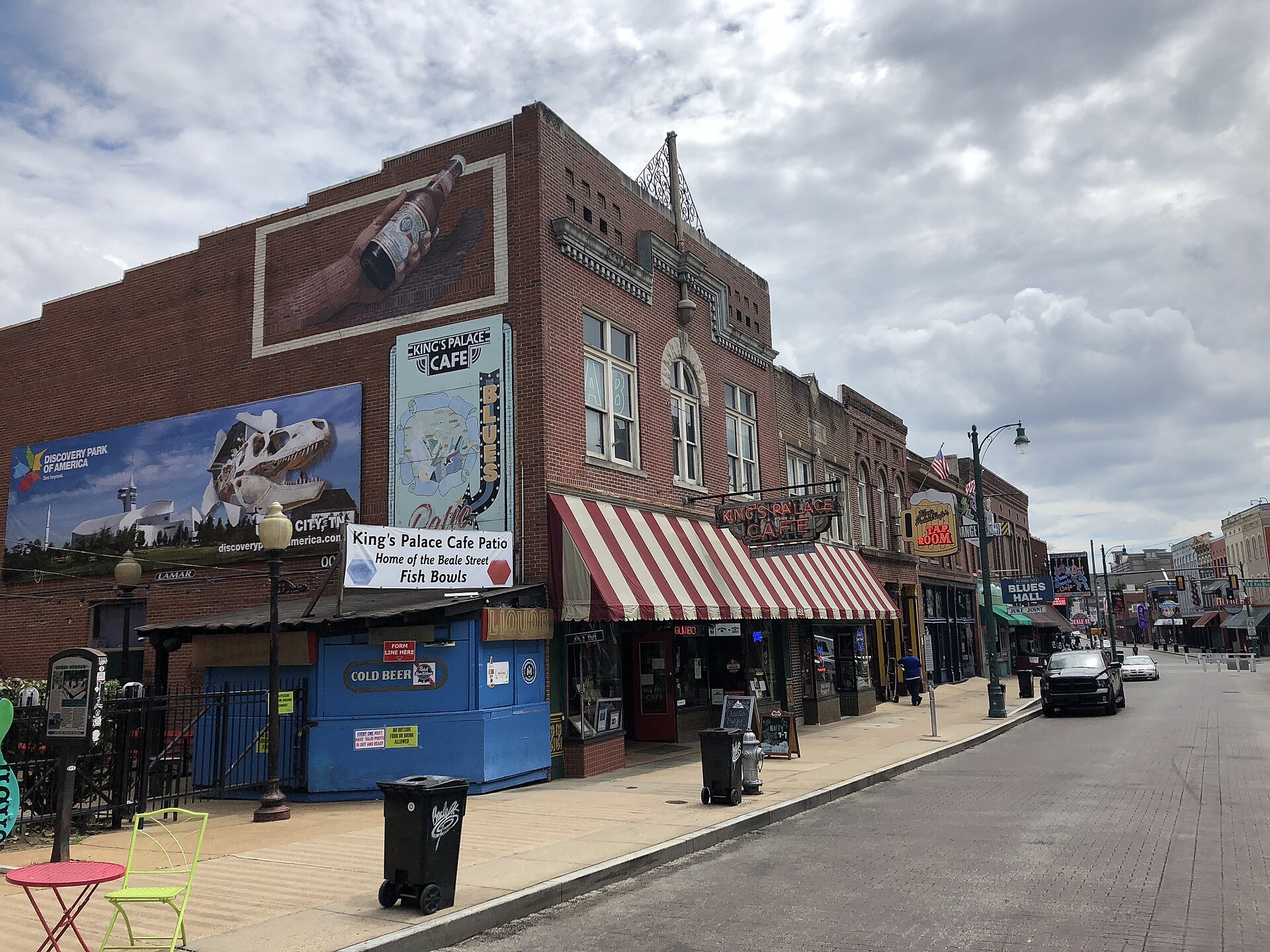

What’s original in the building today, and what’s been rebuilt?
The exterior brick walls and the basic form of the sanctuary are original to the 1870s construction. The congregation has repaired the roof, replaced windows, and updated interior finishes several times since. Records on buildings of this age, kept by bodies like the Tennessee Historical Commission, usually separate a structure’s footprint from its finishes. Footprints tend to survive. Finishes and mechanical systems do not. Beale Street Baptist Church fits that pattern: a nineteenth-century shell carrying repairs made across the twentieth and twenty-first centuries.
How does the church connect to Ida B. Wells specifically?
Wells was a member of the congregation and a schoolteacher before she became a journalist. She bought a one-third interest in a small Memphis newspaper, the Free Speech and Headlight. She ran its office from space inside the church building. That arrangement gave her investigative writing on lynching a base with institutional support behind it. After the 1892 mob attack on the paper’s press, Wells continued her anti-lynching journalism from New York and then Chicago. The Memphis office never reopened.
What was the church’s role in the 1968 sanitation strike?
By February 1968, roughly 1,300 Memphis sanitation workers were on strike over pay and conditions. The strike followed the deaths of two workers, Echol Cole and Robert Walker, crushed by a malfunctioning garbage truck. Mason Temple, headquarters of the Church of God in Christ, became the strike’s central meeting hall. Dr. King spoke there on April 3, 1968, the night before his assassination at the Lorraine Motel. Beale Street Baptist Church, a few blocks away, served as an additional gathering point for strikers and local ministers. Clayborn Temple, also nearby, served as the staging ground for marches. Together, the three buildings show how the 1968 movement spread across several Black institutions, not one.
Can the public visit the church today?
Beale Street Baptist Church remains an active congregation, not a museum. It is not part of the National Civil Rights Museum‘s core exhibit, though the museum’s own materials cite it as context for the city’s longer civil-rights history. Visiting hours follow the congregation’s own schedule, not tourist hours. The church’s own office is the most reliable source for current access.
How does it fit into a wider Memphis civil-rights visit?
Readers piecing together this history can pair Beale Street Baptist Church with Clayborn Temple, Mason Temple, and the National Civil Rights Museum at the Lorraine Motel. Access Memphis’s own itinerary lays out a workable order for those sites; see a Memphis day built around civil-rights history. The I Am a Man Plaza, a few blocks from the church, is covered separately; see I Am a Man Plaza.
For the rest of Beale Street’s history — the blues clubs and W.C. Handy’s connection to the strip — see who W.C. Handy was and what Handy Park holds. Broader Black Memphis history, including another landmark built by and for Black Memphians, is covered in the Universal Life Insurance Building. For how Beale sits inside downtown’s edges, see downtown Memphis’s boundaries. The wider set of the city’s landmarks is indexed in Landmarks & Sights, and the Memphis guide hub covers museums and neighborhoods together.
Related reading
what the city is like to actually live in.
Access Memphis is an independent guide written from published, checkable sources. We have not visited the places described here and we do not publish personal recommendations or invented ‘local favourites’ — where something is singled out as notable, we say who says so. Opening times, fares, closures and prices change at short notice, so treat everything here as a starting point and confirm with the museum, operator or venue directly before building a day around it. We give no advice on visas, insurance, health or safety; use your own government’s official guidance for those.
Featured image: Photo by WillyBearden, source, CC BY-SA 4.0
