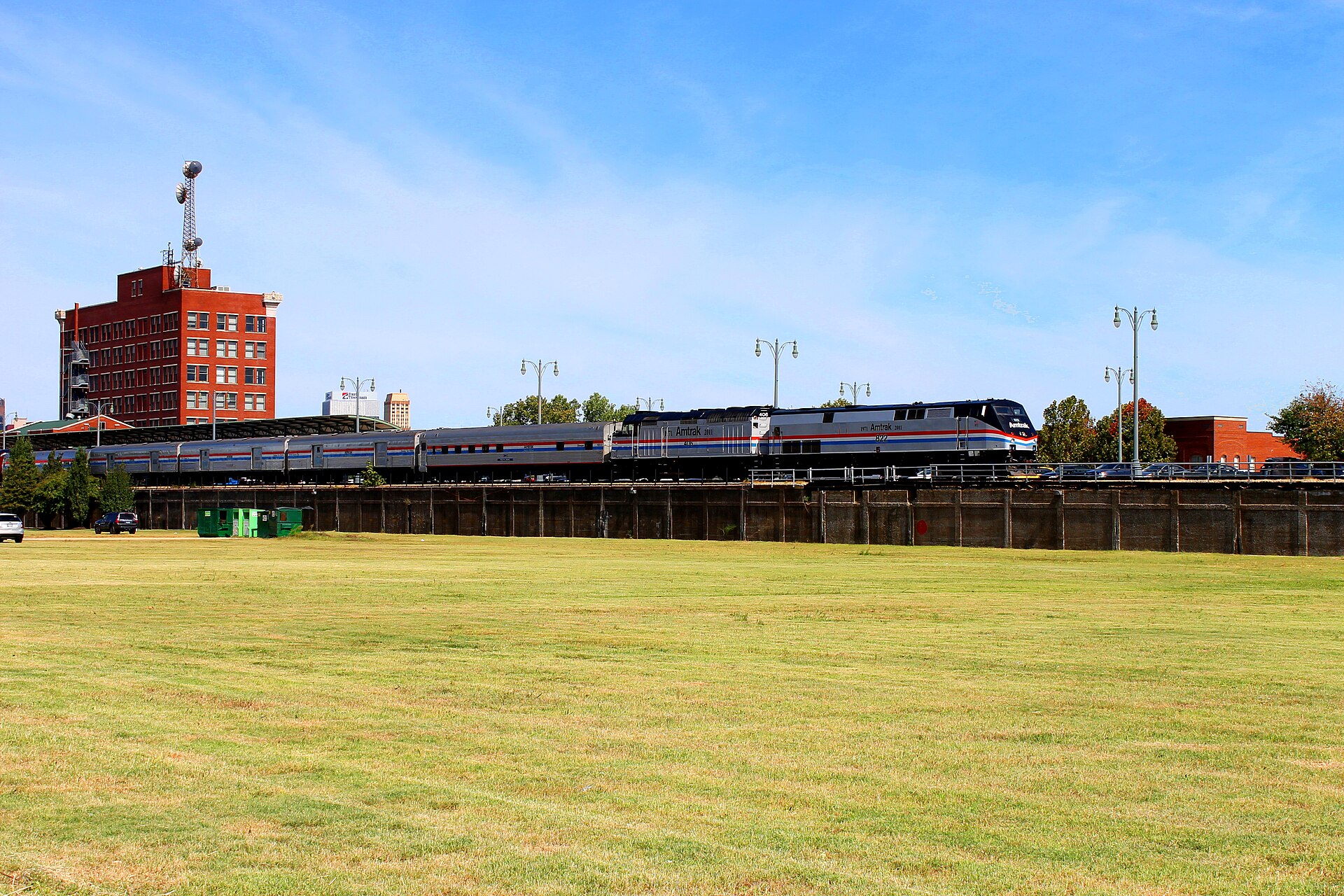
Central Station is Memphis’s historic downtown railway depot, built in 1914 on South Main Street. It still does two jobs at once: it is an active Amtrak stop on the Chicago–New Orleans City of New Orleans route, and it is the restored shell of a mixed-use building holding a hotel, apartments and a MATA transit connection.
Where is Central Station, and what was it built for?
Central Station stands at 545 South Main Street, at the southern end of downtown Memphis, close to the South Main Historic Arts District. It was built in 1914 by the Illinois Central Railroad as one of the city’s two grand passenger terminals of that era.
The other, Union Station, stood a short distance away on Calhoun and served competing railroads. Union Station was demolished in the 1960s as intercity rail travel declined nationally, which left Central Station as the sole survivor of Memphis’s era of grand terminal architecture.
What happened to passenger rail through Central Station?
Passenger volumes fell through the mid-20th century as travelers shifted to cars and, later, planes — a pattern repeated in almost every American city with a large downtown terminal. When Congress created Amtrak in 1971 to take over intercity passenger service nationwide, Central Station was retained as Memphis’s stop rather than abandoned outright.
For decades after that, the building itself was underused relative to its size, even as trains kept calling. The station’s current form — restored and repurposed rather than simply preserved as a museum piece — is a more recent development, completed through a redevelopment project in the late 2010s that brought commercial life back into a building that had been serving mainly as a rail platform.
What runs from Central Station now?
Amtrak’s City of New Orleans is the intercity passenger train serving Central Station, running between Chicago and New Orleans with Memphis as an intermediate stop. It is the only Amtrak route that calls at Memphis; the city has no other intercity passenger rail connection.
Schedules, fares and platform details are set by Amtrak and change over time, so any specific timetable printed here would go stale. Amtrak’s own site lists Memphis (station code MEM) under the City of New Orleans route, and that is the source to check before planning a trip involving the train.
,_November_2022.jpg)
Does Memphis’s local transit system connect at Central Station?
Yes. The Memphis Area Transit Authority, known as MATA, uses Central Station as a stop within its downtown network, connecting rail arrivals to the city’s bus routes and to downtown’s trolley line along South Main and Main Street. MATA’s own site carries current route maps and fare information, which is the correct place to confirm details rather than a fixed figure repeated here.
For a resident, this matters more than it might for a one-time visitor: Central Station is one of the few points downtown where intercity rail, local bus routes and the trolley genuinely overlap, which is relevant to anyone weighing car-free options for reaching the airport, Midtown or the riverfront.
What is inside the building today?
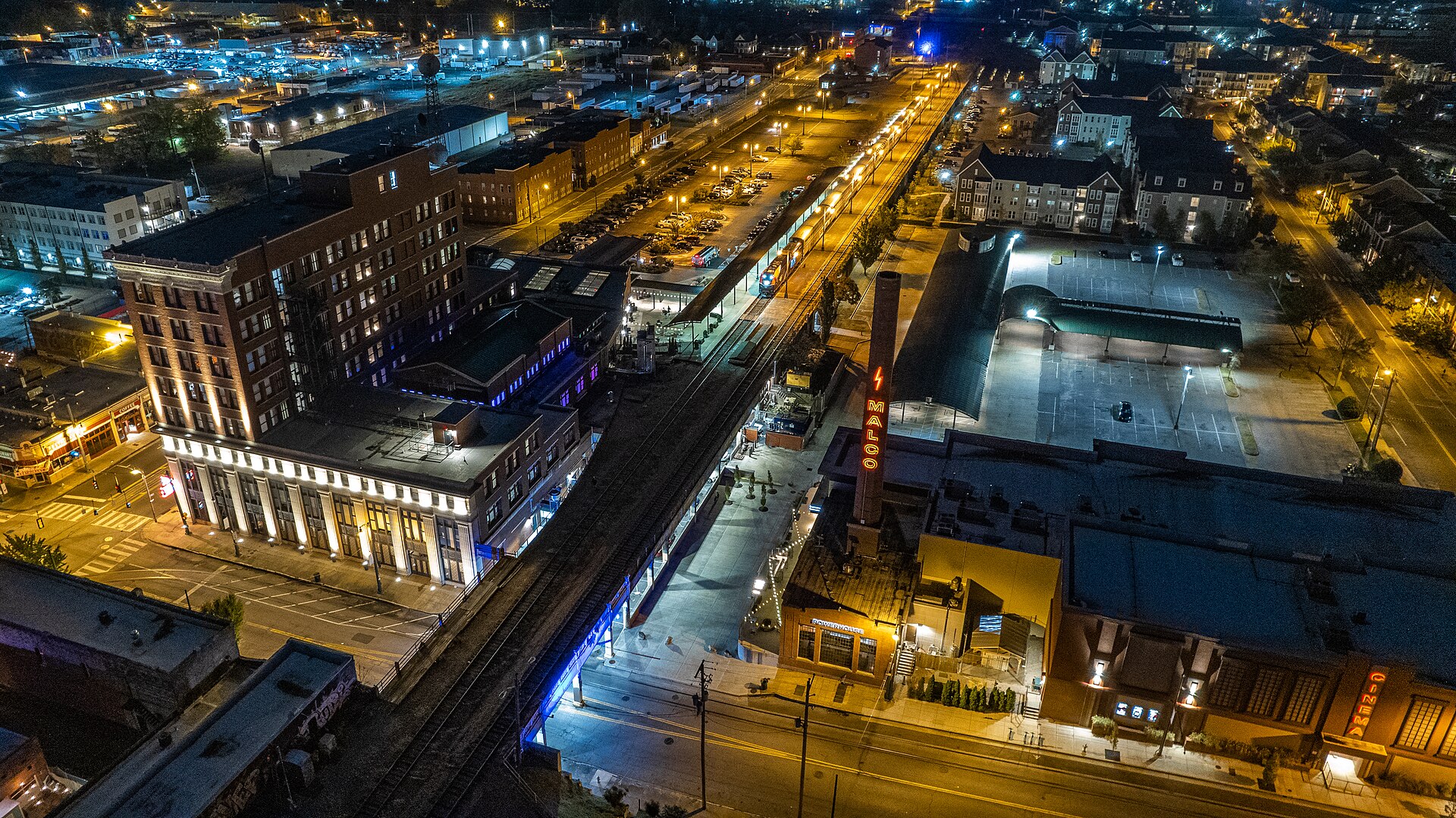
The redeveloped Central Station combines its working Amtrak function with a hotel operating under Hilton’s Curio Collection brand and apartments built into the upper floors of the restored terminal. The Amtrak waiting area occupies part of the historic ground floor, while the rest of the building has been converted to commercial and residential use rather than left as unused rail infrastructure.
This is a common pattern for surviving American terminal buildings of this scale: the original structure is too large and too architecturally significant to demolish, but too costly to operate as rail infrastructure alone, so redevelopment folds in a hotel, offices or housing around a working, much smaller transit core.
Can the public visit Central Station without a ticket?
Central Station is not a museum and keeps no fixed visiting hours in that sense. It is a working building — a hotel lobby, a small Amtrak waiting room, and private apartments — open to the public in the way any hotel or transit building is, during its normal operating hours, rather than as a sight with posted admission.
Anyone arriving to catch a train should plan around Amtrak’s own posted schedule and arrival guidance for the station, again confirmed on Amtrak’s site rather than assumed from an old timetable.
How does Central Station fit into the South Main district?
Central Station sits at the edge of the South Main Historic Arts District, a walkable stretch of downtown Memphis that also holds the National Civil Rights Museum, built around the former Lorraine Motel. The Mississippi riverfront, and the pedestrian route across the river on the Big River Crossing, are also within walking distance north and west of the station.
Beale Street lies a short walk to the north as well, connected by the same downtown trolley line that stops near Central Station. For visitors arranging a downtown day on foot, or without a car, this cluster of a transit hub, a historic district and the riverfront is one of the more genuinely walkable combinations in the city.
What should a visitor or a resident actually take from this?
For a visitor, Central Station is worth understanding mainly as infrastructure: it is where the train from Chicago or New Orleans actually arrives, and where MATA’s downtown routes intersect, rather than a destination with posted opening hours in its own right.
For a resident, it is one of a small number of practical alternatives to driving or flying for trips along the Mississippi River corridor, and one of the clearer examples in Memphis of a historic building kept alive by putting a hotel and housing around a working transit core rather than by treating the whole structure as a relic.
- Confirm any Amtrak schedule or fare directly on Amtrak’s own site before planning around it.
- Confirm MATA bus and trolley routes and any current fare card system on MATA’s own site.
- Treat Central Station as a transit and lodging building first, and a historic landmark second.
For a wider view of how downtown’s landmarks connect on foot, the Access Memphis guide to Memphis’s museums, landmarks and neighbourhoods and the practical guide to getting around Memphis cover the surrounding district in more detail. Readers thinking about transit as part of daily life in the city, rather than a single visit, may also find the Living in Memphis hub useful. Nearby landmarks covered elsewhere on the site include the National Civil Rights Museum and the Lorraine Motel, Beale Street, and the Big River Crossing pedestrian bridge over the Mississippi. The broader Landmarks & Sights archive holds further entries on downtown’s surviving historic buildings.
Access Memphis is an independent guide written from published, checkable sources. We have not visited the places described here and we do not publish personal recommendations or invented ‘local favourites’ — where something is singled out as notable, we say who says so. Opening times, fares, closures and prices change at short notice, so treat everything here as a starting point and confirm with the museum, operator or venue directly before building a day around it. We give no advice on visas, insurance, health or safety; use your own government’s official guidance for those.
Featured image: Photo by Matthew Nichols, source, CC BY-SA 3.0
