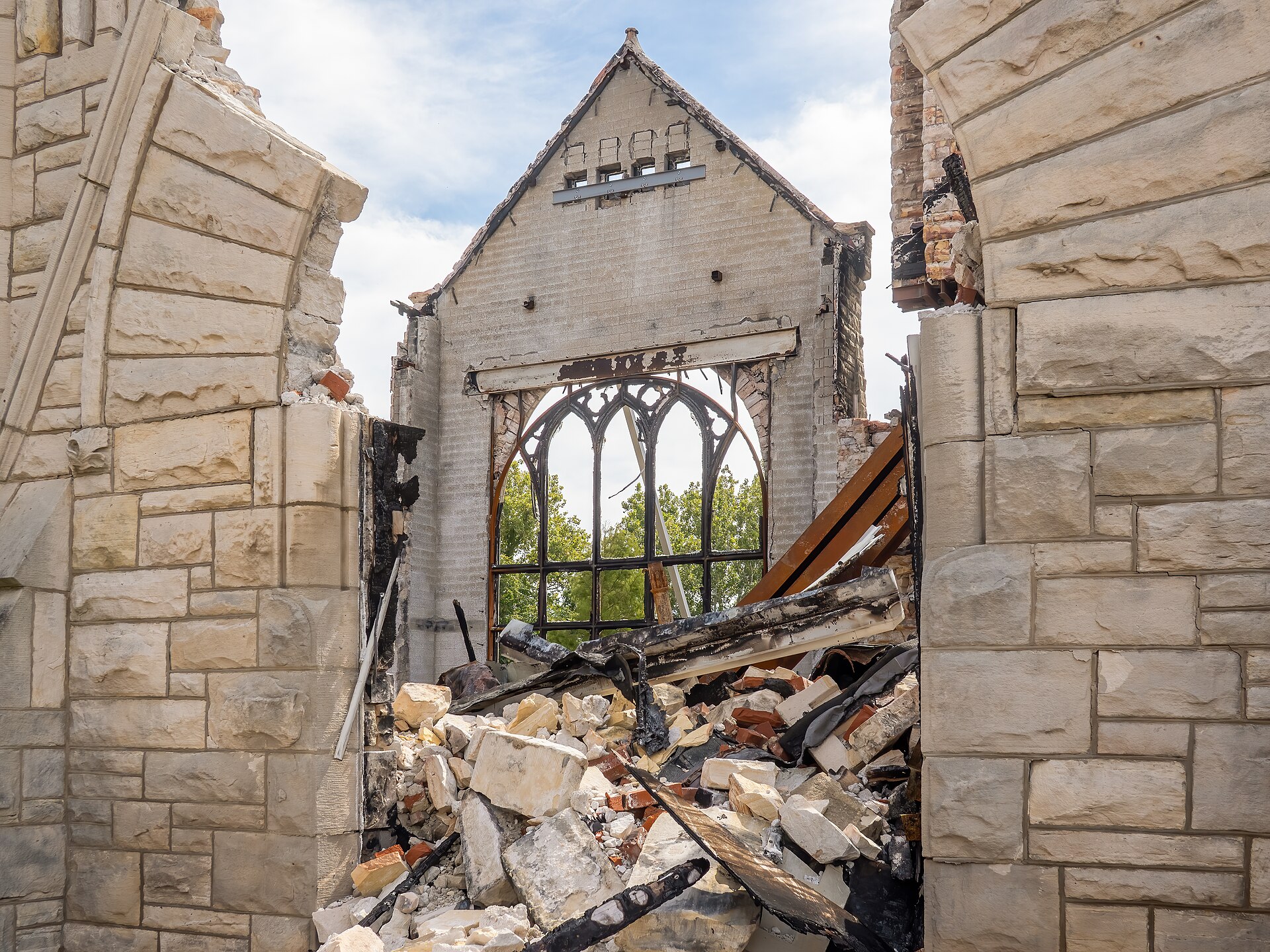
Clayborn Temple is a Romanesque Revival church building in downtown Memphis, near Beale Street, that served as the organizing headquarters for the 1968 Memphis sanitation workers’ strike. It is where the “I AM A MAN” signs were produced and where marchers gathered before walking into the city, including the march led by Dr. Martin Luther King Jr.
What is Clayborn Temple, as a building?
Clayborn Temple was built in 1892 as Second Presbyterian Church, a congregation of white Memphians, in the Romanesque Revival style common to large American churches of that period — heavy stone walls, rounded arches, a squat bell tower. In 1949 the building was sold to an African Methodist Episcopal congregation and renamed Clayborn Temple AME Church. It sits at 280 Hernando Street, a few blocks from the Mississippi River and from the shops and clubs of Beale Street.
The building is listed on the National Register of Historic Places. Federal and state historic-preservation bodies, including the Tennessee Historical Commission, treat it as a documented site of the American civil rights movement rather than simply an old church — its significance rests specifically on its role in 1968, addressed below.
What happened at Clayborn Temple in 1968?
In February 1968, two Memphis sanitation workers, Echol Cole and Robert Walker, were crushed to death by a malfunctioning garbage truck compactor. Black sanitation workers in the city’s Public Works Department, who were paid far less than white workers and given no protective equipment, went on strike days later demanding recognition of their union, back pay, and safer conditions.
Clayborn Temple became the strike’s operational base. Organizers used its basement and sanctuary as a staging ground for daily marches into downtown Memphis. Union meetings, strategy sessions, and rallies were held there through the spring of 1968. The church’s location — close to City Hall and the main downtown streets — made it a practical starting point for marches as much as a symbolic one.
Dr. Martin Luther King Jr. traveled to Memphis in support of the strike and led a march that began at Clayborn Temple on March 28, 1968. That march was disrupted by violence and looting on its edges, and Memphis police response led to the death of a teenager, Larry Payne. King returned to Memphis on April 3 and delivered what is now known as his “Mountaintop” speech at Mason Temple that evening. He was assassinated at the Lorraine Motel the following day, April 4, 1968 — an event now central to the National Civil Rights Museum, which is built around the preserved motel site.
.jpg)
What does “I AM A MAN” mean, and where did it start?
“I AM A MAN” was the slogan printed on placards carried by striking sanitation workers, asserting basic dignity and rejecting the era’s practice of Black workers being addressed as “boy.” The signs were produced inside Clayborn Temple, largely in its basement, ahead of the daily marches. Photographs of the strike — rows of Black men in overcoats holding identical black-and-white signs — are among the most reproduced images of the 1968 strike and are held in various civil-rights photographic archives, including collections connected to Memphis photographer Ernest Withers, whose own work is the subject of the Withers Collection Museum and Gallery.
The strike itself ended in mid-April 1968, shortly after King’s assassination, when the city agreed to recognize the sanitation workers’ union and raise wages — a resolution reached under considerable national pressure following the assassination, according to accounts held by the National Civil Rights Museum and by labor historians who have studied the strike’s records.
Is Clayborn Temple still standing, and can it be visited?
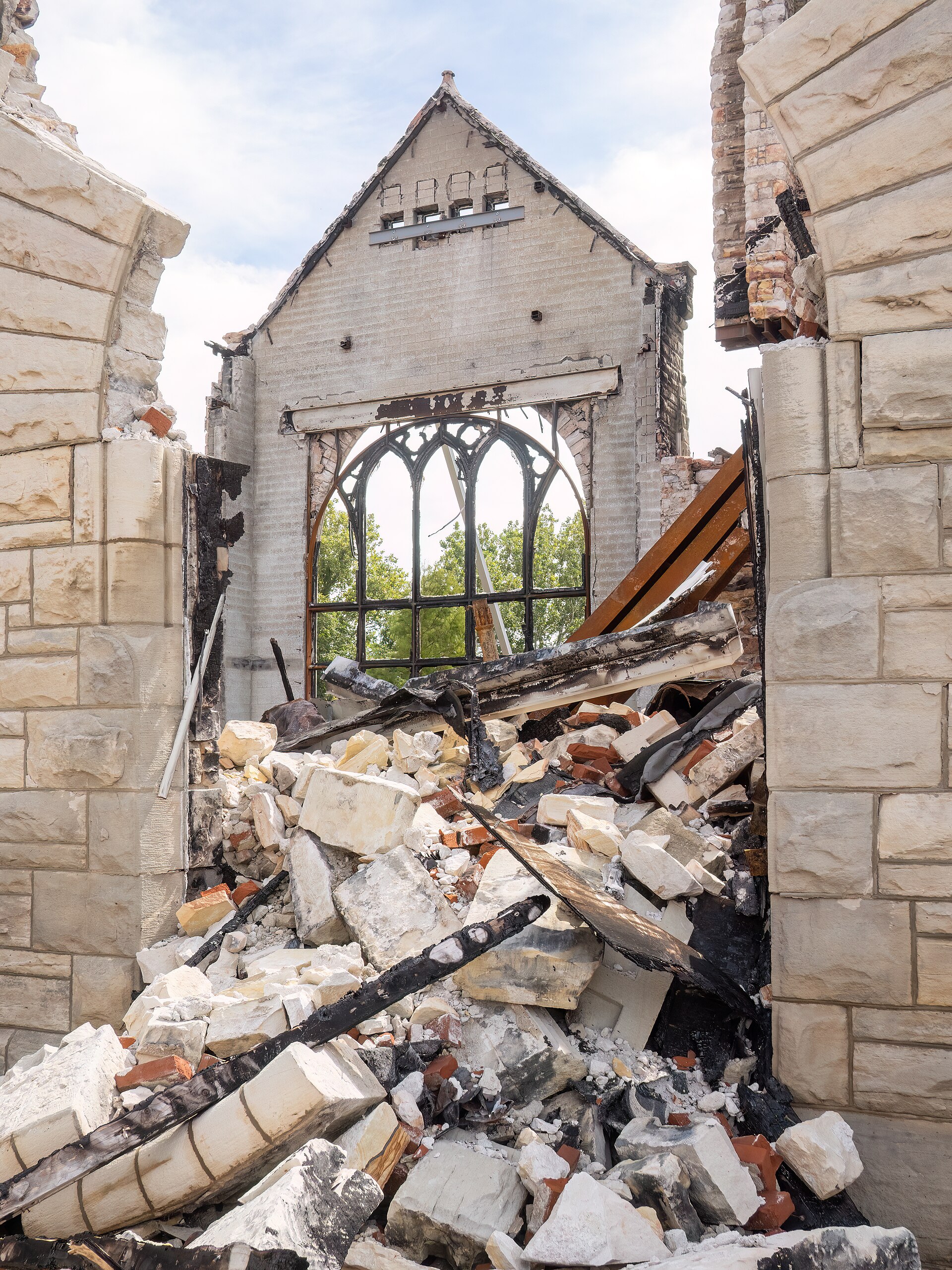
The building still stands and has been the subject of a long preservation effort led by a nonprofit, Clayborn Reborn, working to stabilize and restore it as a civil-rights heritage site and community space. In April 2023, a fire caused significant damage to the building’s roof and interior; local and national news outlets covered the fire and the subsequent structural assessment, and restoration work has continued since. Anyone planning to see the building should check current access and safety status directly with the preservation organization or the city of Memphis before visiting, since a working construction and restoration site is not the same as an open museum.
Clayborn Temple does not operate as a ticketed museum in the way the National Civil Rights Museum or the Stax Museum do. It is, at present, a landmark building under active restoration, and its long-term public role — gallery space, memorial, community center, or some combination — is still being determined by the organizations responsible for it.
How does Clayborn Temple fit with Memphis’s other civil rights sites?
Clayborn Temple is one of a small number of standing Memphis buildings with a direct, documented connection to the 1968 sanitation strike and King’s final visits to the city. The others most often cited by historians and the National Civil Rights Museum are:
- The Lorraine Motel, preserved as the core of the National Civil Rights Museum, where King was assassinated on April 4, 1968.
- Mason Temple, the Church of God in Christ’s international headquarters in Memphis, where King delivered his final public speech on April 3, 1968.
- Clayborn Temple, the organizing and staging point for the sanitation strike’s marches.
Together these buildings form a loose, unofficial route through the events of March and April 1968, though there is no single ticketed circuit connecting them — each is a separate, independently managed site. Readers building a broader picture of Memphis’s museums and landmarks can start from the Memphis guide hub, which lays out the city’s major institutions by type, or the landmarks and sights archive for other buildings with a documented public record.
Why does a strike over garbage collection matter this much?
The 1968 sanitation strike is treated by historians as a labor dispute that became a civil-rights flashpoint precisely because it tied economic conditions — low pay, no grievance process, unsafe equipment — directly to racial segregation in city employment. The demand was simple and specific: recognition of Local 1733 of the American Federation of State, County and Municipal Employees, along with a wage increase and safety improvements. It was not an abstract protest; it was a labor action with a concrete list of terms, and Clayborn Temple was where that list was organized, printed, and carried into the street.
For residents trying to understand how this history sits inside the modern city — how it connects to neighborhoods, to Beale Street’s commercial district a few blocks away, or to how Memphis presents its civil-rights history to visitors and to itself — the Living in Memphis hub and the practical planning hub cover the broader context of the downtown area and how the city’s history is documented across its museums and markers today.
Access Memphis is an independent guide written from published, checkable sources. We have not visited the places described here and we do not publish personal recommendations or invented ‘local favourites’ — where something is singled out as notable, we say who says so. Opening times, fares, closures and prices change at short notice, so treat everything here as a starting point and confirm with the museum, operator or venue directly before building a day around it. We give no advice on visas, insurance, health or safety; use your own government’s official guidance for those.
Featured image: Photo by Rhododendrites, source, CC BY-SA 4.0
.jpg)