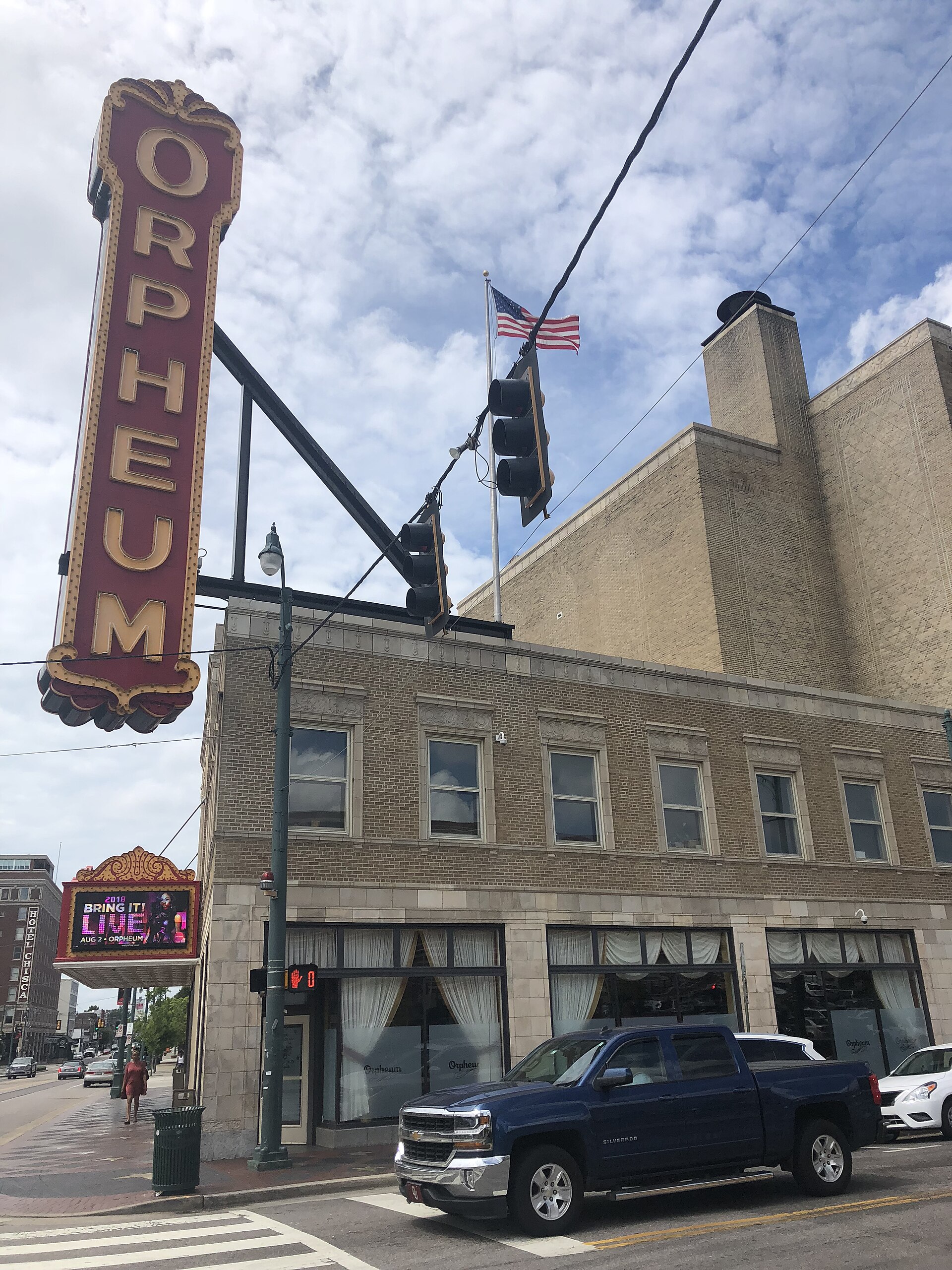
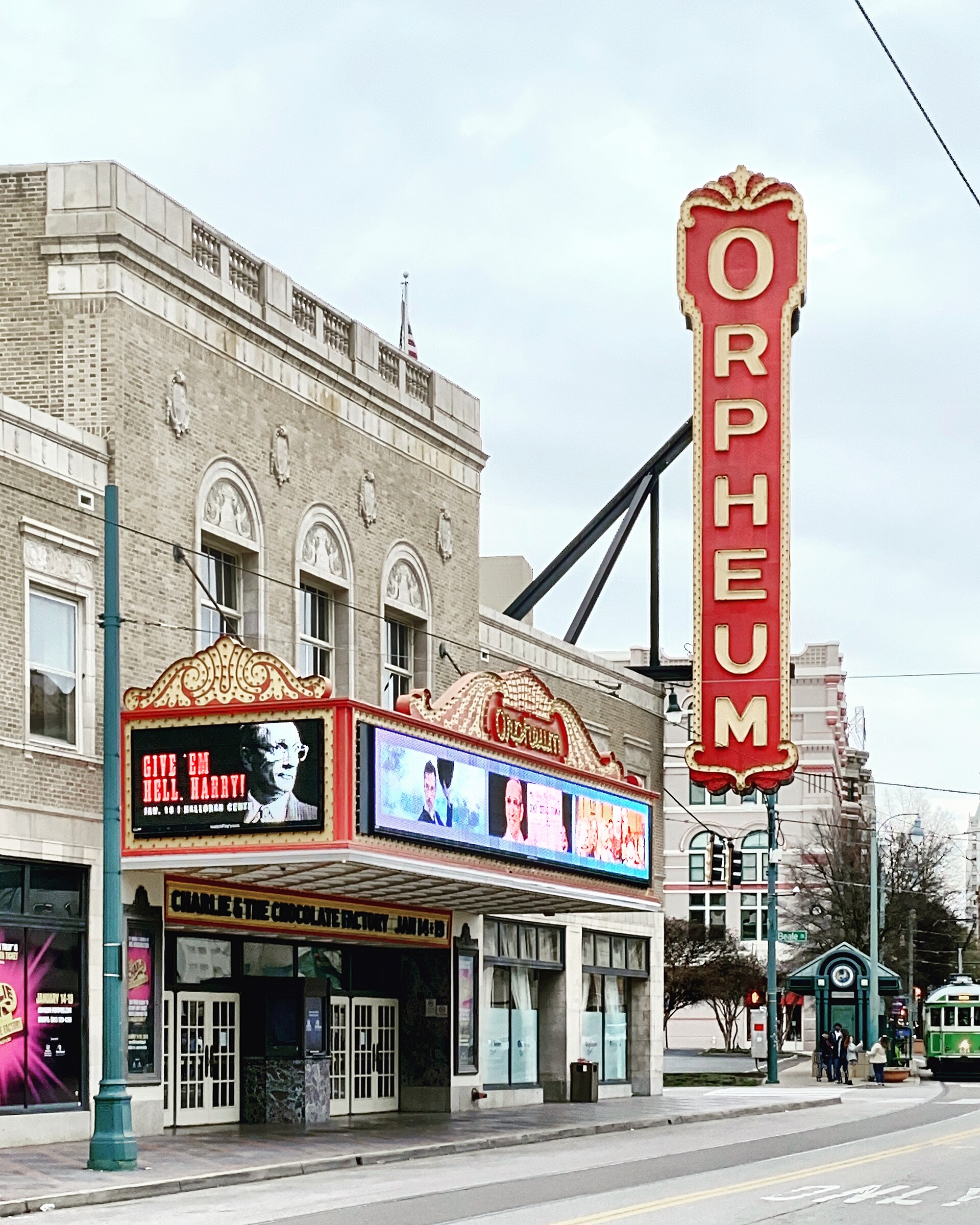
The Orpheum Theatre is a historic performing arts venue on Main Street in downtown Memphis, built in 1928 as a movie and vaudeville palace on the site of an earlier opera house. It now operates as a nonprofit performance hall hosting touring Broadway productions, opera, ballet and concerts, and it is a listed historic building.
Where is the Orpheum, and what is it part of?
The Orpheum stands at the corner of Main Street and Beale Street in downtown Memphis, at the northern edge of the Beale Street Historic District. Its location places it within walking distance of the district described in what is on Beale Street, and it functions as a downtown anchor separate from, but adjacent to, that entertainment strip.
How old is the building, and what happened to the original theatre?
The Orpheum on Main Street today is not the first theatre on the site. A Grand Opera House opened there in 1890 and was later rebranded as an Orpheum venue on the national vaudeville circuit of the same name. That building burned down in a 1923 fire. The current structure was built in 1928 as its replacement, designed as an elaborate movie palace in the style typical of large American cinemas of the era, with an ornate interior and a theatre organ installed for silent-film accompaniment and live performance.
Is the Orpheum a historic landmark?
Yes. The building is recognized as a historic structure tied to downtown Memphis’s early-twentieth-century entertainment district, and its 1928 architecture and interior detailing are part of what distinguishes it from a modern performance hall. Readers researching its formal historic status should check the National Register of Historic Places and Tennessee Historical Commission records directly, since designations and listing details are maintained by those bodies rather than by the theatre itself.
Who runs the Orpheum today, and what happens there?
The Orpheum is operated by the Memphis Development Foundation, a nonprofit organization that acquired and restored the building starting in the late 1970s after it had fallen into disuse as a movie house. According to the Orpheum’s own site, the venue now serves as Memphis’s primary home for touring Broadway musicals, along with performances by Opera Memphis and Ballet Memphis, plus concerts and other staged events booked through the year.
This mix matters for how the building functions in the city’s cultural life. It is not a museum with fixed exhibits — it is a working stage, and what is on depends entirely on the season’s booking calendar. Anyone planning a visit around a specific production should confirm dates, casts and ticket prices directly through the Orpheum’s own site, since none of that is stable enough to print reliably here.

What is the story about the Orpheum being haunted?
The theatre has a long-running local legend involving a ghost known as “Mary,” a story that predates most current staff and has been repeated in local press and by the Orpheum itself as part of its public identity. The theatre’s own materials reference the story as part of its history and occasionally build programming around it. It should be read as folklore attached to a real, working building — not as a documented historical event, and not something this site can verify or endorse.
How does the Orpheum compare to Beale Street venues nearby?
Beale Street’s clubs are primarily music venues tied to the blues tradition documented in the National Park Service’s account of the Beale Street Historic District. The Orpheum is a different kind of institution: a large-capacity, seated performance hall built for touring productions rather than nightly live music sets. The two sit close together geographically but serve different functions in downtown Memphis’s entertainment landscape — one a historic entertainment district, the other a single restored theatre building.
The Orpheum is also distinct from the city’s music-history museums. It is not primarily an exhibit space the way the Memphis Music Hall of Fame is, and it holds no permanent collection in the way a museum does. It is a stage first, with its own history as the exhibit.
Why does a movie palace matter to how downtown Memphis works?
Downtown Memphis’s built environment includes a cluster of early-twentieth-century commercial and entertainment architecture, of which the Orpheum is one of the more intact examples. Its survival — burning down once, being rebuilt, falling into disuse as single-screen cinemas declined, then being reclaimed by a nonprofit restoration effort — mirrors a pattern seen in historic downtown theatres across American cities. For residents, the building represents one of the few full-scale performance venues in the urban core, distinct from suburban multiplexes and from smaller music clubs.
Readers building a broader picture of downtown’s landmarks can find related entries in the site’s landmarks and sights archive, and a wider view of how the city’s museums and historic sites fit together is covered in the Memphis guide hub.
Is the Orpheum worth building a visit around?
That depends entirely on what is being staged when a reader is in the city, since the Orpheum operates on a touring and seasonal booking schedule rather than fixed daily hours. Its own site is the only reliable source for what is currently running and how to get tickets.
For visitors combining a stop at the Orpheum with other downtown landmarks — including the nearby Peabody Hotel, covered in the Peabody’s duck march explainer — the practical logistics of moving around downtown Memphis, including parking and walking distances, are addressed in the site’s practical planning hub.
What should residents know about the Orpheum?
For people who live in Memphis rather than visit it, the Orpheum functions less as a tourist stop and more as a recurring fixture of the local performance calendar — the venue where a touring Broadway run or an Opera Memphis production is likely to land during any given season. Its programming rhythms and any membership or season-ticket structures are set by the Memphis Development Foundation and change year to year, so residents planning around a season should check directly rather than rely on a fixed pattern. Broader context on how cultural institutions fit into daily life in the city is available in the living in Memphis hub.
Access Memphis is an independent guide written from published, checkable sources. We have not visited the places described here and we do not publish personal recommendations or invented ‘local favourites’ — where something is singled out as notable, we say who says so. Opening times, fares, closures and prices change at short notice, so treat everything here as a starting point and confirm with the museum, operator or venue directly before building a day around it. We give no advice on visas, insurance, health or safety; use your own government’s official guidance for those.
Featured image: Photo by Bjoertvedt, source, CC BY-SA 4.0
