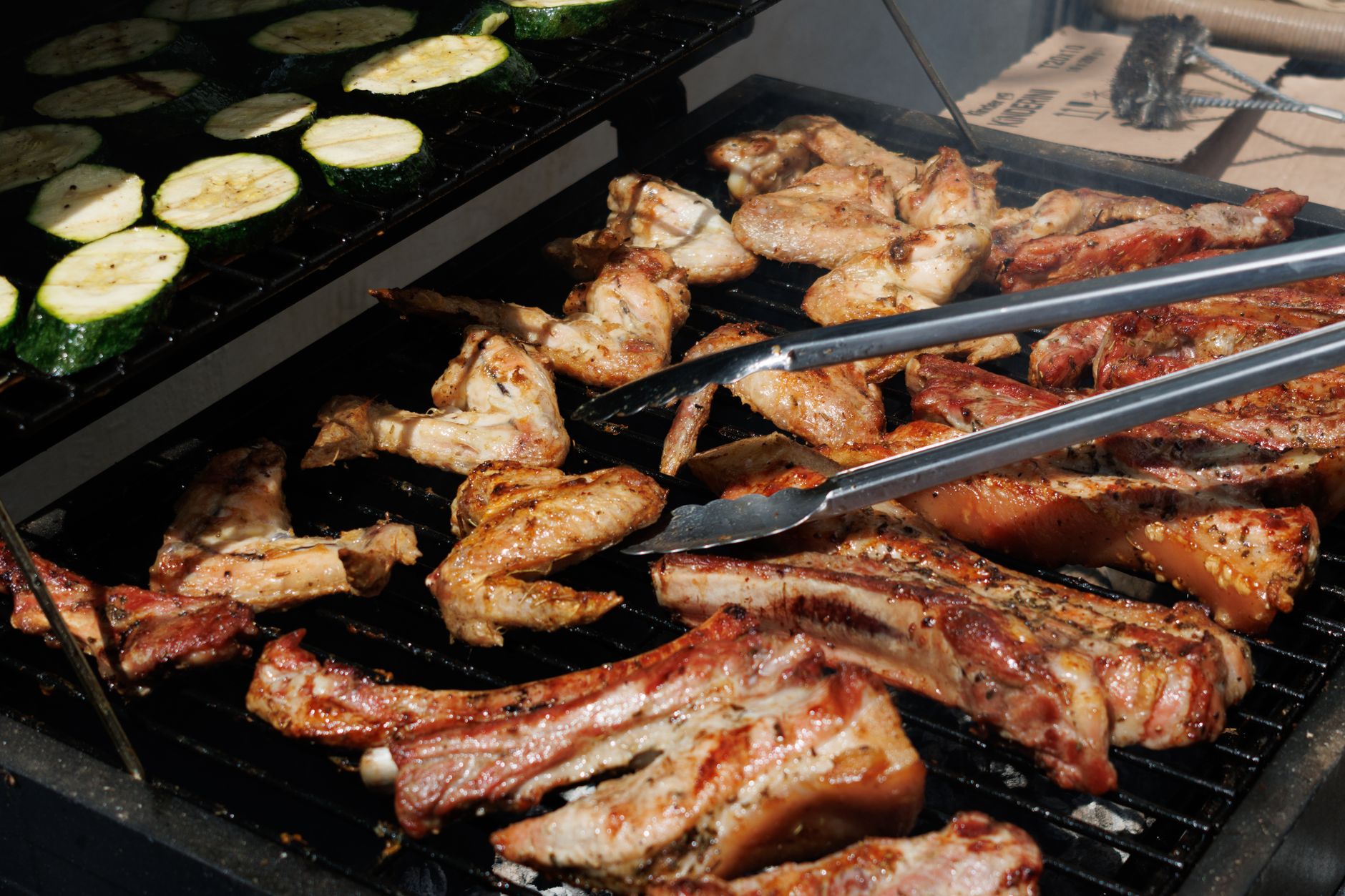
Memphis barbecue is pork, cooked slowly over indirect heat, most often shoulder or ribs, and served either “dry” — coated in a spice rub with no sauce — or “wet,” basted or finished with a tomato-and-vinegar sauce. That combination, plus the “plate” as the standard way of serving it, is what sets Memphis apart from Texas, Kansas City or Carolina barbecue.
What cut defines Memphis barbecue?
Pork shoulder is the base of the tradition, cooked whole and then pulled or chopped, not sliced. Spare ribs are the other defining cut. This is the first real divide from other American barbecue regions: Texas barbecue is built around beef brisket, Kansas City mixes meats and leans on a thick sweet sauce, and the Carolinas split between vinegar-based whole hog in the east and mustard-based sauce further west. Memphis is a pork city, and shoulder and ribs are what that means in practice.
The meat is smoked low and slow, typically over hickory, in pits that can run for many hours. The Southern Foodways Alliance, a documentary and research program based at the University of Mississippi that studies Southern food traditions, has recorded Memphis pit cooking as part of a wider Mid-South pork tradition running from West Tennessee into the Mississippi Delta.
Dry rub vs wet sauce — what’s the actual difference?
“Dry” ribs are seasoned with a spice rub — usually a mix that includes paprika, garlic, black pepper and cayenne — before and after smoking, with no sauce applied. “Wet” ribs are basted with a tomato-and-vinegar sauce during or after cooking. Both are Memphis, not a compromise between them.
Dry ribs are the style most closely associated with the city in national food writing, largely because of one detail: the rub itself, applied heavily enough that it forms a crust, is meant to carry the flavour without a sauce doing the work. Wet ribs are more common outside Memphis and are what many first-time visitors expect when they order “barbecue ribs” without knowing there’s a choice.
What is a “plate,” and what comes with it?
A Memphis barbecue plate is the standard order: chopped or pulled pork, or a rack of ribs, served with a small number of sides — usually some combination of coleslaw, baked beans and barbecue spaghetti, a Memphis-specific side of pasta tossed in barbecue sauce. A “sandwich” version puts the chopped pork on a bun, frequently topped with coleslaw rather than served with it separately, which is itself a regional habit rather than an accident.
None of this is table service in the sense of a long, plated restaurant meal. Most Memphis barbecue operations are counter-service or cafeteria-style, a structure that goes back to the mid-20th-century pit restaurants the tradition grew out of.
How does Memphis barbecue differ from Texas, Kansas City and Carolina styles?
The differences are structural, not just a matter of taste:
- Texas: beef-centred, especially brisket, cooked in offset smokers, usually with a simple salt-and-pepper bark rather than a sweet rub.
- Kansas City: a broader meat range (beef, pork, chicken, sausage) unified by a thick, sweet, tomato-based sauce applied generously.
- Eastern Carolina: whole hog, chopped, dressed in a thin vinegar-and-pepper sauce with no tomato.
- Memphis: pork shoulder and ribs, the dry-rub option as a genuine alternative to sauce, and barbecue spaghetti as a distinctly local side.
These are the categories barbecue historians and food writers, including those working with the Southern Foodways Alliance, generally use to separate American regional styles — Memphis is one of four or five recognised traditions, not a variation on someone else’s.
What is the World Championship Barbecue Cooking Contest?
It is a sanctioned competition held each May as part of Memphis in May, judging teams in categories including whole hog, shoulder, ribs and sauce, with hundreds of teams entering most years according to Memphis in May’s own materials. It is the largest event of its kind and is central to how the city treats barbecue as a competitive craft rather than only a menu item.
The contest and the wider festival month reshape the riverfront for several weeks; Access Memphis covers what that means for visitors and residents in a dedicated explainer on the World Championship Barbecue Cooking Contest, and in a broader look at what Memphis in May does to the city for the whole of that month.
Where does this history sit in the city?
Barbecue in Memphis is tied to specific pit restaurants that have operated for decades, several of them downtown or in neighborhoods close to it. Food writers and the Southern Foodways Alliance frequently trace the city’s dry-rib tradition to Charlie Vergos’ Rendezvous, a downtown restaurant opened in 1948 that is commonly cited as an early popularizer of the dry style in Memphis. That kind of longevity — multi-generation pit operations rather than a recent trend — is part of what distinguishes the city’s barbecue culture from a food scene built around new openings.
Readers researching where barbecue fits into a wider day out downtown can cross-reference a walking route through downtown Memphis, which covers how the district’s restaurants sit relative to Beale Street and the riverfront.
Is there a “best” barbecue in Memphis?
Access Memphis does not rank restaurants it has not verified through published, checkable sources, and no credible single authority ranks Memphis barbecue restaurants in an official capacity. Local newspapers, food critics and the Southern Foodways Alliance publish their own assessments and oral histories, and those differ from each other. A reader weighing where to eat is better served checking current, dated food coverage than a static claim on a general guide.
What can be stated plainly: Memphis is one of the handful of cities whose barbecue tradition is documented as distinct in national and academic food writing, on the strength of the dry-rub style, the pork-shoulder base, and barbecue spaghetti as a genuine local side rather than a novelty.
How do residents treat barbecue differently from visitors?
For a visitor, barbecue is often one stop on a short trip, frequently paired with Beale Street or a music-history day. Access Memphis covers that pairing in its guide to fitting Beale Street, Sun and Stax into one day. For residents, barbecue functions more like a Sunday habit or a takeout order tied to a specific pit rather than an event — plate lunches picked up rather than sat down to, and rivalries between neighborhood spots that rarely make it into visitor guides at all.
Cost is a fair, practical question for both groups. A barbecue plate is generally one of the less expensive full meals available downtown compared with sit-down restaurant dining; Access Memphis breaks down food costs more broadly in its cost breakdown for visiting Memphis, and covers how service charges and tipping work at counter-service barbecue spots in its guide to tipping in Memphis. Alcohol rules at restaurants serving barbecue with beer or a local sauce-and-bourbon pairing are covered separately in Tennessee alcohol laws in practice.
Anyone building a fuller picture of how food fits into the city’s neighborhoods and daily rhythm can start from the Food & Drink archive, or the wider Memphis guide hub, which covers museums, landmarks and neighborhoods that barbecue history runs alongside.
Access Memphis is an independent guide written from published, checkable sources. We have not visited the places described here and we do not publish personal recommendations or invented ‘local favourites’ — where something is singled out as notable, we say who says so. Opening times, fares, closures and prices change at short notice, so treat everything here as a starting point and confirm with the museum, operator or venue directly before building a day around it. We give no advice on visas, insurance, health or safety; use your own government’s official guidance for those.