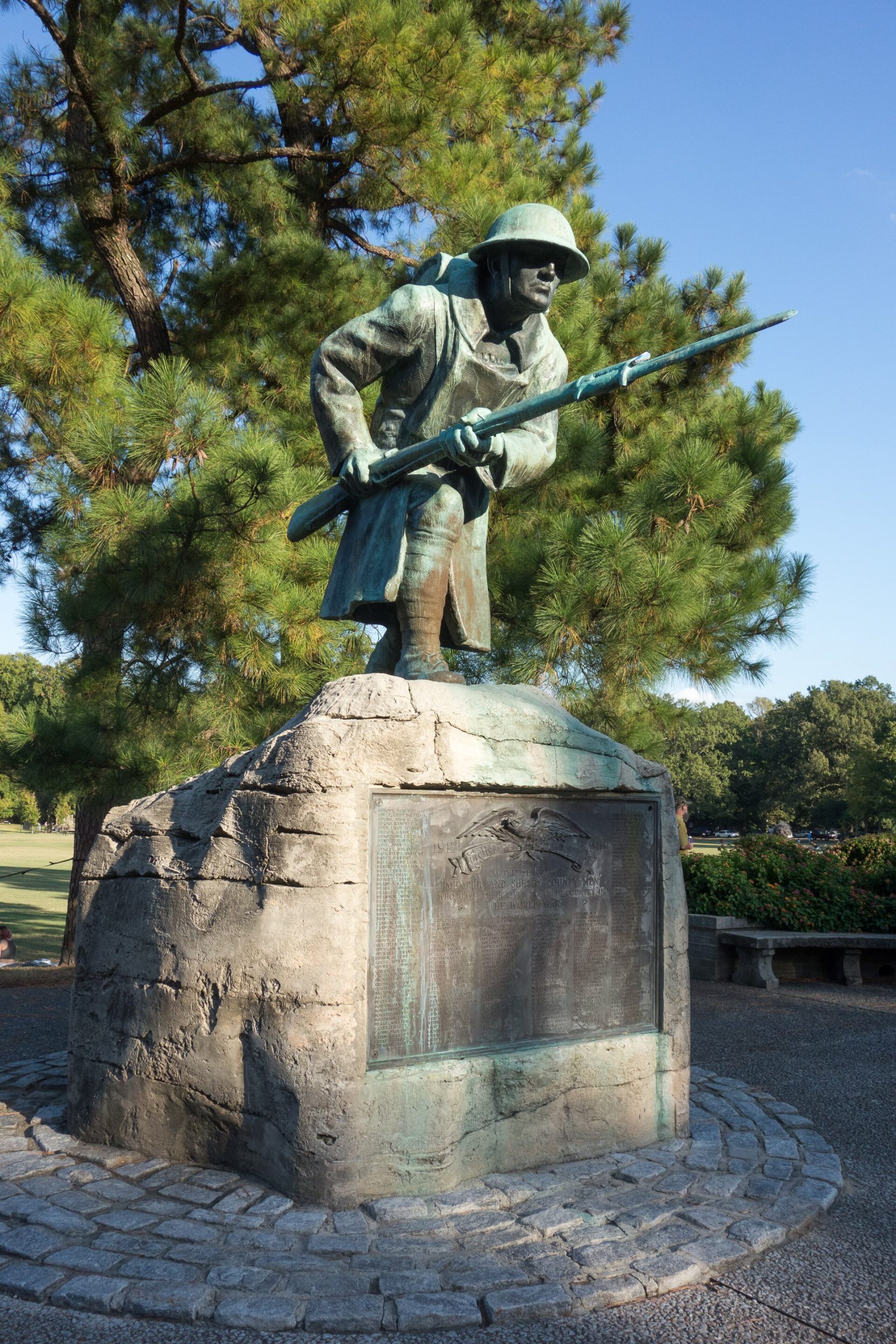
What is Overton Park?
Overton Park is a 342-acre municipal park in Midtown Memphis, laid out in 1901 as part of the city’s original park system plan. It holds the Memphis Zoo, the Overton Park Shell music venue, the Memphis Brooks Museum of Art, a public golf course, and — at its core — the Old Forest, a stand of old-growth woodland that predates the park itself.
The park’s design traces to landscape architect George Kessler, who was hired to draft a citywide park and parkway system for Memphis around the turn of the twentieth century. Overton Park was one of the anchor pieces of that plan, along with Riverside Park to the south. It sits in Midtown, bordered by the East Parkway and North Parkway corridors that were part of the same original scheme, and it functions today as one of the few large green spaces inside the urban core rather than out at the city’s edge, the way Shelby Farms Park does.
What is the Old Forest?
The Old Forest is roughly 126 acres of old-growth forest inside Overton Park’s boundaries, made up of trees and understory that were never cleared when the surrounding land was developed. The National Park Service designated it a National Natural Landmark in 1966, recognizing it as one of the last surviving fragments of the hardwood forest that once covered the bluffs above the Mississippi.
Unlike the park’s mowed lawns, ballfields, and formal plantings, the Old Forest was left largely alone. It is managed today as forest rather than as landscaped parkland, with a network of unpaved walking trails threading through it. The Overton Park Conservancy, the nonprofit that oversees much of the park’s daily upkeep, maintains and publishes its own trail map for the Old Forest on its site, and that is the source to check before walking it, since trail conditions and closures change with weather and maintenance work.
Why wasn’t a highway built through the park?
Because a citizens’ group sued the federal government over a proposed interstate route, and the U.S. Supreme Court sided with them. In the late 1960s, the Tennessee highway department planned to route Interstate 40 directly through Overton Park, splitting the Old Forest.
A group calling itself Citizens to Preserve Overton Park filed suit, and the case reached the Supreme Court as Citizens to Preserve Overton Park v. Volpe, decided in 1971. The Court found that federal law required agencies to avoid routing highways through public parkland where a feasible alternative existed, and it sent the case back for further review. The interstate was ultimately never built through the park; I-40 was rerouted around Memphis instead, and the gap became part of what is now Sam Cooper Boulevard. The case remains a standard citation in American administrative law, not just Memphis history, and Overton Park is the reason it exists.

Who manages Overton Park today?
Overton Park is owned by the City of Memphis, but a nonprofit called the Overton Park Conservancy has managed most of its public grounds — lawns, the Old Forest, trails, and general upkeep — under an operating agreement with the city since 2012. The Memphis Zoo and the municipal golf course inside the park’s footprint are managed separately from the Conservancy’s core area, which is a point worth knowing if a specific closure or fee question comes up: the right authority to check depends on which part of the park it concerns.
This split management is common in American park systems where an older city-owned park has grown institutions inside it over more than a century, and it’s worth checking the Conservancy’s own site directly for current trail conditions, event closures, or maintenance work rather than relying on a general park description.
What else is inside the park?
Overton Park holds several institutions that operate independently of one another and of the Conservancy:
- The Memphis Zoo, a separately operated zoological institution with its own grounds and admission.
- The Overton Park Shell, an open-air amphitheater built in the 1930s that has hosted concerts for decades and is documented by its own operating nonprofit as one of Memphis’s older continuously used music venues.
- The Memphis Brooks Museum of Art, described on its own site as the oldest art museum in Tennessee, founded in 1916.
- A public 18-hole golf course and a playground area known as Rainbow Lake Playground.
Because these sit inside one park boundary but are run by different operators, opening hours, admission, and event schedules should be checked on each institution’s own site rather than assumed from the park’s general hours.
How does Overton Park connect to the rest of Midtown?
Overton Park sits at the edge of Midtown Memphis, immediately adjacent to Overton Square, a commercial and entertainment district that grew up facing the park’s Cooper Street side. The relationship between the two — a park with an entertainment district at its gate — is a pattern repeated in a few American cities, and it shapes how the area is used: park visits and evening plans in the Square tend to run together for people already in Midtown, even though the park itself has no direct role in the Square’s businesses. Readers working out how the neighborhood fits together more broadly can start with a general account of what Midtown actually is and how it differs from Downtown and East Memphis.
Is Overton Park free to visit?
The park’s grounds, lawns, Old Forest trails, and Overton Park Shell grounds are open to the public without an admission charge, in keeping with how the city’s original park system was designed. The Memphis Zoo and the Memphis Brooks Museum of Art, both inside the park, charge their own admission or offer their own free-access windows — that is worth checking directly, and a broader rundown of which Memphis museums offer free entry is covered separately on this site.
What should residents actually know about using it?
For people living in Memphis rather than visiting for a weekend, Overton Park functions as ordinary green infrastructure: a place to run, walk a dog, or use the Old Forest trails on a weekday morning without competing with festival crowds. Its role changes seasonally — concerts at the Overton Park Shell run through warmer months, and the Old Forest trail surface can be affected by rain and standing water after storms, which is a genuine consideration given how much rainfall Midtown gets across a Memphis year. The Conservancy’s own maintenance notices are the reliable source for trail closures after severe weather, rather than assuming the forest is always fully open.
Parking is available at several points around the park’s perimeter, though visitors driving in for Zoo or Brooks Museum visits should expect that lots serve those institutions specifically rather than the park as a whole.
How does it compare to Memphis’s other parks?
Overton Park is smaller than Shelby Farms Park, the roughly 4,500-acre park further east that is one of the largest urban parks in the country, but Overton Park’s role is different: it is an inner-city park with a century of built institutions layered inside it, rather than a large reclaimed open landscape. Both are covered in the site’s broader parks and riverfront coverage, alongside river-adjacent spaces like Mud Island River Park and Tom Lee Park, which serve Downtown in a comparable way to how Overton Park serves Midtown.
For a wider view of how green space fits into a visit or a life in the city, the Memphis guide hub lays out how landmarks, museums, and neighborhoods connect, and the parks and riverfront archive collects the individual park write-ups, including this one, in a single place. Families weighing a park visit against other options on a given day can also check the site’s account of what actually works in Memphis with children, since Overton Park’s Zoo and playground make it one of the more straightforward stops for that purpose.
Related reading
what the city is like to actually live in, getting around, planning, itineraries, food and the riverfront.
Access Memphis is an independent guide written from published, checkable sources. We have not visited the places described here and we do not publish personal recommendations or invented ‘local favourites’ — where something is singled out as notable, we say who says so. Opening times, fares, closures and prices change at short notice, so treat everything here as a starting point and confirm with the museum, operator or venue directly before building a day around it. We give no advice on visas, insurance, health or safety; use your own government’s official guidance for those.
Featured image: Photo by Kenneth C. Zirkel, source, CC BY-SA 4.0
