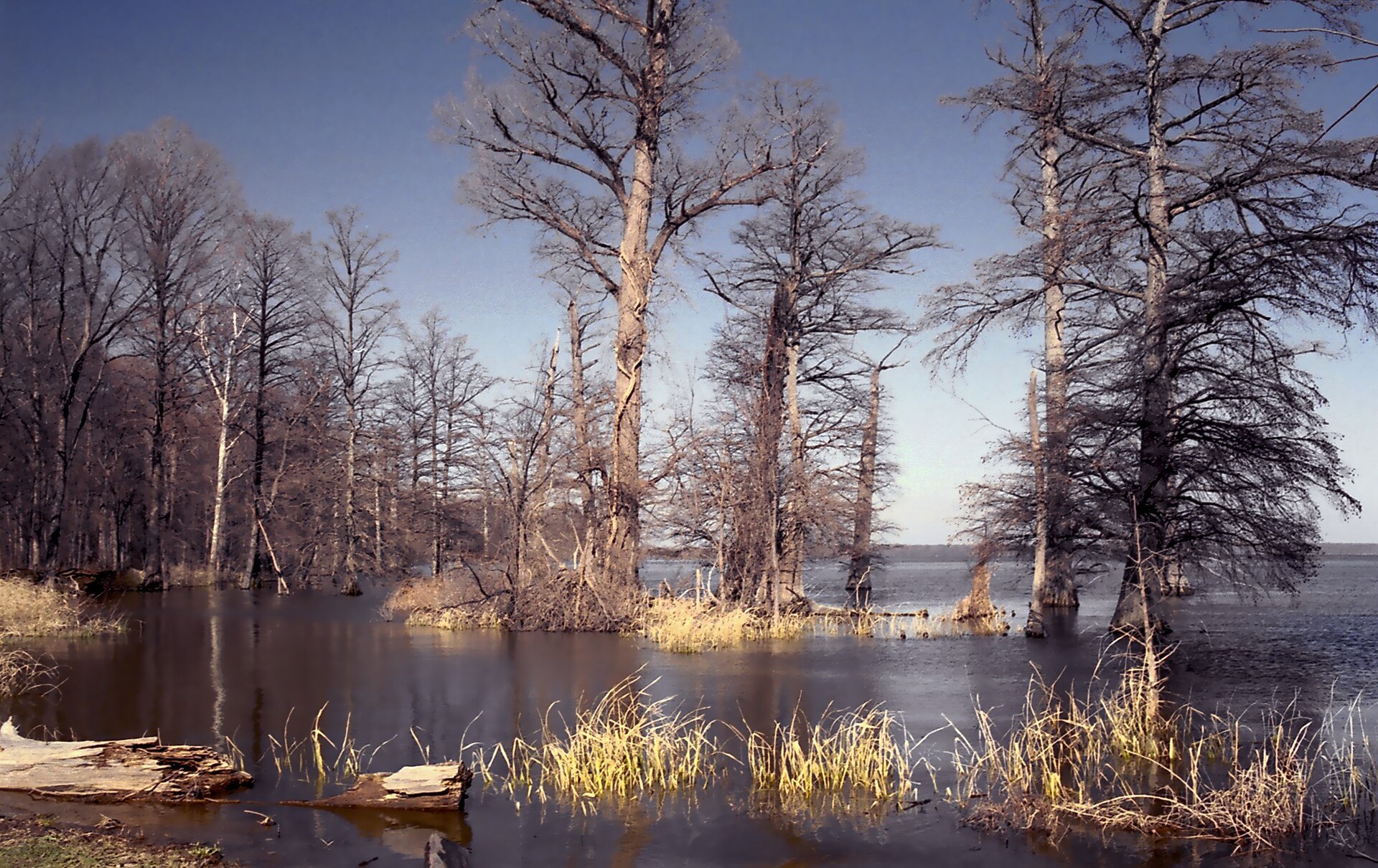
Reelfoot Lake is a shallow, cypress-studded lake in the northwest corner of Tennessee, straddling Lake and Obion counties. It exists because the New Madrid earthquakes of 1811–12 dropped a section of land low enough that nearby streams backed up and filled the basin. The result is a natural lake barely two centuries old — young by geological standards.
What is Reelfoot Lake?
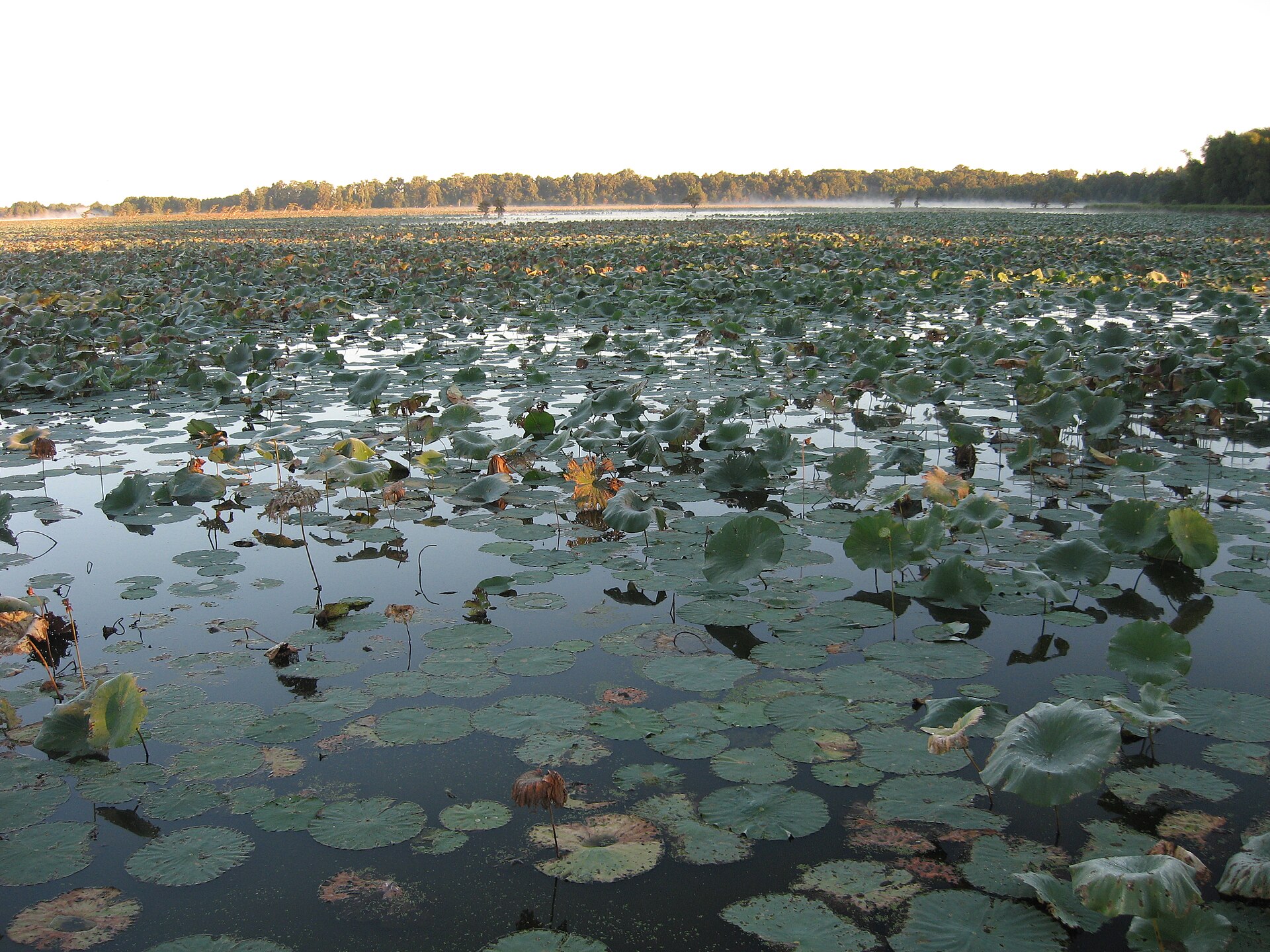
Reelfoot Lake covers roughly 15,000 acres, though its exact footprint shifts with rainfall and management of its water levels. It sits about ten miles from the Mississippi River, in the flat bottomland of the state’s northwest tip, near the Kentucky line. The lake is unusually shallow — averaging only a few feet deep in most areas — and much of its surface is broken up by stands of bald cypress, some of them centuries old, rising directly out of the water.
Tennessee State Parks manages Reelfoot Lake State Park on the lake’s shoreline, and the U.S. Fish and Wildlife Service manages the adjoining Reelfoot National Wildlife Refuge. Together they cover the lake and a good portion of the surrounding wetland and forest.
How was Reelfoot Lake formed?
Reelfoot Lake was formed by the New Madrid earthquake sequence of 1811 and 1812, a series of major quakes centered in what is now the Missouri Bootheel, roughly 100 miles from Memphis. The U.S. Geological Survey records the sequence as among the largest ever to strike the interior of the continental United States, with several main shocks estimated at magnitude 7 or higher.
The quakes caused widespread land subsidence — the ground itself sank — across a stretch of the Mississippi River floodplain. In the area that became Reelfoot Lake, the sunken ground formed a natural basin. Reelfoot Creek and other local streams, no longer able to drain normally, backed up and flooded the depression, creating a permanent lake where there had been forested lowland before.
Contemporary accounts, some collected and later published by the Tennessee Historical Commission and by USGS researchers studying the New Madrid Seismic Zone, describe unusual river behavior during the quakes, including reports that stretches of the Mississippi appeared to run backward for a time as the riverbed itself buckled. The lake’s formation is tied to this same seismic event, though it resulted from subsidence and stream impoundment rather than any reversal of the Mississippi itself.
Because the lake is geologically recent, many of the trees standing in it today — cypress that predate the lake — were simply flooded in place rather than planted or seeded afterward. Their trunks and the dead standing timber long visible in parts of the lake are physical evidence of forest that stood on dry ground before 1811.
Where is Reelfoot Lake in relation to Memphis?
Reelfoot Lake sits roughly 100 to 110 miles north of Memphis by road, generally reached via US-51 through northwest Tennessee. It is well outside any day trip built around downtown Memphis sights, and is typically treated as a longer excursion or an overnight rather than an afternoon out. Readers planning the drive should confirm current routing and conditions before setting out; see the site’s general notes on driving in Memphis and the surrounding region for context on road conditions in the wider area.
The lake is closer to the Mississippi River’s course than to the city itself, and it sits within the same broad alluvial landscape the river has shaped for millennia — the same floodplain context that defines where the Mississippi Delta begins, further south.
What does the New Madrid Seismic Zone mean for the area today?
The New Madrid Seismic Zone remains active and is monitored by the USGS, which records smaller earthquakes in the region on an ongoing basis. Reelfoot Lake is one of the few visible, permanent landscape features created by the 1811–12 sequence, which makes it a reference point for USGS and state seismic education efforts, alongside sunken lands and sand deposits (called sand blows) documented elsewhere in the region.
This site does not offer safety guidance on seismic risk. Readers with questions about current hazard assessments for the region should consult the USGS’s own New Madrid Seismic Zone pages directly.
What is at Reelfoot Lake now?
The lake and its surrounding refuge are known chiefly for three things, according to the managing agencies:
- Cypress forest in standing water — bald cypress and buttonbush stands across shallow sections of the lake, some of the cypress predating the lake’s formation.
- Wintering bald eagles — the U.S. Fish and Wildlife Service and Tennessee State Parks both document Reelfoot as a significant wintering ground for bald eagles, drawing organized eagle-watching tours run through the state park in the colder months.
- Fishing — the lake is managed as a fishery, and Tennessee Wildlife Resources Agency regulations apply to license and catch rules; anglers should confirm current requirements on the agency’s own site rather than assume rules carry over from elsewhere in the state.
Reelfoot Lake State Park operates a visitor center, camping, cabins and boat access on the Tennessee side; the adjoining National Wildlife Refuge is managed separately for habitat and migratory bird protection, with its own access rules. Because operating seasons, program dates and facility details change, readers should check Tennessee State Parks’ and the U.S. Fish and Wildlife Service’s own sites before planning a visit.
Is Reelfoot Lake part of a typical Memphis itinerary?
Not usually. It sits well outside the cluster of sights that make up a standard first or second day in the city, and most guides to itineraries and day plans for Memphis focus on downtown, Midtown and the riverfront rather than the northwest corner of the state. Reelfoot is better understood as a separate excursion, closer in character to the site’s coverage of other day trips from Memphis than to anything walkable from Beale Street.
Readers interested in the broader category of Tennessee and Mississippi state parks reached from Memphis may also want the site’s explanations of T.O. Fuller State Park and Meeman-Shelby Forest State Park, both of which are closer to the city and function differently — as forested parkland along the bluff and the river rather than as a lake created by an earthquake.
How does Reelfoot Lake fit into the region’s wider landscape?
The lake is a reminder that the flat land around Memphis and the Mississippi River is not static. Subsidence, flooding, channel shifts and, in this case, a major seismic event have all reshaped the ground within recorded history — a point the site returns to in its broader coverage of parks and riverfront landscapes around Memphis, and in explanations of how the river itself has moved and been managed over time.
For readers building out a wider regional picture rather than a single day trip, the site’s practical planning hub and planning and practicalities archive cover how to sequence a longer visit that includes destinations, like Reelfoot, well outside the city itself.
Access Memphis is an independent guide written from published, checkable sources. We have not visited the places described here and we do not publish personal recommendations or invented ‘local favourites’ — where something is singled out as notable, we say who says so. Opening times, fares, closures and prices change at short notice, so treat everything here as a starting point and confirm with the museum, operator or venue directly before building a day around it. We give no advice on visas, insurance, health or safety; use your own government’s official guidance for those.
Featured image: Photo by User:JeremyA, source, CC BY-SA 2.5
