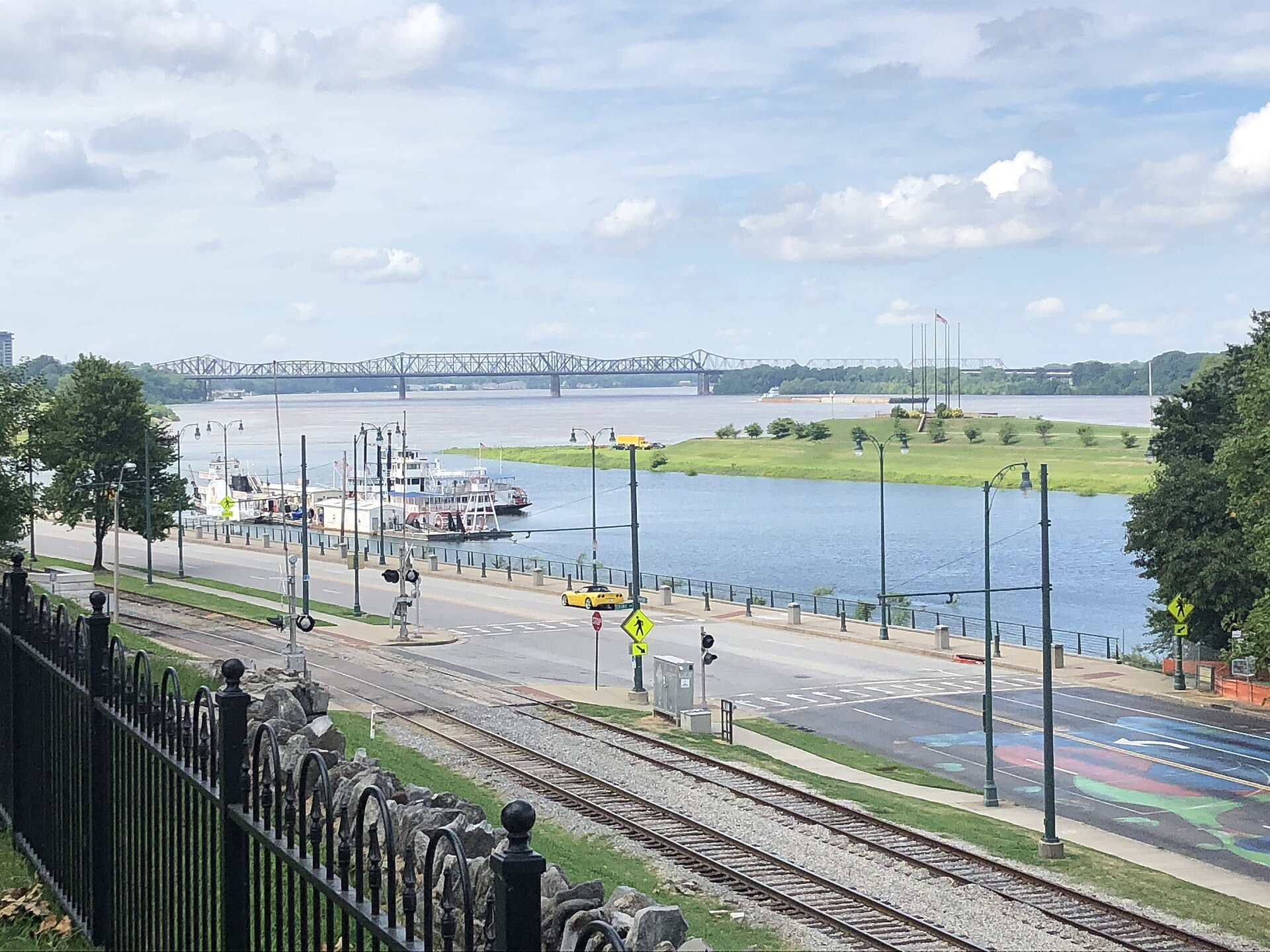
Martyrs Park is a small public park on the bluff above the Mississippi River in downtown Memphis, and it is a memorial to the victims of the yellow fever epidemics that struck the city in the 1870s — above all the outbreak of 1878, which killed thousands of residents and drove most of the rest out of town. The name refers to those who died and, more specifically, to the doctors, nurses and clergy who stayed to nurse the sick.
Where exactly is Martyrs Park?
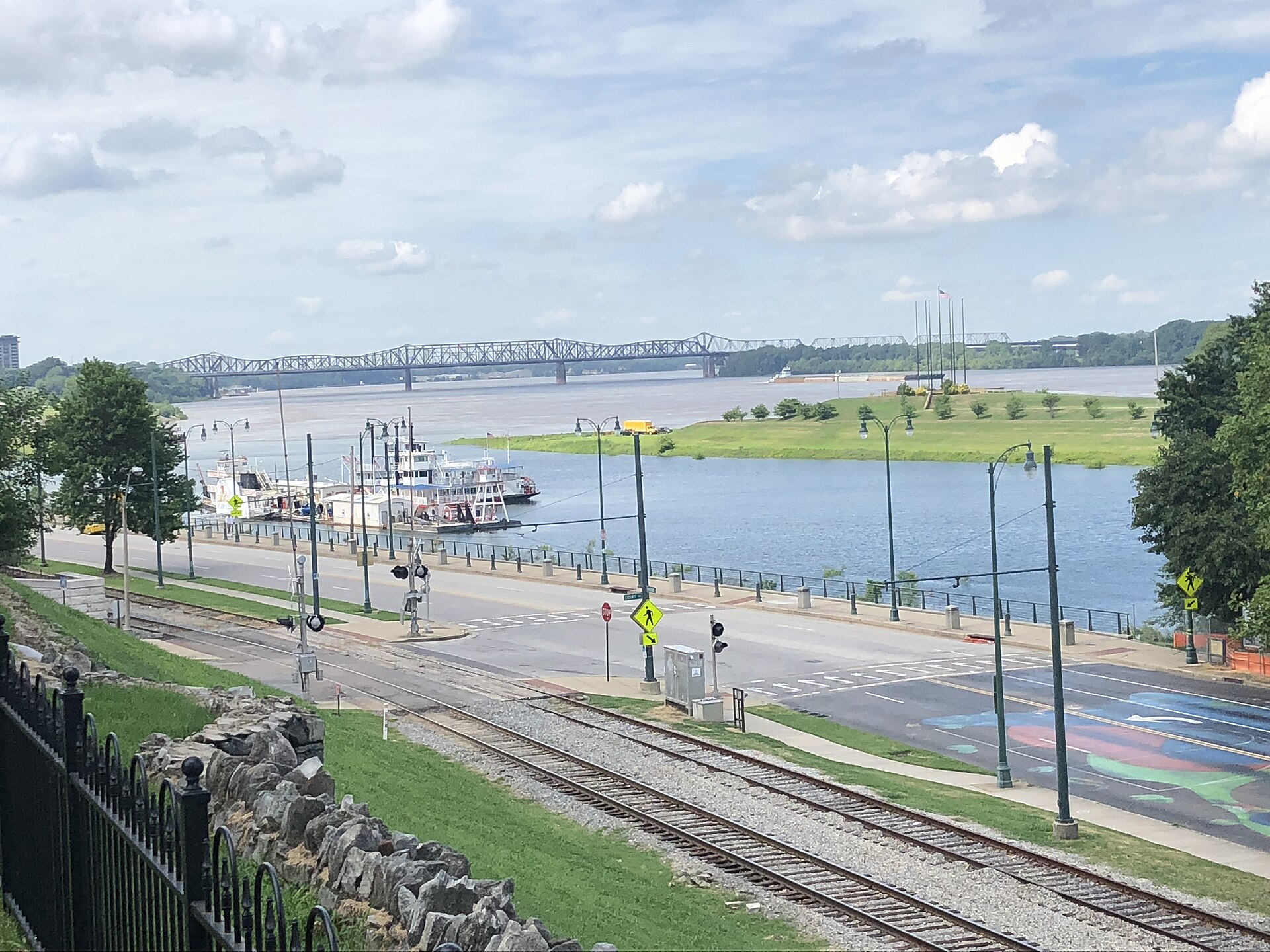
Martyrs Park sits along Riverside Drive on Memphis’s downtown bluff, part of a chain of small riverside parks that runs north to south above the river — a landscape covered in more detail on this site’s Parks & Riverfront pages. It is close to the cobblestone landing and within walking distance of the area covered by a walking route through downtown Memphis, roughly midway between the central business district and the blocks around the National Civil Rights Museum.
Like Memphis’s other bluff parks, it is a modest green space rather than a destination in itself — a place to read a marker and take in the river, not a park built around amenities. Its significance is historical, not recreational.
What is Martyrs Park a memorial to?
The park commemorates the deaths caused by yellow fever epidemics that hit Memphis repeatedly in the 1870s, most catastrophically in 1878. Historical accounts of that outbreak, including those referenced by the Tennessee Historical Commission’s marker program, describe a death toll in the thousands within a single summer, out of a city population that had already shrunk as tens of thousands fled.
Yellow fever is a viral disease spread by mosquitoes, not understood at the time as such — the mosquito link was not established until decades later. In 1878, with no treatment and no accepted means of prevention, Memphis’s response was largely to flee or to nurse the sick and hope. Those who could leave did. Those who stayed — out of duty, poverty, or a decision to care for others — bore the epidemic’s full weight.
Who were the “martyrs” the park’s name refers to?
The name points to two overlapping groups: the general population who died in the epidemic, and the specific individuals — physicians, nurses, priests and religious sisters — who remained in the city to tend the sick and died as a result. This second group is documented well beyond Memphis itself.
The Sisters of St. Mary, an Episcopal religious order based at what is now St. Mary’s Cathedral in Memphis, sent sisters to nurse fever victims in 1878; several died of the disease themselves. The Episcopal Church’s own calendar of commemorations still marks this history annually, under the title “Constance and Her Companions” — often referred to as the Martyrs of Memphis — on September 9, the anniversary of Sister Constance’s death. Catholic clergy in Memphis suffered comparable losses caring for the sick during the same outbreak. This is the specific history the park’s name draws on, distinct from a general civic memorial.

Why did the epidemic matter so much to Memphis’s history?
The 1878 epidemic did more than kill residents — it broke the city’s finances and governance. With the tax base collapsed and the population scattered, the Tennessee legislature revoked Memphis’s city charter in 1879, and for several years the city operated instead as a state-controlled taxing district rather than an incorporated municipality. Memphis did not regain a full city charter until 1893.
This is a documented turning point covered in Memphis civic history generally, and it explains why the epidemic is remembered with a dedicated park rather than folded into a broader Civil War-era or founding-era memorial landscape. The scale of loss reshaped the city’s administration, not just its population.
Does Martyrs Park connect to Memphis’s other bluff parks?
It does, in the sense that it belongs to the same string of small riverside green spaces built along the bluff in the 19th century, several of which carried Confederate-associated names for over a century before being renamed by the Memphis City Council in the 2010s. Martyrs Park’s name was never tied to that same naming controversy — it has consistently referred to the yellow fever dead rather than to a Confederate figure — which is one reason it reads differently from parks nearby that underwent formal renaming.
Readers building a picture of the whole riverfront system, including Tom Lee Park and its 2023 redesign and Mud Island River Park’s river model, will find Martyrs Park is smaller and quieter than either — a historical marker and a stretch of bluff rather than a programmed destination.
Is there a physical monument or marker in the park?
Yes. Historical markers documenting the 1878 epidemic and its toll on Memphis have been placed downtown under Tennessee’s official state historical marker program, and material of this kind is what a visitor to Martyrs Park should expect to find — text explaining the epidemic’s scale, not a statue or built memorial in the conventional sense. Anyone researching the exact wording or current condition of a specific marker should confirm details directly, since markers are occasionally relocated or updated; the Tennessee Historical Commission is the authoritative source for its own marker text and locations.
How does this fit into a visit to downtown Memphis?
Martyrs Park is not typically built into a first-time visitor’s itinerary the way Beale Street or the National Civil Rights Museum are, and this site does not present it as a must-stop. It is, however, a useful stop for anyone assembling a day around Memphis’s harder civic history rather than its music history — a natural pairing with a day built around Memphis’s civil-rights sites, given the physical proximity of the museum and the shared instinct to read the city through what actually happened here rather than through a single narrative.
For residents, the park is a reminder that Memphis’s civic memory runs deeper than the more heavily marketed music and civil-rights histories — the 1870s epidemics are a formative, if less visited, chapter, and one the city marks in stone rather than in festival form.
Where can this be read about further?
Readers wanting primary framing rather than a summary should look to two kinds of sources: the Tennessee Historical Commission, which maintains the marker program covering the epidemic itself, and the Episcopal Diocese of West Tennessee or St. Mary’s Cathedral in Memphis, which maintains the specific record of the Sisters of St. Mary and the clergy who died in 1878. Both are the appropriate authorities here — general Memphis tourism material is not a substitute for either.
For a broader sense of how this fits into the city’s landmarks and neighbourhoods, the Memphis guide hub and the Landmarks & Sights archive cover the surrounding downtown sites, while Living in Memphis sets this history alongside the city’s more recent civic record.
Access Memphis is an independent guide written from published, checkable sources. We have not visited the places described here and we do not publish personal recommendations or invented ‘local favourites’ — where something is singled out as notable, we say who says so. Opening times, fares, closures and prices change at short notice, so treat everything here as a starting point and confirm with the museum, operator or venue directly before building a day around it. We give no advice on visas, insurance, health or safety; use your own government’s official guidance for those.
Featured image: Photo by Bjoertvedt, source, CC BY-SA 4.0
