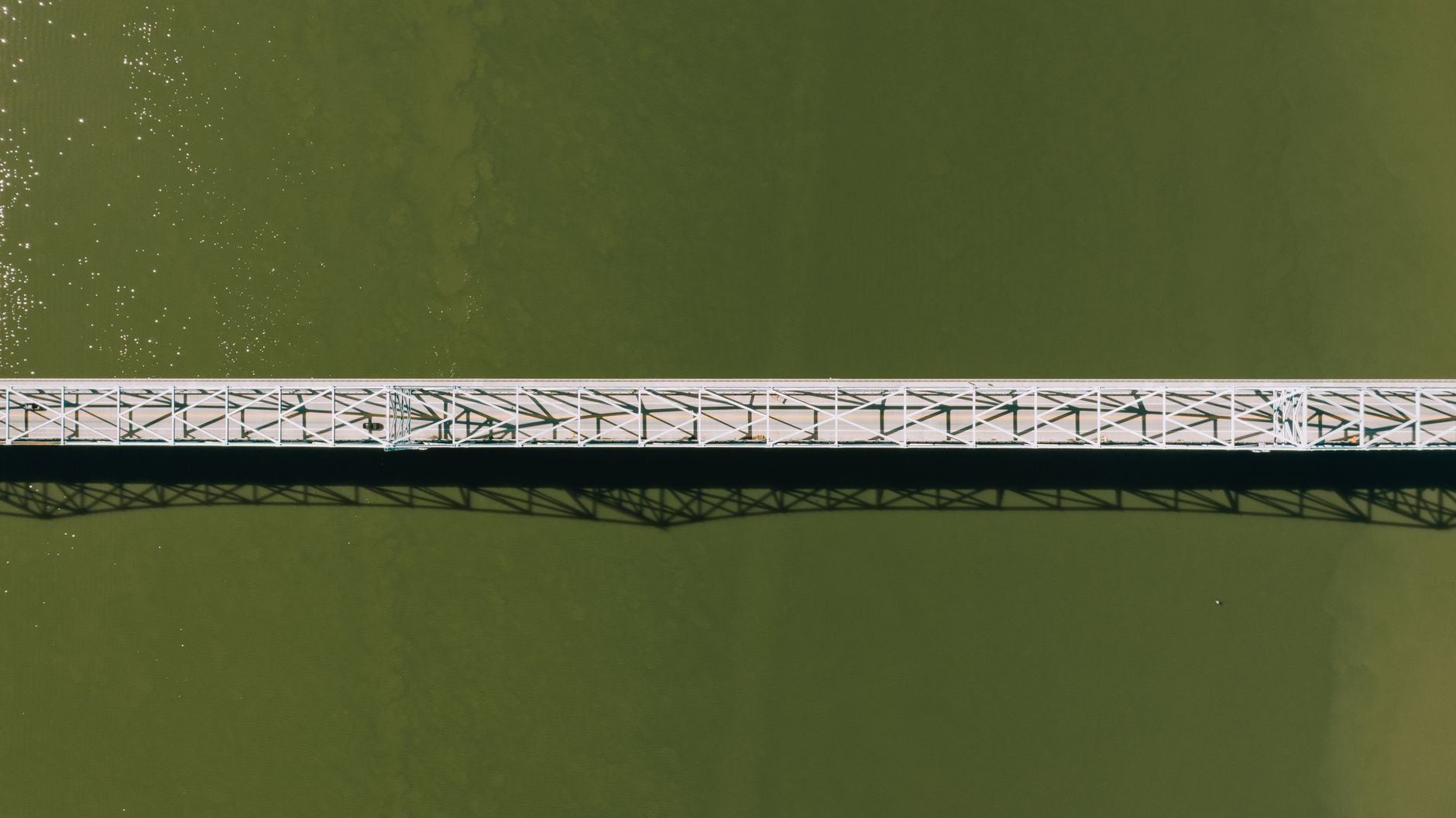
Big River Crossing is a lighted pedestrian and bicycle path carried on the south truss of the Harahan Bridge, running across the Mississippi River between downtown Memphis and West Memphis, Arkansas. The crossing itself is close to a mile long one way; walking it out and back, without detours on either bank, runs to roughly two miles.
What is the Big River Crossing exactly?
It is a dedicated walking and cycling path built into an existing 1916 railroad bridge, not a new structure. The Harahan Bridge was built for the Rock Island and Frisco railroads, and for decades it also carried automobile traffic on wooden truss roadways cantilevered off either side of the rail deck — a common early-20th-century solution before purpose-built highway bridges existed. When the Memphis–Arkansas Memorial Bridge (carrying what is now I-55) opened in 1949, those old vehicle lanes on the Harahan Bridge went out of use.
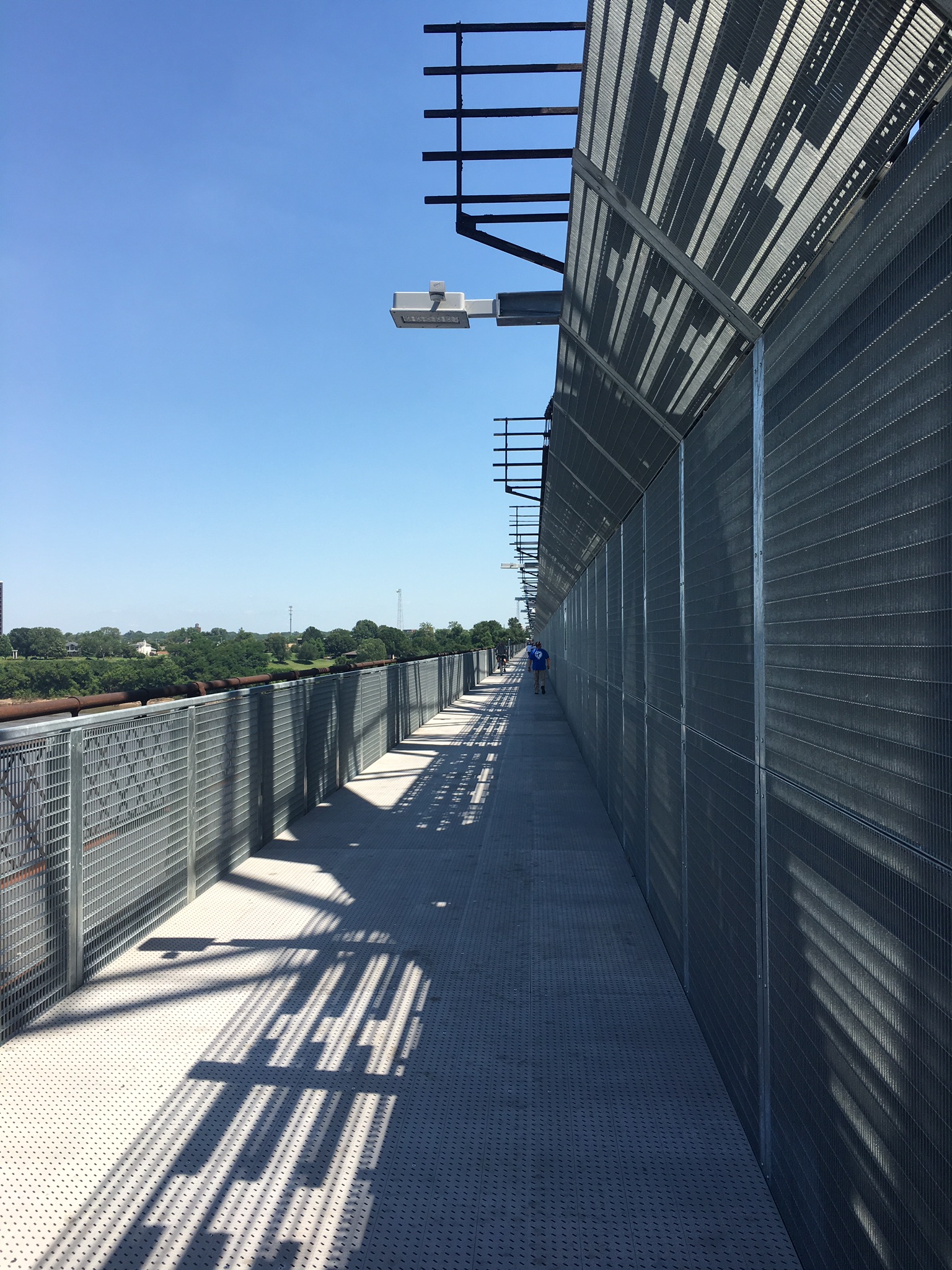
Big River Crossing converted one of those disused truss roadways into a permanent public walkway, reopening in 2016 as part of a joint Memphis–West Memphis effort generally referred to as the Main Street to Main Street project. Trains still run on the adjacent rail deck; the walkway is a separate, fenced structure alongside it.
How long is the walk?
The crossing over open water is close to a mile in each direction. Organizers and regional coverage of the project have described it as one of the longest public pedestrian bridges across the Mississippi River, a distinction worth noting but one readers should confirm against current project materials rather than treat as a fixed record, since claims like this are sometimes revised as other crossings open.
In practice, most people walking it round-trip — starting and finishing on the Memphis side — should plan for a walk in the region of two miles, plus whatever distance is added getting to and from the Memphis approach itself, which sits at the west end of downtown near the river.
Where does it start and end?
On the Memphis side, the walkway begins near the western edge of downtown, close to the riverfront and not far from the Memphis Pyramid. On the Arkansas side, it lands in West Memphis, connecting into the Big River Trail, a paved path that runs along the Arkansas riverbank and links to Broadway in West Memphis and to further trail network in the Delta.
Because the bridge connects two separate cities in two separate states, walking it is also, functionally, a way to cross state lines on foot — something almost nobody in Memphis does casually, since the only other river crossings nearby are highway bridges built for vehicles. For a broader look at how the river is otherwise crossed, see how to cross the river between Memphis and the Arkansas side, and for the modern highway crossing nearby, what the Hernando de Soto Bridge is and how it differs.
Is it free, and when is it open?
Big River Crossing is open to the public at no charge, and it is lit at night with an LED system built into the truss, which is part of what draws people to it after dark specifically — it is one of the few places in Memphis to be out over the river once the sun is down. As with any outdoor public structure, hours, lighting schedules and any closures for maintenance or flooding are set by the operators and can change; anyone planning a visit around a specific time of day should check current status through the Main Street to Main Street project’s own updates rather than assume year-round consistency.
What is the Harahan Bridge, structurally?
The Harahan Bridge is a cantilever through-truss railroad bridge completed in 1916, one of a small number of rail crossings of the Mississippi built in that era to link Memphis with points west. It carries active freight rail traffic on its main deck. The pedestrian truss now used by Big River Crossing was originally one of two roadways added to the outside of the rail structure specifically to carry early automobile traffic, at a time when a dedicated highway bridge did not yet exist. A more detailed account of the bridge’s own history is covered separately; see the standalone explainer on Big River Crossing and the Harahan Bridge for that structural background.

What connects to it on the Arkansas side?
The Big River Trail picks up where the bridge walkway ends in West Memphis, running along the levee and into the small downtown grid of that city. This is genuinely a different municipality with its own street pattern and its own points of interest, not an extension of Memphis; readers approaching it as a novelty crossing rather than a destination in itself should treat it that way.
On the Memphis side, the approach sits close to riverfront green space and to the network of paths that make up the city’s broader riverfront system. For how that system fits together, see the explainer on the Memphis riverfront loop and what Tom Lee Park is and what changed there in 2023, both of which sit within reasonable walking distance of the bridge’s Memphis end.
Is it good for cycling as well as walking?
Yes — the walkway was designed for both pedestrians and cyclists, and its connection into the Big River Trail on the Arkansas side is specifically built for bike traffic. Riders coming from Memphis’s own trail network, including the Shelby Farms Greenline, are covering a genuinely different kind of route once they’re on the bridge: enclosed truss, no road traffic, open water on both sides. For a general sense of how cycling functions across Memphis, see how good cycling actually is in Memphis and what the Shelby Farms Greenline is and where it runs.
Does it matter to people who actually live in Memphis, not just visit?
For residents, Big River Crossing functions less as a sight to visit once and more as a genuine piece of infrastructure — a walking and cycling route that happens to cross a state line, used by runners, cyclists and dog-walkers as much as by anyone treating it as a landmark. It sits at the edge of downtown, within reach of other riverfront spaces without requiring a car, which is worth noting for anyone weighing whether a car is genuinely necessary in Memphis.
It’s also a useful data point on how downtown itself is laid out, since the bridge’s Memphis approach marks one practical edge of the walkable core; for that layout generally, see how downtown Memphis’s boundaries are actually defined.
How does it fit into a visit to Memphis?
Big River Crossing is not typically a first-stop landmark on a short visit, since it requires walking to and from the riverfront specifically for the crossing itself, rather than sitting inside the cluster of downtown sights most visitors see first. It fits more naturally into an itinerary with room for the riverfront generally, or into a longer stay. For broader riverfront planning, the Parks & Riverfront section covers the other green and riverside spaces nearby, and the Getting Around section covers how to reach downtown’s western edge without a car.
Anyone building a full day plan around the river, rather than a single crossing, should also look at the Itineraries & Day Plans section, which sets out how much of downtown and the riverfront can realistically be covered together on foot.
Related reading
what the city is like to actually live in, Memphis, Practically, The Memphis Guide, What Is the Memphis Botanic Garden? A Clear Guide, What Is Tom Lee Park? Memphis’s 2023 Riverfront Redesign
Access Memphis is an independent guide written from published, checkable sources. We have not visited the places described here and we do not publish personal recommendations or invented ‘local favourites’ — where something is singled out as notable, we say who says so. Opening times, fares, closures and prices change at short notice, so treat everything here as a starting point and confirm with the museum, operator or venue directly before building a day around it. We give no advice on visas, insurance, health or safety; use your own government’s official guidance for those.