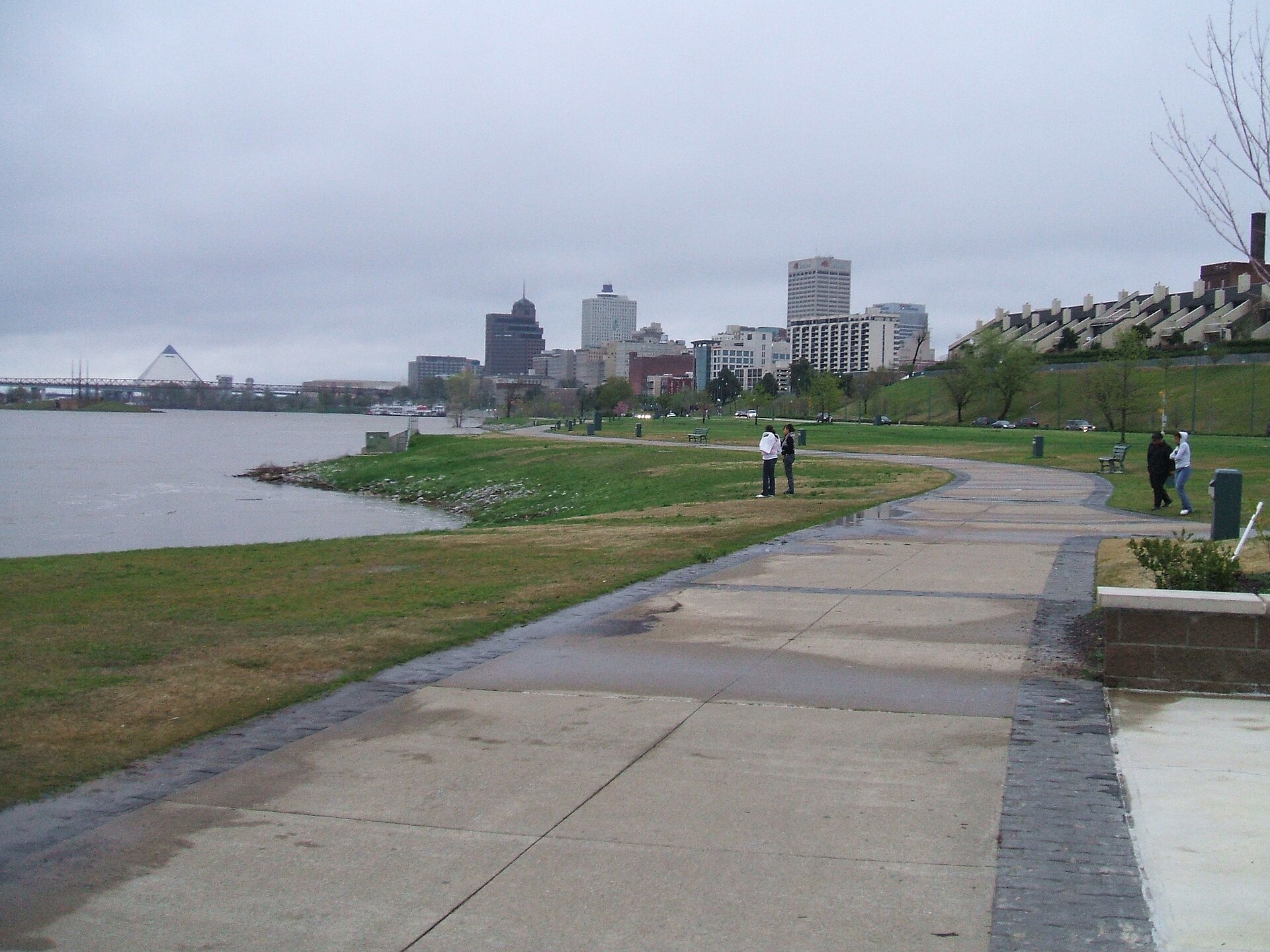
Tom Lee Park is a public riverfront park that runs for roughly a mile along the Mississippi River in downtown Memphis, between the Beale Street area and the bluffs to the south. It is named for Tom Lee, a Black Memphian who could not swim and who rescued 32 people from a sinking steamboat in 1925. The park was rebuilt and reopened to the public in 2023.
Where is Tom Lee Park, and what is there now?
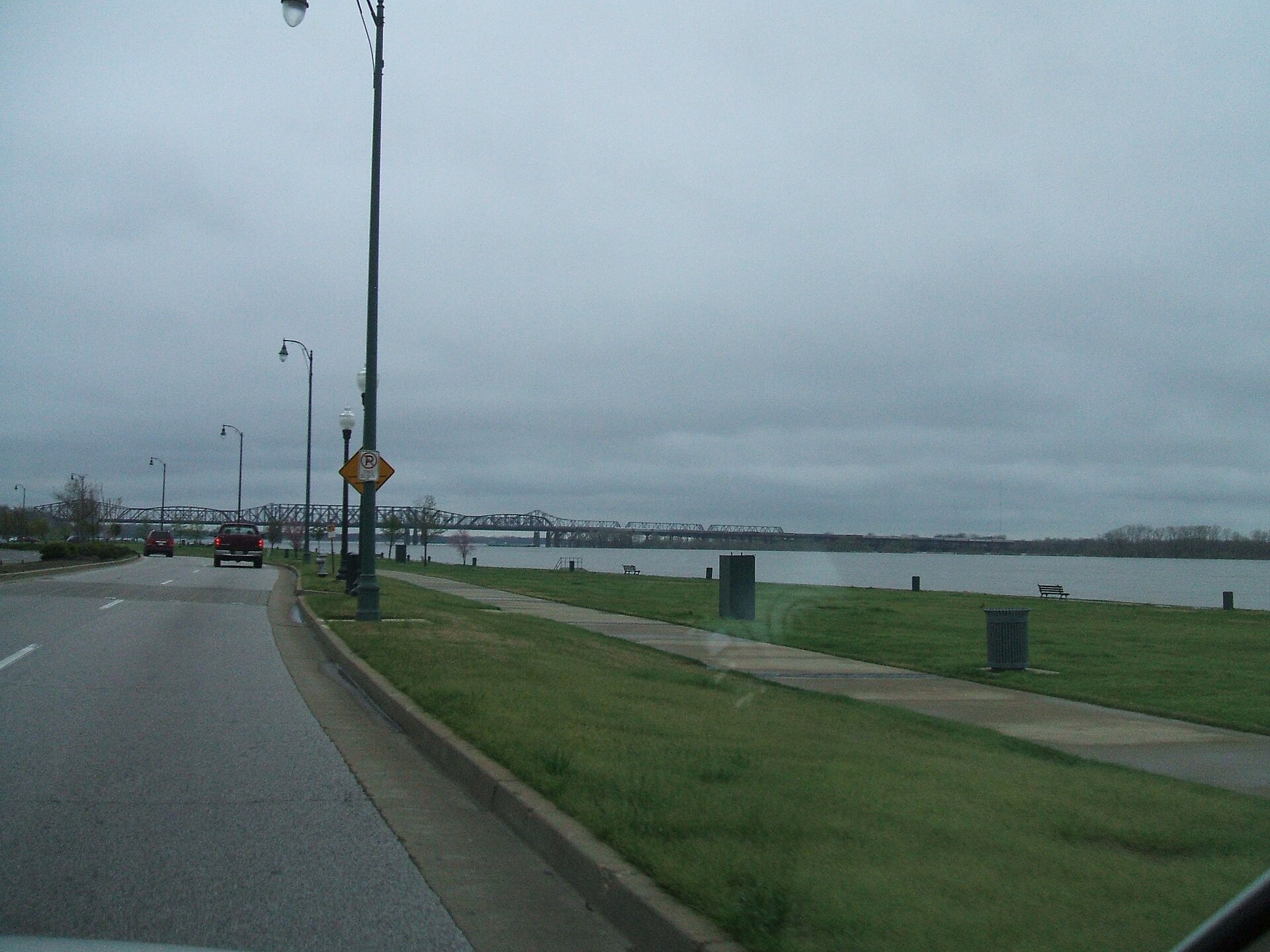
Tom Lee Park sits on the east bank of the Mississippi, along Riverside Drive, directly below the downtown bluff on which the rest of the city stands. It runs from around Beale Street Landing at its north end to the South Bluffs neighborhood at its south end, covering roughly 31 acres, according to Memphis River Parks Partnership, the nonprofit that manages the city’s riverfront parks and led the park’s redesign.
After a construction closure of several years, the rebuilt park opened over Labor Day weekend in 2023. Memphis River Parks Partnership describes the current layout as organized around open lawn for large gatherings, a canopied civic space for events, playgrounds and sport courts, a skate feature, and plantings drawn from the native habitats of the Mississippi River bluff and floodplain. The design is the work of the Chicago-based architecture firm Studio Gang, working with the landscape architecture firm SCAPE, both credited by the Partnership as lead designers of the rebuild.
Who was Tom Lee?
Tom Lee was a Black laborer who worked on the Mississippi River near Memphis in the early twentieth century. On May 8, 1925, a steamboat called the M.E. Norman, carrying members of an engineers’ association on a river excursion, capsized near Memphis, throwing dozens of passengers into the water. Lee was operating a small boat on the river at the time.
According to the history of the rescue as presented by Memphis River Parks Partnership, Lee could not swim. He nonetheless used his boat to pull survivors from the water and ferry them, repeatedly, to a nearby sandbar, saving 32 lives before other help arrived. It remains one of the most cited acts of individual rescue in the city’s river history, and it is the reason his name is attached to a park rather than a plaque alone.
How did the park come to carry his name?
In the years after the rescue, the city recognized Lee with a monument on the riverfront and eventually named the surrounding green space Tom Lee Park. Accounts of the original memorial, including reporting that surfaced again during the 2023 redesign, note that its inscription described Lee in language now considered demeaning and out of step with the scale of what he had done. That original wording has since been addressed; the park’s current interpretive material, maintained by Memphis River Parks Partnership, presents Lee’s story in his own right rather than through the framing used decades earlier.
A monument to Lee stands within the rebuilt park. Its presence is a deliberate link between the site’s name and the reason for it — the Partnership’s own materials are explicit that the redesign was meant to tell Lee’s story more fully, not simply to preserve open river frontage.

Why was the park rebuilt in 2023?
Memphis River Parks Partnership’s own account of the project describes several goals behind the rebuild: restoring a park that had been used hard for decades of festivals and events, improving how the space handles flooding and erosion on an active river bank, and creating year-round uses beyond the festival season. The project was funded through a mix of public and private money, including support from national foundations, and was managed by the Partnership rather than directly by city government, though it operates the park on the city’s behalf.
The rebuild also responded to long-running debate over how much of the riverfront should be given over to fenced festival infrastructure for part of the year versus open public space the rest of the time. The new design was built around year-round public access as the default use, with large-event infrastructure treated as a secondary layer.
Does Memphis in May still happen at Tom Lee Park?
Tom Lee Park has long been the home of major Memphis in May events, including the Beale Street Music Festival, and Memphis in May International Festival’s own announcements confirm the park’s continued role as a festival site following the rebuild. Because festival footprints, dates and formats change from year to year, readers should confirm current plans directly through Memphis in May’s official site rather than relying on any fixed description here.
Outside festival season, the park functions as ordinary public riverfront space — open lawn, walking paths and river views used by residents rather than crowds built for an event.
How does Tom Lee Park connect to the rest of the riverfront?
The park sits within a continuous stretch of downtown riverfront that includes Beale Street Landing at its north end and links, by way of the bluff above, to the historic cobblestones that once served as Memphis’s river landing. A short distance north across the water, the Big River Crossing carries pedestrians and cyclists over the Mississippi on a repurposed rail bridge, and the Memphis Pyramid stands nearby on the riverfront as a separate, unrelated landmark now operating as a Bass Pro Shops store. None of these sites is part of Tom Lee Park itself, but together they make up the working shape of downtown Memphis’s relationship to the river.
Readers mapping out a riverfront visit can find more on how these pieces fit together in Access Memphis’s guide to Memphis landmarks and neighborhoods and its landmarks and sights archive, which cover the individual sites in more detail than a single article on the park can.
What should a visitor or resident actually know before going?
Tom Lee Park is open-air public space with no admission fee, in the pattern typical of city riverfront parks. As with any outdoor riverside site, conditions — flooding, seasonal closures for maintenance or events, and construction on nearby streets — change without much notice, so readers should check Memphis River Parks Partnership’s own site for current conditions before visiting rather than assume year-round uniform access.
For residents, the park functions less as a single destination and more as connective tissue between downtown and the neighborhoods along the bluff — a place used for a run, a festival, or simply river frontage that the city spent years and considerable money rebuilding around one man’s name. Its practical role in the city’s daily life, alongside the riverfront’s other pieces, is covered further in Access Memphis’s practical guide to getting around and the riverfront and its broader guide to living in Memphis.
Where else can this history be checked?
- Memphis River Parks Partnership’s own site publishes the organization’s account of Tom Lee’s rescue and the park’s redesign.
- Memphis in May International Festival’s official site is the source for current festival dates and locations.
- Access Memphis’s own coverage of nearby sites — including what is actually on Beale Street, the Big River Crossing, and the Memphis Pyramid — fills in the surrounding riverfront that Tom Lee Park sits within.
Together, these sources give a fuller picture than any single plaque or park sign: a working riverfront, reshaped more than once, still carrying the name of the man who pulled 32 people from the river without being able to swim himself.
Access Memphis is an independent guide written from published, checkable sources. We have not visited the places described here and we do not publish personal recommendations or invented ‘local favourites’ — where something is singled out as notable, we say who says so. Opening times, fares, closures and prices change at short notice, so treat everything here as a starting point and confirm with the museum, operator or venue directly before building a day around it. We give no advice on visas, insurance, health or safety; use your own government’s official guidance for those.
Featured image: Photo by Chris English, source, CC BY-SA 3.0
