Clarksdale is a small city in the Mississippi Delta, about 75 miles south of Memphis on U.S. Highway 61, and the seat of Coahoma County. It draws blues listeners because a disproportionate number of the musicians who shaped Delta blues — Muddy Waters, John Lee Hooker, Sam Cooke, Ike Turner among them — were born or raised in and around it.
Where is Clarksdale, and how does it relate to Memphis?
Clarksdale sits in Coahoma County, in the flat cotton country of the Mississippi Delta, roughly an hour and a half’s drive from Memphis via U.S. Highway 61, sometimes called the Blues Highway. It is not a Memphis suburb and not part of Tennessee at all — it’s a separate, self-governing Mississippi city, and it functions as a day trip or overnight from Memphis rather than a neighborhood of it. Readers planning a longer look at the wider region can compare it with a similar case just across the state line, covered in this site’s guide to what Tunica, Mississippi actually is now.
Why does so much blues history trace back to this one town?
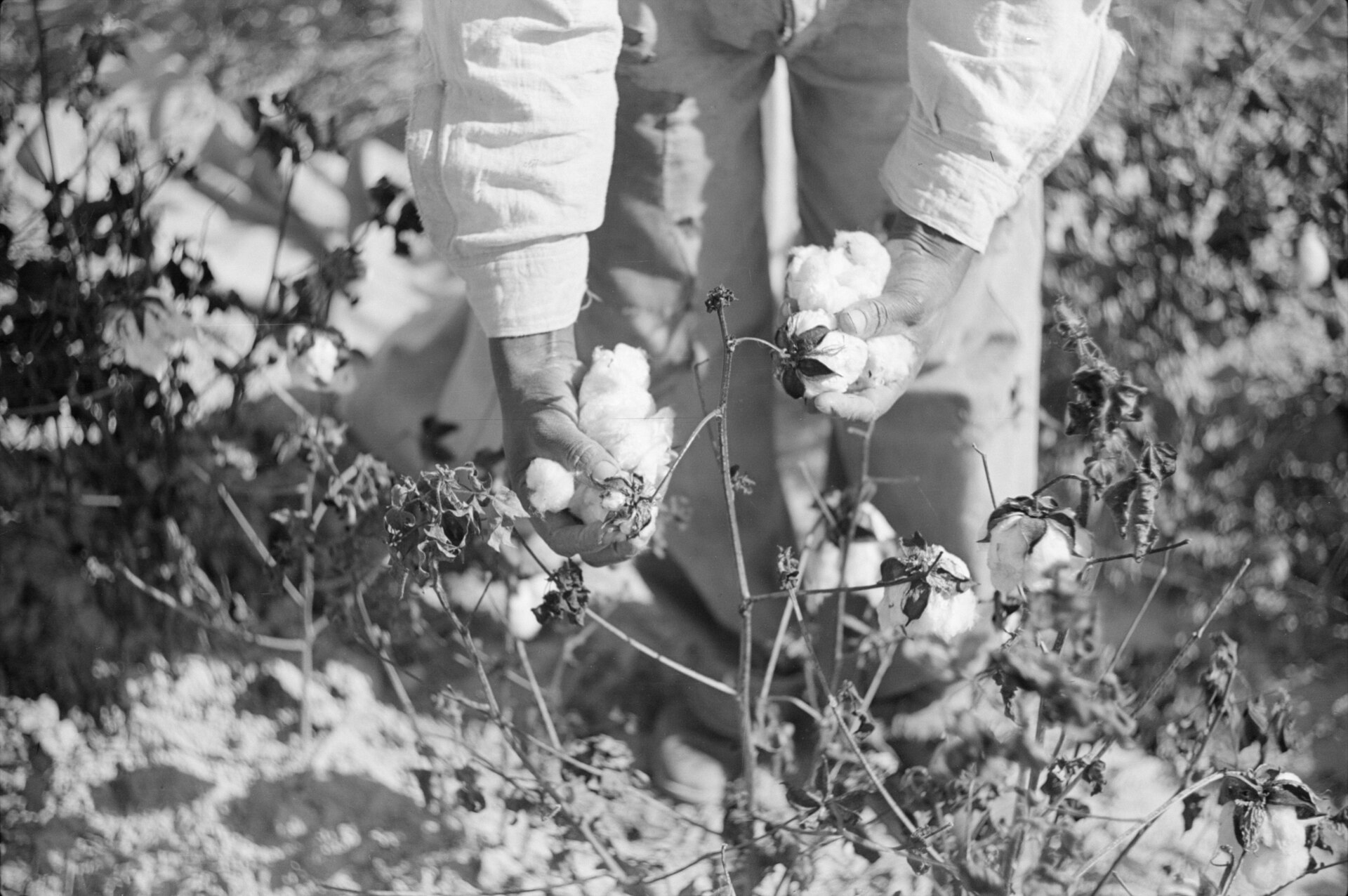
The short version: Coahoma County was, in the early 20th century, one of the most intensively farmed cotton counties in the Delta, worked largely by Black sharecroppers and tenant farmers. Clarksdale grew as the county’s rail and market town, with juke joints, churches and street corners serving as the places where that labor force made music on its own terms.
W.C. Handy, later credited as the “Father of the Blues,” worked as a bandleader in the Delta around 1903 and wrote of hearing a guitarist playing with a knife blade at a train depot in the region — an account historians generally place at Tutwiler, a few miles from Clarksdale, not in the city itself. The point stands regardless of the exact spot: this stretch of the Delta is where a distinct guitar and vocal style was already circulating before it had a name.
What is “the Crossroads,” and is it real?
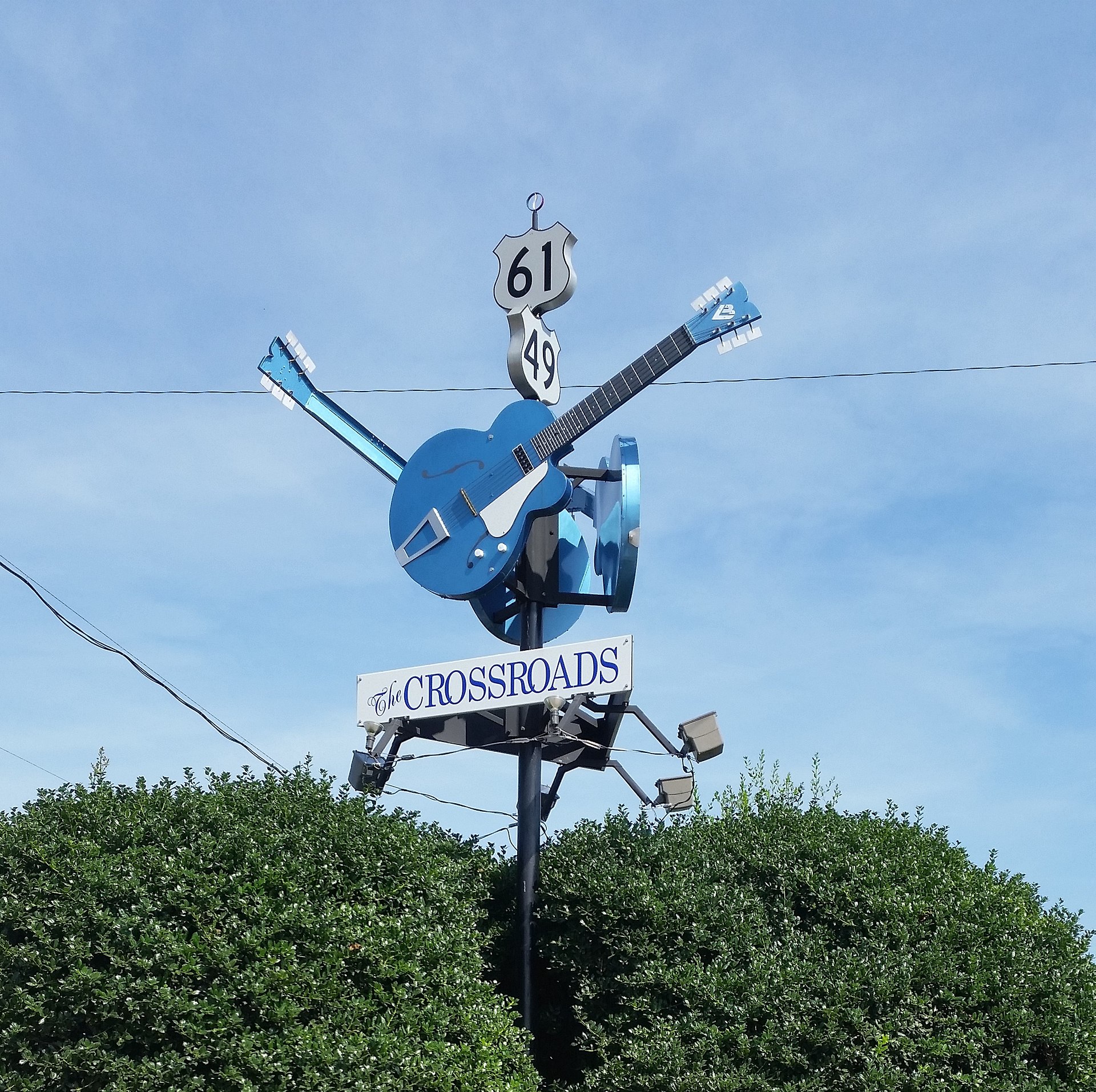
The intersection of Highway 61 and Highway 49 in Clarksdale is marketed locally as “the Crossroads,” tied to the folk legend that guitarist Robert Johnson traded his soul at a crossroads for his playing ability. The legend has no documented factual basis and is not treated as history by any serious source — it’s a piece of blues mythology that predates Johnson and has been attached to several intersections across the Delta over the years. What is verifiable is that Johnson recorded in the 1930s, died young and became, decades later, one of the most influential figures in American guitar playing; the Mississippi Blues Commission’s own Mississippi Blues Trail includes a marker addressing the crossroads story directly, treating it as legend rather than fact.
What does the Delta Blues Museum hold?
The Delta Blues Museum, in downtown Clarksdale, occupies a former freight depot built in 1918 for what was then the Yazoo and Mississippi Valley Railroad — a building tied to the town’s cotton-and-rail economy rather than to music specifically. According to the museum’s own site, its collection includes the reconstructed log cabin from the Stovall Plantation where Muddy Waters lived as a young man, along with “Muddywood,” a guitar built from wood salvaged from that cabin and donated by ZZ Top’s Billy Gibbons. The museum also holds instruments, photographs and recordings tied to Delta musicians more broadly, and functions as the town’s primary institutional record of that history rather than a performance venue.
What is a juke joint, and do any still operate in Clarksdale?
A juke joint is an informal club — historically Black-owned, often rural, serving food, drink, dancing and live music, and operating outside the formal entertainment economy that excluded Black patrons under Jim Crow. Most of the juke joints that once dotted the Delta are gone; the ones that remain are notable partly for having survived. Red’s Lounge, a long-running Clarksdale juke joint, has been documented in blues scholarship and on Mississippi Blues Trail signage as an example of the type still operating in something like its original form. Ground Zero Blues Club, opened in downtown Clarksdale in 2001 with actor Morgan Freeman among its founders, is a newer, larger venue built explicitly around that tradition rather than a survival of it — the distinction matters if a reader is trying to understand what’s original to the town and what’s been built to serve blues tourism.
What is the Mississippi Blues Trail?
The Mississippi Blues Trail is a state-run marker program administered by the Mississippi Blues Commission, placing interpretive historical markers at sites tied to blues musicians, venues, record labels and events across Mississippi and at a handful of related sites in other states. Clarksdale and Coahoma County carry one of the highest concentrations of these markers anywhere on the trail, covering Muddy Waters, the Delta Blues Museum’s depot building, the crossroads legend and several musicians born locally. The Commission’s own site is the authority for the current list and exact locations.
What festivals happen in Clarksdale, and when?
Two recurring events shape the town’s calendar. The Juke Joint Festival, a street festival built around Clarksdale’s surviving juke joints and clubs, is typically held in spring. The Sunflower River Blues and Gospel Festival, running in Clarksdale since the late 1980s, is typically held in summer. Both are organized locally and dates shift year to year, so exact scheduling should be confirmed on the organizers’ own sites rather than assumed from a prior year. Readers building a Memphis trip around music generally can see how a single-city version of that logic works in this site’s piece on a Memphis day built around music.
How do you get from Memphis to Clarksdale?
The practical route is by car, south on U.S. Highway 61 through the Delta, a drive generally reckoned at around 75 miles and roughly an hour and a half depending on stops and traffic through the southern edge of Memphis. There is no regular passenger rail service between the two cities, and readers weighing whether they need a car at all in Memphis first should see this site’s separate piece on whether you actually need a car in Memphis — for a Clarksdale trip specifically, the honest answer is yes. For context on how Clarksdale’s music landmarks relate distance-wise to Memphis’s own Beale Street, Sun Studio and Stax sites, see the guide to distances between Memphis’s music landmarks.
What should a Memphis-based reader know before going?
Clarksdale is a small city — its population is measured in the low thousands, not tens of thousands — and Coahoma County is among the Mississippi counties the U.S. Census Bureau has repeatedly recorded with some of the highest poverty rates in the state. That context matters for understanding the town: the blues tourism built around the Delta Blues Museum, the Blues Trail and the festivals sits alongside a local economy still shaped by the decline of Delta agriculture and out-migration, not against a backdrop of general prosperity. None of that is a reason to avoid the trip; it’s the reason the history feels lived-in rather than staged, and it’s worth knowing before arriving with expectations set by the marketing rather than the place.
Museum hours, festival dates and club schedules all change; the Delta Blues Museum’s own site and the Mississippi Blues Commission’s Mississippi Blues Trail site are the right places to confirm current information rather than any secondhand listing. For readers assembling a broader Delta-region day trip from Memphis, this site’s day trips archive and its museums and galleries archive cover related ground, and the planning and practicalities hub is the place to start for logistics on getting around the wider region.
Access Memphis is an independent guide written from published, checkable sources. We have not visited the places described here and we do not publish personal recommendations or invented ‘local favourites’ — where something is singled out as notable, we say who says so. Opening times, fares, closures and prices change at short notice, so treat everything here as a starting point and confirm with the museum, operator or venue directly before building a day around it. We give no advice on visas, insurance, health or safety; use your own government’s official guidance for those.
Featured image: Photo by Bigmacthealmanac, source, CC BY-SA 4.0

Related reading
Living in Memphis, Memphis, Practically, What Is Pickwick Landing? A Memphis Day-Trip Guide.