Hot chicken is fried chicken that has been brushed or dunked, after frying, in a paste built on cayenne pepper and hot fat, then usually served on white bread with pickle slices. It is a Nashville dish, not a Memphis one. Memphis’s own food identity runs through barbecue, not fried chicken.
What is hot chicken, exactly?
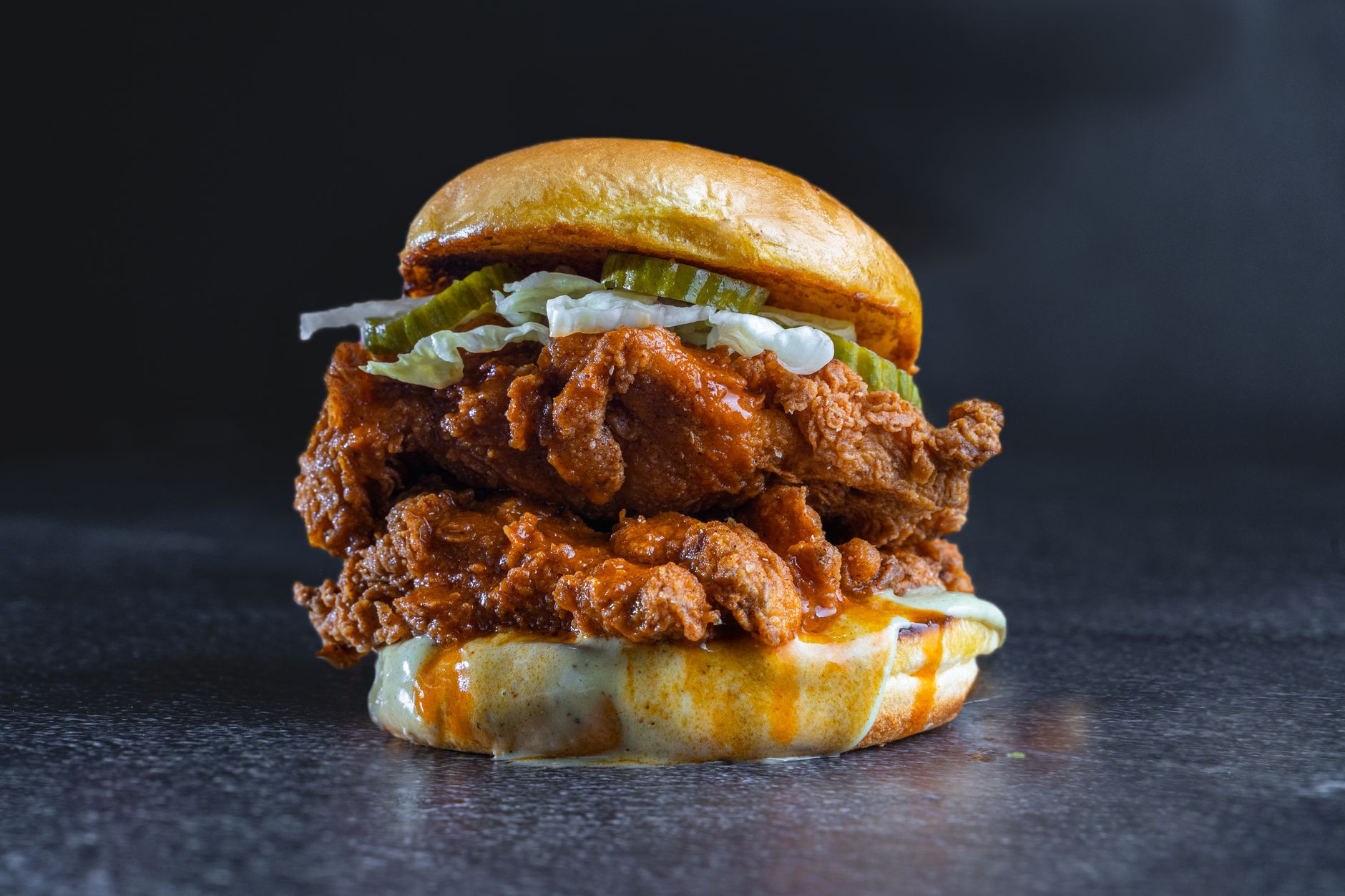
The dish is fried chicken with a specific finishing step. After the chicken comes out of the fryer, it is coated in a paste of cayenne pepper, other spices and hot oil or lard, then set on a slice of white bread — traditionally to soak up the grease — with pickle chips on top. The heat level is usually offered in tiers, from mild through to versions marketed as dangerously hot, and the paste is what separates it from ordinary fried chicken or Southern fried chicken more broadly.
- Fried chicken, bone-in, as the base
- A cayenne-and-fat paste applied after frying, not as a marinade or breading
- White bread underneath to catch the oil
- Pickle slices on top
- A tiered heat scale, from mild to extra hot
Is hot chicken a Memphis dish or a Nashville dish?
It is a Nashville dish. Nashville’s own tourism body, Visit Music City, describes hot chicken as a food closely identified with the city, and it appears on Nashville menus, in Nashville food writing, and at a dedicated Nashville hot chicken festival held annually — readers should check current dates with the organisers, since festival scheduling changes year to year. None of that civic and institutional weight exists around hot chicken in Memphis. Memphis restaurants have adopted the dish as it has spread nationally, in the same way pizza chains or taco trends spread between cities, but hot chicken did not originate here and Memphis does not present it as part of its own food identity.
Where does the Nashville hot chicken story come from?
The most commonly cited origin story credits a Nashville family, the Princes, and a restaurant that traces its history back to the early 20th century. The Southern Foodways Alliance, a food studies and oral-history organisation affiliated with the University of Mississippi, has recorded and published oral histories tied to this account as part of its work documenting Southern food traditions, including hot chicken specifically. That body of recorded interviews is the strongest publicly available documentation of how the dish developed and spread through Nashville before it became a national trend. The point for a Memphis-focused reader is simpler than the folklore: the documented history sits in Nashville, not here.
What does Memphis have instead?
Memphis’s defining food category is barbecue, and it is documented and organised in ways hot chicken never has been in this city. The Memphis barbecue tradition centres on pork — shoulder and ribs — cooked slowly over wood or charcoal, and on the choice between wet sauce and dry rub, a seasoning blend applied to the meat instead of, or alongside, sauce. Memphis also has a dish that genuinely does not exist elsewhere in the same form: barbecue spaghetti, pasta finished with barbecue sauce and pulled pork.
The city’s claim on barbecue is institutional as well as culinary. Memphis in May’s World Championship Barbecue Cooking Contest draws competition teams from across the country to judge pork specifically, and the event’s own rules and categories are set out by the organisers rather than by any restaurant. That is the kind of durable, checkable civic structure that hot chicken has in Nashville and does not have in Memphis.
Can you actually get hot chicken in Memphis?
Hot chicken has spread well beyond Nashville over the past two decades, showing up on menus across the South and in national fried-chicken chains, and Memphis has not been an exception to that trend. A visitor who wants hot chicken specifically will likely be able to find a version of it somewhere in the city. But that availability reflects a national food trend reaching Memphis, not a local tradition originating here — the same way barbecue chains have opened in Nashville without making barbecue a Nashville dish. Readers researching a specific restaurant should verify current menus directly with the operator, since dish availability changes far faster than a food’s regional identity does.
Does it matter which city “owns” a dish?
For a resident, not particularly — plenty of Memphis kitchens cook things that didn’t originate in Memphis, and that’s true of most American food cities. For a visitor trying to plan a trip around a city’s actual food identity, it matters more. Someone arriving in Memphis expecting a hot chicken scene comparable to Nashville’s will be looking for something the city was never organised around. Someone arriving expecting barbecue, dry rub, and a contest that treats pork cookery as a judged discipline will find exactly that, documented and repeatable year after year.
This is also a useful example of how the two cities get confused generally, despite sitting roughly three hours apart by road on I-40 and having distinct musical and culinary identities — Memphis built around Sun, Stax and the blues; Nashville around country music and its own food traditions, hot chicken included. Conflating the two is a common visitor mistake, and it is worth sorting out early in any trip planning, alongside more basic questions like what a Memphis trip actually costs or how to structure a couple of days in the city.
Where does barbecue fit into a Memphis visit?
Barbecue is not a single stop so much as a running theme through any serious look at the city, and the Food & Drink section covers the specific forms it takes — dry rub versus wet sauce, ribs versus shoulder, and dishes like barbecue spaghetti that exist almost nowhere outside Memphis. For a broader sense of how food, music and history fit together across a visit, the Memphis guide hub and the itineraries and day plans archive lay out how much can reasonably be covered in a day or a weekend, and where barbecue stops make sense against museum visits and neighbourhood walks. For residents rather than visitors, the Living in Memphis section deals with the parts of the city’s food and neighbourhood life that outlast any single trend, hot chicken included.
The short version holds regardless of how the national trend moves: hot chicken is Nashville’s dish, documented as such by Nashville’s own tourism authorities and by food historians who have recorded its origin story there. Memphis’s food identity is built on barbecue, organised around dry rub, wet sauce, and a competition that has judged pork cookery for decades. Visitors who want one should go looking for the right city’s specialty, and residents already know which side of that line they live on.
Access Memphis is an independent guide written from published, checkable sources. We have not visited the places described here and we do not publish personal recommendations or invented ‘local favourites’ — where something is singled out as notable, we say who says so. Opening times, fares, closures and prices change at short notice, so treat everything here as a starting point and confirm with the museum, operator or venue directly before building a day around it. We give no advice on visas, insurance, health or safety; use your own government’s official guidance for those.