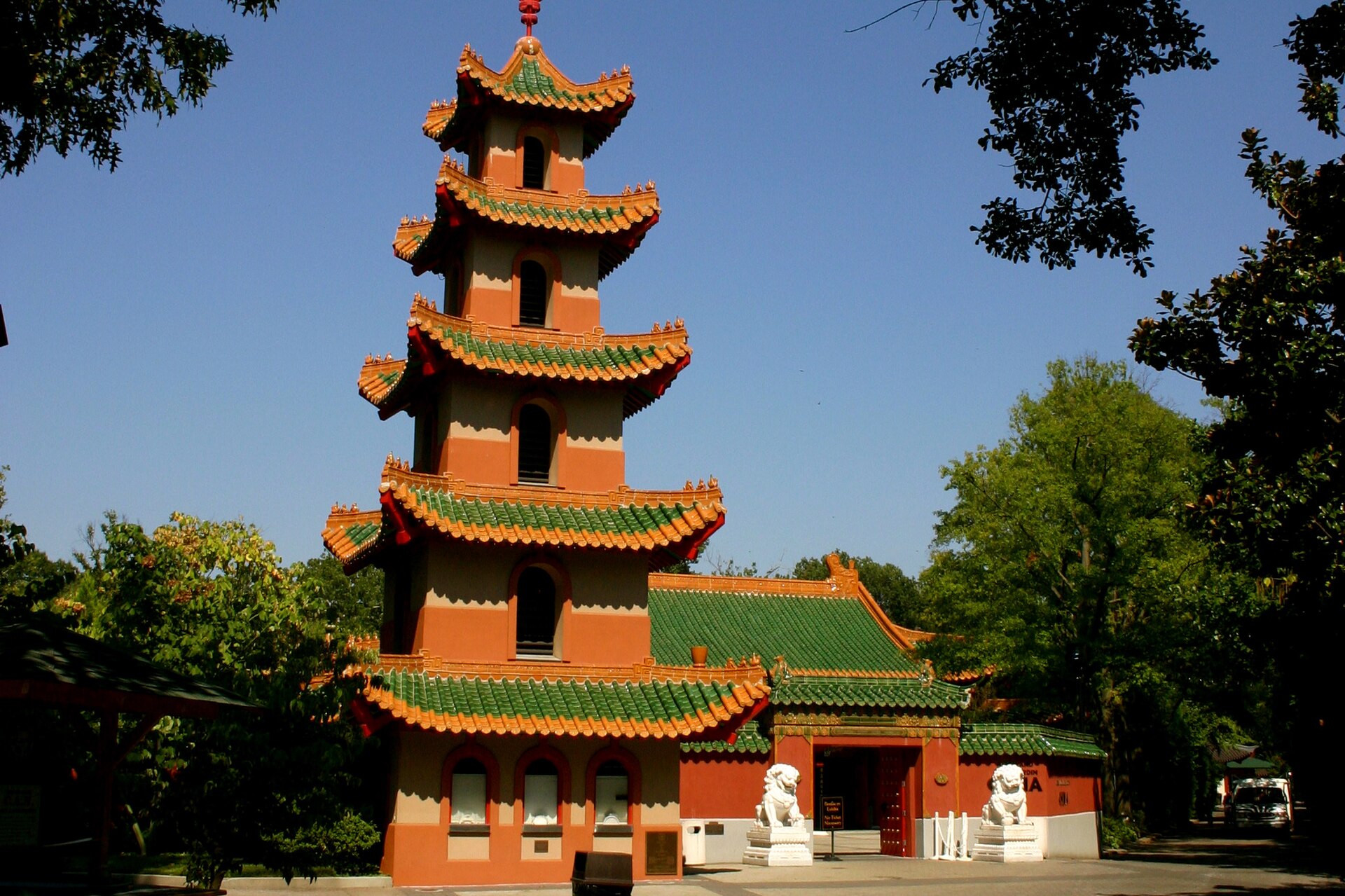
The Memphis Zoo is a 70-plus-acre zoological park inside Overton Park in Midtown Memphis, accredited by the Association of Zoos and Aquariums (AZA) and operated as a nonprofit by the Memphis Zoological Society. It opened in 1906 and holds several thousand animals across curated exhibit areas built around geography rather than a single theme.
Where exactly is the Memphis Zoo?
The zoo occupies a fenced section within the larger footprint of Overton Park, the Midtown green space that also contains the Old Forest, the Memphis Brooks Museum of Art, and an outdoor amphitheater. The zoo is a distinct, ticketed institution with its own entrance and boundary — it is not the same thing as the park, though the two share a history and, at times, a dispute over land.
Overton Park itself sits close to the Midtown grid, a short distance from Overton Square and Crosstown Concourse, and is covered as part of the site’s broader Parks & Riverfront coverage.
What can a visitor actually see there?
The zoo is organized into named exhibit zones rather than a single walking loop through generic enclosures. Areas include Zambezi River Hippo Camp, built around a large hippo pool with underwater viewing; Teton Trek, modeled on the northern Rockies and home to grizzly bears and Arctic foxes; Northwest Passage; Cat Country; Primate Canyon; an Animals of the Night building; and a farm-themed area aimed at younger children called Once Upon a Farm. There is also a herpetology building and an aquarium exhibit.
The China exhibit remains part of the physical layout, though the animals it was built for are no longer present — a change covered in the next section. As with any zoo’s holdings, specific animal residents, feeding demonstrations and seasonal exhibits change; the Memphis Zoo’s own site is the current source for what is on display on a given date.


What happened to the giant pandas?
For nearly two decades the zoo’s best-known residents were a pair of giant pandas, Ya Ya and Le Le, who arrived in 2003 under a research and loan agreement with China — an arrangement of the kind China maintains with a small number of accredited zoos worldwide, coordinated through diplomatic and conservation channels rather than a purchase. Le Le died at the zoo in February 2022. Ya Ya was flown back to China in April 2023 at the end of the loan period, following extended public attention over her condition in her final years there, reported at the time by national and Memphis news outlets. The zoo does not currently hold giant pandas, and readers should check the zoo’s own site for any update on the China exhibit’s future use.
Why has the zoo been in conflict with Overton Park’s conservancy?
The zoo and the nonprofit Overton Park Conservancy, which manages most of the surrounding park under an agreement with the city, were involved for several years in a public dispute over the zoo’s use of a section of open lawn known locally as the Greensward for overflow parking on busy days. The disagreement, which included litigation, centered on whether that grass area was park land under the conservancy’s stewardship or effectively zoo parking. It was resolved through negotiation that shifted overflow parking arrangements away from the lawn. The history of Overton Park’s earlier fight to stop an interstate through the same ground is a separate, older episode, but both disputes turn on the same underlying question of what the park is for and who decides. The Overton Park Conservancy’s own published materials and contemporary Memphis news coverage are the sources for the parking dispute’s details; the zoo’s own site does not present it as a current issue.
Who runs the Memphis Zoo, and is it accredited?
The Memphis Zoo is operated by the nonprofit Memphis Zoological Society and holds accreditation from the Association of Zoos and Aquariums, the national body that sets standards for animal care, safety and conservation programming at member institutions. AZA accreditation is a recurring review, not a one-time award, and the zoo’s current status can be confirmed on AZA’s own site.
Like most zoos of its scale, the Memphis Zoo participates in AZA Species Survival Plans, cooperative breeding and conservation programs run across accredited zoos for particular threatened species. Details of which programs the zoo currently takes part in are published on its own site rather than fixed here, since participation changes over time.
How do visitors get to the zoo without a car?
The zoo sits within reach of Midtown but is not directly on Memphis’s core downtown grid, so getting there without a car takes some planning. MATA, the city’s bus operator, runs routes through Midtown that pass near Overton Park; the specific route and stop nearest the zoo entrance should be checked on MATA’s own site, since routes and schedules are revised periodically. Details of how Memphis’s bus network is structured generally are covered in the site’s Getting Around archive, and the broader question of whether a car is worth having in the city at all is addressed directly in Do You Need a Car in Memphis, Honestly?. For a visitor without a car working through a wider day, A Day in Memphis Without a Car lays out what’s realistically reachable on foot, trolley and bus.
Parking at the zoo itself is on-site and paid, with the size and layout of the lot itself part of what the Greensward dispute above was about.
What does it cost, and when is it open?
Ticket prices, member rates and seasonal hours all change year to year and are the kind of detail that goes stale fast on any third-party site. The zoo’s own site publishes current admission pricing, member pricing, and seasonal opening hours, and readers planning a visit should confirm there directly rather than relying on a fixed figure repeated elsewhere. For a broader sense of what a day in Memphis costs relative to admission fees, transport and food, see Is Memphis Expensive to Visit?
Is the zoo a good fit for a family day, or for a single stop on a wider visit?
The zoo is one of the handful of Memphis attractions built specifically around a full day rather than a quick stop — most visitors plan several hours there rather than folding it into a downtown museum circuit. It is a recurring recommendation in coverage of A Day in Memphis With Children, alongside other family-oriented stops, precisely because it does not require the reading and pacing that civil-rights or music history sites do.
For visitors trying to sequence a first trip to the city, the zoo tends to sit outside the compressed downtown-and-music-history circuit covered in A First Visit to Memphis, in a Sensible Order, since it requires a dedicated half-day of its own rather than a stop between other landmarks. Broader context on how Overton Park, the zoo, and Midtown’s museums and neighborhoods fit together is available in the site’s Memphis guide hub.
What should residents know that a one-time visitor wouldn’t?
For people who live in Memphis, the zoo functions less as a single attraction and more as a recurring family destination — many residents hold annual memberships specifically because a single membership typically pays for itself within a handful of visits across a year, a math worth checking against current membership pricing on the zoo’s own site rather than assuming last year’s figures still apply.
The zoo’s relationship with Overton Park is also a live civic topic in a way visitors rarely encounter: parking, tree cover in the adjoining Old Forest, and the boundary between “zoo” and “park” have all been matters of public meetings and reporting over the years, not settled trivia. Anyone following how Memphis governs its own green space will find the zoo a recurring character in that story, documented in Overton Park Conservancy’s own materials and in the city’s local press rather than in zoo marketing.
Broader patterns of life in the city, including how its parks and public institutions are actually run day to day, are covered in the Living in Memphis hub.
Access Memphis is an independent guide written from published, checkable sources. We have not visited the places described here and we do not publish personal recommendations or invented ‘local favourites’ — where something is singled out as notable, we say who says so. Opening times, fares, closures and prices change at short notice, so treat everything here as a starting point and confirm with the museum, operator or venue directly before building a day around it. We give no advice on visas, insurance, health or safety; use your own government’s official guidance for those.
Featured image: Photo by unicurse (talk), source, CC BY-SA 3.0
