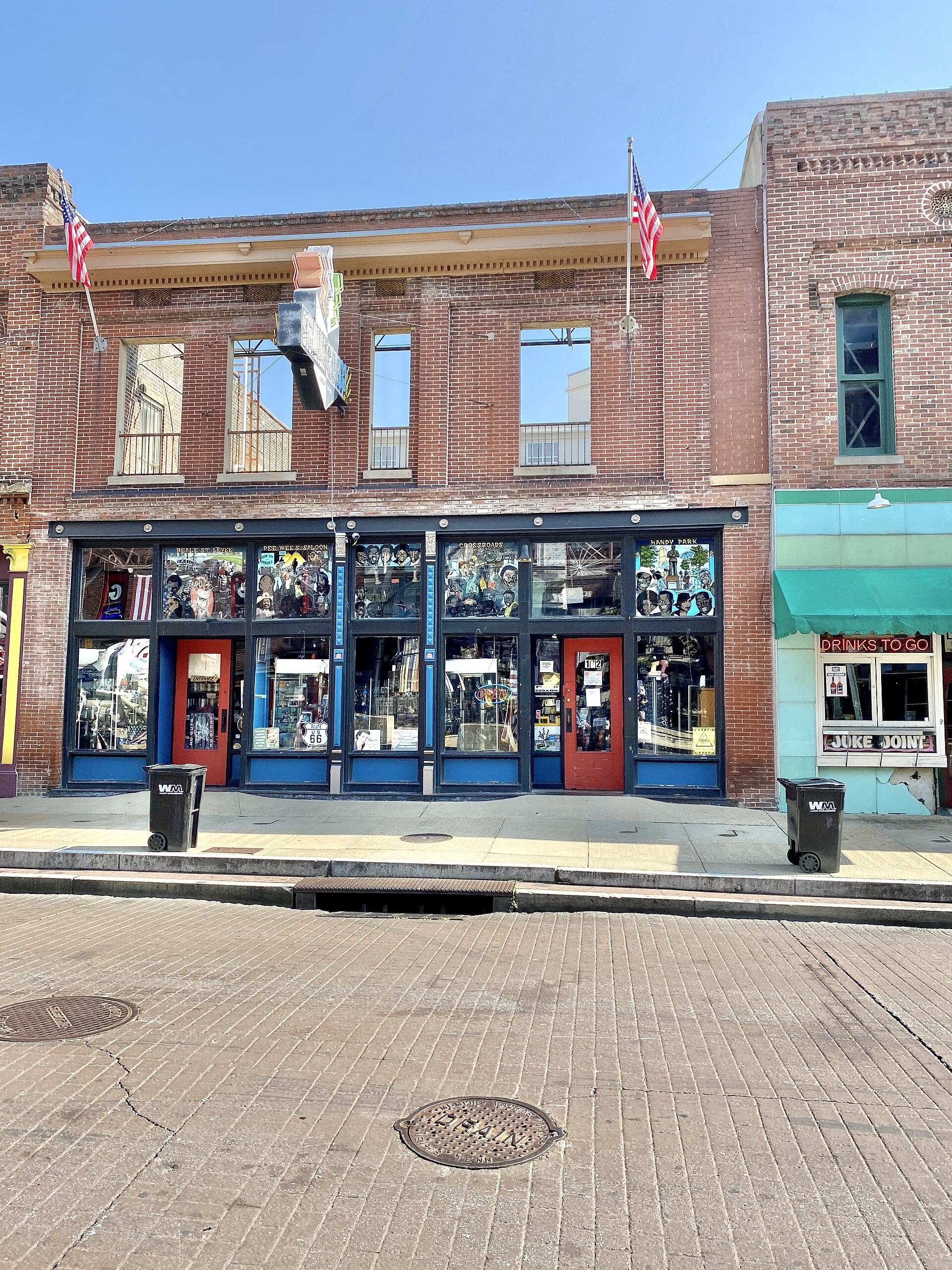
Beale Street is a short commercial strip in downtown Memphis, roughly three blocks long, that grew into the city’s central Black business and music district from the late 1800s onward and is now run largely as an entertainment corridor of clubs, bars and music venues on land owned or controlled by the city of Memphis. It is a real street with an actual address grid, not a themed attraction built for visitors.
Where is Beale Street, and how long is it?
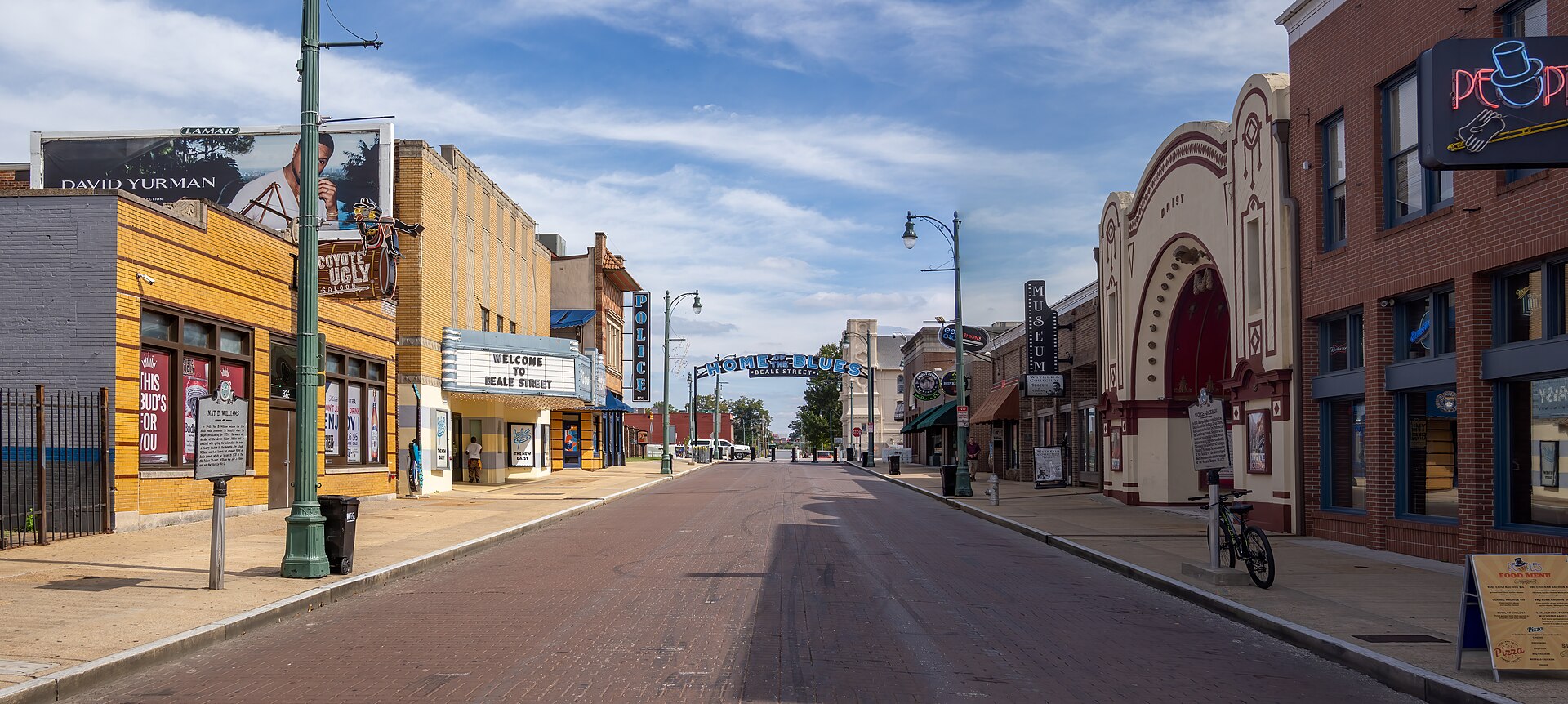
Beale Street runs east from the Mississippi River bluff through downtown Memphis toward Midtown. The stretch most people mean when they say “Beale Street” is the commercial block between Second Street and Fourth Street, a few hundred yards of clubs, restaurants and shops. The street continues further east past this core, but that longer run is mostly residential and institutional, not entertainment frontage.
The district sits a short walk from the Mississippi River, from FedExForum (home of the Memphis Grizzlies), and from the National Civil Rights Museum at the former Lorraine Motel. For orientation within downtown, the Memphis neighbourhoods and landmarks guide places it against the rest of the riverfront and Downtown grid.
Why does Beale Street matter historically?
Beale Street was the commercial spine of Memphis’s Black community from Reconstruction through the mid-20th century, home to Black-owned banks, insurance firms, churches, theatres and clubs at a time when segregation shaped where such businesses could operate. Robert R. Church Sr., widely credited as the South’s first Black millionaire, developed property on and near the street, including Church Park, a public park he built at the street’s eastern end for a community barred from the city’s whites-only parks.
The street’s musical reputation grew from the clubs and theatres that booked touring blues and jazz performers in the early 1900s. Composer and bandleader W.C. Handy worked in Memphis in this period and published sheet music, including “Beale Street Blues,” that helped fix the street’s association with the blues in the national imagination — a link Memphis and Tennessee institutions have leaned on ever since in official signage and civic branding. B.B. King performed on Beale early in his career and later took his stage name partly from the city (Memphis to “Beale Street”) era; his history is documented at the Memphis Rock ‘n’ Soul Museum, which places Beale Street within the wider story of how Memphis music developed across genres and decades.
Is Beale Street an official historic landmark?
Yes. Beale Street’s core commercial blocks are recognized as a historic district in the federal record, reflecting the street’s role in African American commercial and cultural history. The National Register of Historic Places is the authority for this kind of designation, and its own database, NPGallery, is the place to confirm current listing details, boundaries and documentation rather than relying on secondhand summaries.
Separately from federal listing, Tennessee state government and, at one point, the U.S. Congress have made formal statements associating Beale Street with the birth and popularization of blues music. Readers who want the primary language of any such designation should look for it on the relevant government body’s own record rather than take it on faith from tourism copy.
.jpg)
What is actually on Beale Street today?
The street today is a working entertainment district: a run of music clubs, bars and restaurants occupying historic storefronts, most operating under lease arrangements tied to the city of Memphis, which owns a significant share of the buildings along the core block. A handful of things on the street have a documented civic or historic status beyond being a bar or club:
- A. Schwab — a dry goods store dating to the 19th century, generally cited as the oldest continuously operating business on the street, occupying its original building.
- W.C. Handy Home and Museum — a relocated house associated with the composer, now operated as a small museum near the street, distinct from the commercial club strip.
- Church Park — the public park developed by Robert R. Church Sr. at the street’s eastern end, a rare surviving piece of the pre-entertainment-district Beale Street.
- The Withers Collection Museum and Gallery — a gallery on Beale Street built around the photographic archive of Ernest Withers, who documented Memphis music, sport and the civil rights movement; the Withers Collection explainer covers what the gallery actually holds.
- Handy Park — a small public square on the street with a statue of W.C. Handy, used as an outdoor performance space.
Beyond these, the street is dense with live-music clubs and bars, several operating under names tied to musicians associated with Memphis, and a number of restaurants. Because leases and operators on Beale Street change over time — a venue’s name or ownership is not a fixed historical fact the way a museum’s collection is — this article does not attempt to list current club names as if they were permanent institutions. Anyone checking what specific venue occupies a given storefront this year should confirm with the Downtown Memphis Commission or the city’s own tourism materials, since the physical buildings persist but tenants do not.
How does the street actually operate, day to day?
Beale Street functions differently by time of day. During daytime hours it reads largely as a commercial street with shops, a small museum presence, and modest foot traffic. In the evening, especially on weekends, the core block is typically closed to vehicle traffic and run as a pedestrian entertainment zone, with clubs opening their frontages onto the street and live music audible from multiple venues at once.
Cover charges, age restrictions after certain hours, and any entry fee to the closed pedestrian block are set by the city and individual venues and change over time; none of these figures are stable enough to print here as current fact. The Memphis practical planning hub covers how to check current transit and access details before a visit, which is the right approach for anything time-sensitive on Beale Street specifically.
How does Beale Street connect to Memphis’s other music sites?
Beale Street is one node in a wider network of Memphis music history rather than a self-contained attraction. Sun Studio, where early rock and roll and R&B sessions were recorded, sits a short distance away and is covered in the Sun Studio explainer. Stax Records, the South Memphis soul label, is documented at the Stax Museum of American Soul Music. The Memphis Music Hall of Fame sits close to Beale Street itself and inducts figures across genres, including several performers whose careers passed through Beale’s clubs.
For a fuller sense of how these sites relate geographically and historically, the landmarks and sights archive and the museums and galleries archive group the relevant entries together rather than treating Beale Street as an isolated stop.
What should a Memphis resident know that a visitor might not?
For people who live in Memphis, Beale Street is largely a destination for specific evenings out or for hosting visiting family, rather than a place used the way a neighbourhood grocery strip is used. It sits inside the downtown core covered by the living in Memphis hub, which addresses how downtown functions as a residential area distinct from its tourist-facing frontage on Beale itself. Parking, event closures around Beale during Memphis in May and other citywide festivals, and the street’s periodic redevelopment debates are matters the city government and Downtown Memphis Commission publish updates on directly, and those sources are the ones to check rather than general travel guidance.
None of this changes what the street fundamentally is: a specific stretch of downtown Memphis with a documented commercial and musical history, now operated as a live-entertainment district, sitting alongside a small number of buildings — a park, a house museum, a photography gallery, one long-running store — that carry their own separately recorded histories rather than the mood of the block as a whole.
Access Memphis is an independent guide written from published, checkable sources. We have not visited the places described here and we do not publish personal recommendations or invented ‘local favourites’ — where something is singled out as notable, we say who says so. Opening times, fares, closures and prices change at short notice, so treat everything here as a starting point and confirm with the museum, operator or venue directly before building a day around it. We give no advice on visas, insurance, health or safety; use your own government’s official guidance for those.
Featured image: Photo by Warren LeMay from Chicago, IL, United States, source, CC BY-SA 2.0
.jpg)