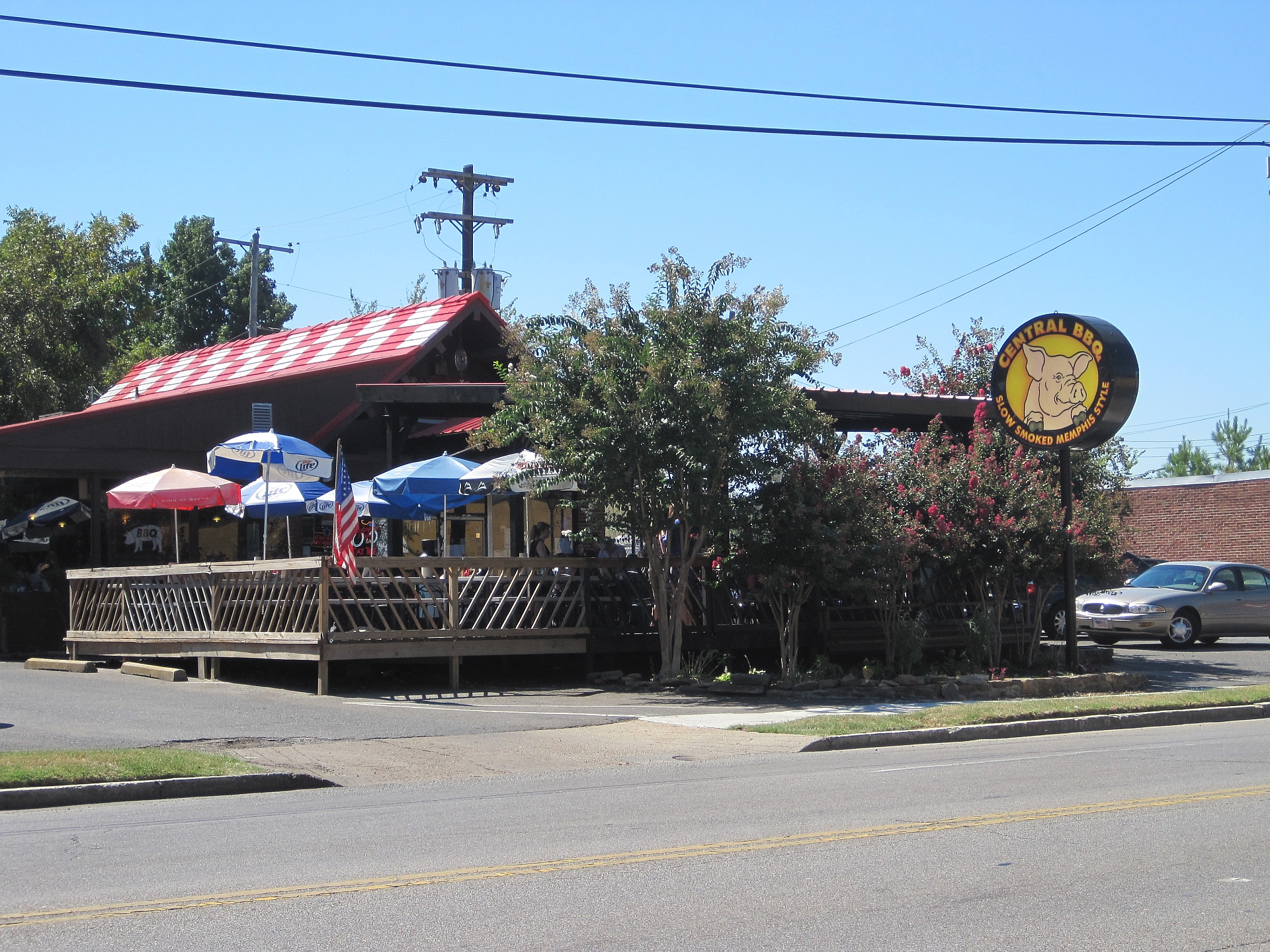
The Broad Avenue Arts District is a roughly half-mile stretch of Broad Avenue in the Binghampton neighborhood of Memphis, made up of early-20th-century commercial storefronts that were largely vacant by the 1990s and have since been reoccupied by galleries, artist studios, small manufacturers and a brewery. It is not an official city ward but a working name used by the businesses and property owners along the strip.
Where exactly is Broad Avenue, and what neighborhood is it in?
Broad Avenue runs through Binghampton, a neighborhood east of Midtown and north of the Poplar/East Parkway corridor. The arts district portion generally covers the stretch of Broad between Hollywood Street and Sam Cooper Boulevard, close to the eastern edge of Overton Park. It sits within walking distance of the Binghampton residential streets that give the neighborhood its name, and it is one of several small commercial districts that have been redeveloped piece by piece across Memphis’s older streetcar suburbs.
Readers comparing it to the city’s other arts corridors can find background on two others in the same category: Cooper-Young in Midtown and South Main downtown. All three follow a similar pattern — a commercial strip built for an early automobile-and-streetcar era, emptied out through the mid-20th century, and reoccupied later by independent businesses rather than chains.
Why is it called an “arts district” specifically?
The name reflects who moved in during the strip’s revival: galleries, working studios and design-oriented small businesses rather than a general retail mix. The buildings themselves date largely to the 1910s–1930s, built as one- and two-story brick storefronts to serve the streetcar suburb growing around them. Binghampton’s commercial core declined along with much of Memphis’s older streetcar-era retail once shopping shifted to strip malls and suburban centers after World War II, leaving a corridor of intact but underused buildings.
Local planning and neighborhood-development accounts describe a concentrated push to reoccupy the strip beginning around 2010, when property owners, artists and neighborhood advocates began marketing the vacant storefronts specifically to galleries and creative businesses rather than waiting for conventional retail tenants. That branding — an “arts district” built out of empty commercial space — is what separates Broad Avenue from a conventional shopping street.

What is actually on Broad Avenue now?
The district’s makeup has always leaned toward galleries, studio space and a small number of destination businesses rather than a dense retail strip. Among the businesses with a public, checkable presence on Broad Avenue is Wiseacre Brewing Company, a Memphis-based brewery whose taproom sits on the avenue; readers should confirm current hours and tours on the brewery’s own site, since taproom schedules change. The strip also includes long-running art galleries and studio spaces that show and sell local work, alongside design, framing and small-scale maker businesses that occupy the older storefronts.
Because tenancy on a small commercial strip turns over, this site does not list every current business by name — a reader planning a visit is better served by checking what is open now rather than relying on a fixed list here.
What is the Hampline, and how does it connect to the district?
The Hampline is a protected, two-way bicycle and pedestrian path built by the City of Memphis along part of Broad Avenue, connecting the district to the Shelby Farms Greenline — the paved rail-trail that runs east toward Shelby Farms Park — via an elevated crossing near Tillman Street. It was built as part of the city’s broader complete-streets work and is one of the more visible pieces of infrastructure tying Binghampton’s commercial strip to the regional greenway network.
For a resident or a visitor arriving by bike, the Hampline is the most direct route into the district from the Greenline; for anyone driving or arriving by other means, Broad Avenue itself carries regular vehicle traffic and on-street parking, and it is not served by the downtown trolley system, which operates on a separate, unrelated line. General background on how the city’s transit and bike infrastructure fits together is covered in the Getting Around archive.
Does the district hold regular art walks or events?
Yes, in pattern if not in fixed date. Arts districts of this kind typically hold periodic open-studio nights or gallery walks timed to draw evening foot traffic, and Broad Avenue’s merchants and galleries have followed that model in various forms over the years. Because exact schedules, and even which specific event name is currently in use, change from year to year, readers should check current listings directly with the district’s galleries and businesses rather than relying on a date printed here. The same caution applies to any Memphis neighborhood event described elsewhere on this site — see the general seasonal patterns covered in the Memphis guide hub.
How does Broad Avenue fit into Binghampton as a neighborhood?
Binghampton is a residential neighborhood that predates the arts district by decades, and the commercial strip’s revival has been explicitly tied to broader neighborhood investment rather than treated as a stand-alone attraction. Community development work in Binghampton — housing rehabilitation, small-business support, neighborhood planning — has been carried out in part by local community development corporations working in the area, and the arts district is generally discussed by those groups as one piece of that wider effort rather than the whole of it.
That distinction matters for anyone trying to understand the district accurately: it is a commercial revitalization project sitting inside a larger, ordinary residential neighborhood, not a purpose-built entertainment zone. Readers interested in how Memphis’s neighborhoods function day to day, beyond the commercial strips that get written about, can start with Living in Memphis and the Neighbourhoods archive.
How does it compare to Midtown’s other arts and entertainment strips?
Broad Avenue is smaller and more gallery-focused than Midtown’s Overton Square, which is built around restaurants, theaters and bars rather than visual art. Background on that district is available at what Overton Square is and how it developed. Broad Avenue also sits apart from the main body of Midtown proper — for the boundaries and character of Midtown itself, see what Midtown Memphis is and why residents treat it as the real city. Together, these districts illustrate a pattern that recurs across Memphis: an older commercial corridor, emptied by mid-century suburbanization, reoccupied later by a specific kind of business — art in Binghampton, nightlife in Midtown, antiques and cafés in Cooper-Young — that gives each strip its identity.
Is there a museum or formal collection associated with the district?
No. Broad Avenue is a commercial and gallery strip, not a museum campus, and it does not hold a permanent public collection in the way an institution does. Readers looking for Memphis’s formal art holdings should look to the city’s museums directly — coverage of those collections, including which offer free admission windows, is in the Museums & Galleries archive and at which Memphis museums are free, and when to visit.
What should a visitor actually expect on a visit?
A short walkable strip of storefronts rather than a large district — the whole of Broad Avenue’s arts stretch covers a few blocks, not a neighborhood-sized area. Parking is generally on-street. Hours for individual galleries and studios vary widely and many are not open every day, so checking ahead with a specific business is more reliable than assuming standard retail hours. For general planning around Memphis visits, including how districts like this one fit into a wider itinerary, see the Memphis practical hub.
Access Memphis is an independent guide written from published, checkable sources. We have not visited the places described here and we do not publish personal recommendations or invented ‘local favourites’ — where something is singled out as notable, we say who says so. Opening times, fares, closures and prices change at short notice, so treat everything here as a starting point and confirm with the museum, operator or venue directly before building a day around it. We give no advice on visas, insurance, health or safety; use your own government’s official guidance for those.
Featured image: Photo by Thomas R Machnitzki, source, CC BY 3.0
