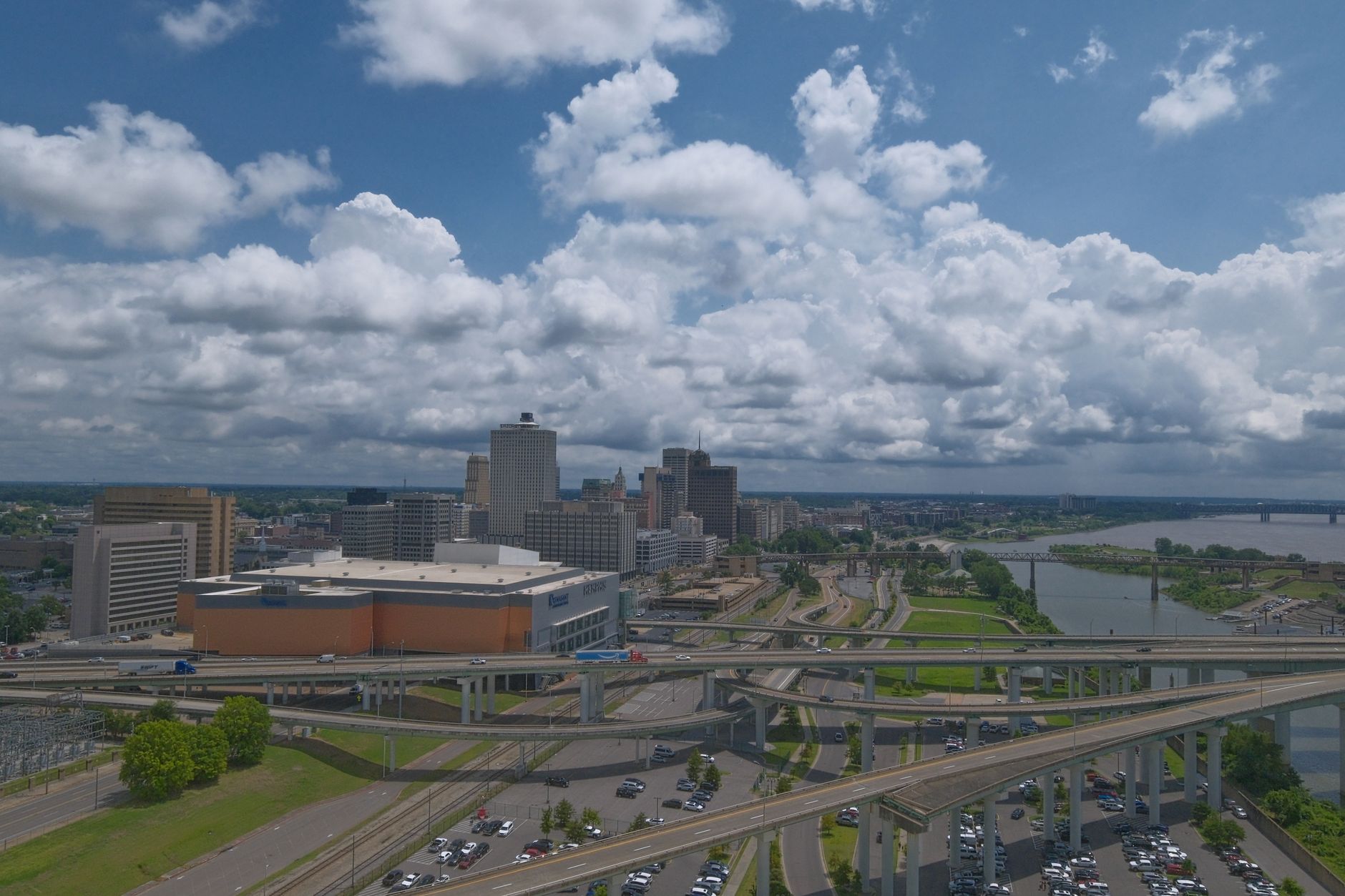
Memphis, Germantown and Collierville are three separately incorporated places in Shelby County, Tennessee. Memphis is the large, historic anchor city on the Mississippi bluff; Germantown and Collierville are smaller, independently governed municipalities to its east, each with its own mayor, police department and school system. They are neighbors, not districts of one city.
Are Germantown and Collierville part of Memphis?
No. Both are their own incorporated municipalities within Shelby County, with their own city or town governments, separate from the City of Memphis. A resident of Germantown or Collierville pays taxes to that municipality and to Shelby County, not to the City of Memphis, and votes in that town’s local elections rather than Memphis’s. The three places share a county, a metropolitan area and, in practice, a single commuting and shopping region — but they are administratively distinct.
How are the three governed differently?
Memphis operates under a mayor-council form of government and is by far the largest municipality in Tennessee by population, according to U.S. Census Bureau estimates (figures should be checked directly at census.gov, since they are updated annually). Germantown and Collierville each have their own municipal governments — an elected mayor and board of aldermen in each case — and each maintains its own police and fire departments, separate from the Memphis Police Department and Memphis Fire Department. Both towns publish their own municipal codes and budgets on their official city sites, which are the authoritative source for anything current about local services.
Where do Germantown and Collierville actually sit?
Both lie east of Memphis proper, along the Poplar Avenue and U.S. 72 corridors. Germantown borders Memphis directly, sitting just east of the neighborhoods described in Access Memphis’s guide to East Memphis and its boundaries. Collierville sits farther out again, southeast of Germantown, close to the Fayette County line — it is generally the easternmost of Shelby County’s incorporated suburbs. Driving from downtown Memphis to Collierville crosses through East Memphis and Germantown in sequence, which is one reason the three names get used almost interchangeably by people unfamiliar with the county’s actual map.
Why did Germantown and Collierville stay separate from Memphis?
Memphis grew for much of the twentieth century by annexing adjoining land, extending its city limits well beyond the original bluff-top settlement described in the guide to Downtown Memphis’s boundaries. Germantown and Collierville, both incorporated in the nineteenth century as their own towns, were not absorbed in those annexation waves and remained self-governing. Tennessee law on municipal annexation has shifted over the decades, and both towns’ own official histories describe periods of active resistance to being annexed by Memphis, particularly as Memphis’s boundaries expanded toward them in the later twentieth century. The result is a county map with one large city ringed by several smaller, fully independent towns — Germantown and Collierville among them, alongside places such as Bartlett, Arlington, Lakeland and Millington.

Do Memphis, Germantown and Collierville have different school systems?
Yes, and this is one of the sharpest administrative differences among the three. Memphis City Schools and Shelby County Schools merged into a single countywide district in 2013. Tennessee’s legislature subsequently permitted the county’s suburban municipalities, including Germantown and Collierville, to withdraw and form their own municipal school districts, which they did starting in the 2014–2015 school year. Germantown Municipal School District and Collierville Schools now operate independently of the district serving Memphis, which is known today as Memphis-Shelby County Schools. Anyone researching schools for either area should check the relevant district’s own site, and the Tennessee Department of Education’s school directory, rather than relying on older references to “Shelby County Schools” covering the whole county — it no longer does.
What does each place look like on the ground?
Memphis contains the century-plus urban fabric that most guides to the city describe: a working downtown grid, Midtown’s older residential districts, and a long list of museums and landmarks concentrated near the river and along Union and Poplar. Access Memphis’s guide to museums, landmarks and neighborhoods and its neighborhoods archive cover this ground in detail, from Midtown to Soulsville.
Germantown and Collierville, by contrast, developed mainly as post-war and later-twentieth-century suburban growth — subdivisions, shopping centers and, in Collierville’s case, a preserved historic town square around its old rail depot. Neither town’s official site claims the density of civic and cultural institutions that Memphis itself holds; both are primarily residential and retail towns whose own municipal websites are the accurate source on parks, municipal facilities and local historic sites, rather than any secondhand description.
Does the distinction matter for a visitor?
It matters mainly for logistics. Almost everything commonly associated with a Memphis trip — Beale Street, Graceland, the Stax Museum, the National Civil Rights Museum, the riverfront — sits inside Memphis’s own city limits, not in Germantown or Collierville. Access Memphis’s practical hub on getting around, food and the riverfront and the getting-around archive are built around movement within the city itself. A visitor whose lodging happens to be in Germantown or Collierville is staying in a separate town with its own retail and dining options, at some driving distance from downtown Memphis, and should plan travel time accordingly rather than assuming proximity.
Does it matter for someone who actually lives in the area?
Considerably more than it does for a visitor. Property taxes, school enrollment, municipal services, local elections and even which police department responds to a call all depend on which of the three jurisdictions a given address sits in — and the boundary lines are not always obvious on the ground, since Memphis, Germantown and Collierville abut each other without a natural break. Anyone moving within Shelby County should confirm municipal jurisdiction directly with Shelby County’s own property and elections offices, rather than assuming a neighborhood’s informal name settles the question. Access Memphis’s hub on living in Memphis covers the city side of this in more depth, including how city services and neighborhood character vary within Memphis’s own limits — a distinction that is separate again from, but often confused with, the Memphis–Germantown–Collierville divide covered here.
The short version
- Memphis is the county’s large, historic core city, with its own mayor-council government and the bulk of the region’s museums and landmarks.
- Germantown is a separately incorporated town directly east of Memphis, with its own government, police and school district.
- Collierville is a separately incorporated town farther east again, likewise self-governing, with its own school district since the 2014–2015 split from the countywide system.
- All three sit within Shelby County, Tennessee, but function as distinct municipalities — not as neighborhoods of one another.
Access Memphis is an independent guide written from published, checkable sources. We have not visited the places described here and we do not publish personal recommendations or invented ‘local favourites’ — where something is singled out as notable, we say who says so. Opening times, fares, closures and prices change at short notice, so treat everything here as a starting point and confirm with the museum, operator or venue directly before building a day around it. We give no advice on visas, insurance, health or safety; use your own government’s official guidance for those.