What is the Medical District?
The Medical District is a concentrated area of hospitals, research institutions and a health sciences university just west of Downtown Memphis. It is not a residential or entertainment neighborhood in the usual sense — it is an employment and treatment center, home to St. Jude Children’s Research Hospital, Le Bonheur Children’s Hospital, Regional One Health, Methodist University Hospital and the University of Tennessee Health Science Center (UTHSC).
Where is the Medical District, and what are its boundaries?
The district sits in the corridor between Downtown Memphis and Midtown, along and around Union Avenue, with Danny Thomas Boulevard — named for St. Jude’s founder — running through its eastern side. Its edges are not fixed by any city zoning line in the way a neighborhood’s might be; instead, the district is defined functionally, by the cluster of hospital, university and research campuses that occupy it, and by the coordinating body that represents them, the Memphis Medical District Collaborative.
It borders Victorian Village to the north and shares its western edge with residential Midtown streets. Because of this location, it is walkable from parts of Downtown and reachable by several Memphis Area Transit Authority (MATA) bus routes; the operator’s own site is the source to check for current routes and schedules.
What institutions make up the Medical District?
The district is organized around a small number of large, nationally known institutions rather than shops or attractions. The core anchors are:
- St. Jude Children’s Research Hospital — a pediatric treatment and research hospital founded by entertainer Danny Thomas, focused on catastrophic childhood diseases including cancer; St. Jude’s own site describes treatment and research as inseparable at the hospital.
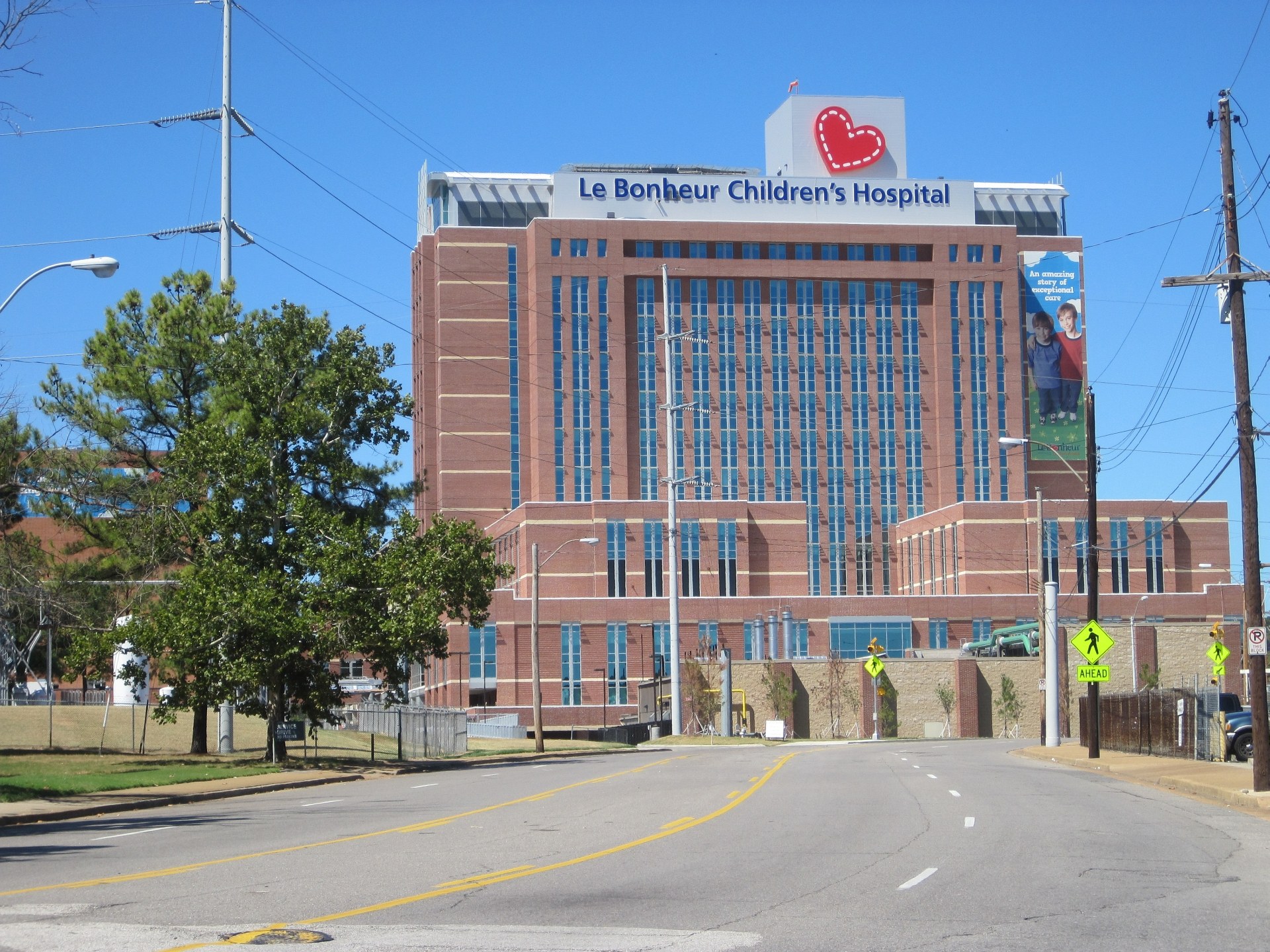
- Le Bonheur Children’s Hospital — a pediatric hospital and teaching affiliate of UTHSC, serving as a regional referral center for children’s care.
- Regional One Health — formerly known as the Regional Medical Center at Memphis, and still often called “the Med” locally; it operates the region’s only Level 1 trauma center, a designation confirmed by the hospital’s own site.
- Methodist University Hospital — the flagship academic hospital of Methodist Le Bonheur Healthcare, affiliated with UTHSC for physician training.
- University of Tennessee Health Science Center (UTHSC) — a graduate and professional campus with colleges of medicine, dentistry, pharmacy, nursing and health professions, according to the university’s own site.
- A Veterans Affairs medical center serving the Memphis region also sits within the district.
Together these institutions make the Medical District one of the largest single concentrations of hospital beds, medical research and health sciences education in the Mid-South, a role the Neighbourhoods archive on this site treats alongside the city’s other functionally distinct districts.

What is the Memphis Medical District Collaborative?
The Memphis Medical District Collaborative (MMDC) is a nonprofit formed by the district’s anchor institutions to coordinate development, streetscape improvements and public safety programs across the area. MMDC’s own site describes its work as covering land use, transportation and greenspace projects intended to connect the district’s campuses to one another and to surrounding neighborhoods, rather than acting as an owner or operator of any single hospital.
This matters for how the district functions day to day. Individually, St. Jude, Le Bonheur, Regional One, Methodist and UTHSC operate as separate institutions with their own governance, staff and patients. MMDC’s role is coordination — pedestrian infrastructure, bike lanes, lighting and shared planning — across an area that grew up piecemeal, hospital by hospital, over more than a century.
How does the Medical District connect to Downtown and Midtown?
The district functions as a hinge between Downtown and Midtown rather than a destination in its own right. Danny Thomas Boulevard and Union Avenue both run through it toward Downtown’s core, and the district’s western streets shade into residential Midtown blocks near Victorian Village. Anyone tracing Memphis’s Downtown boundary or Midtown’s edges on a map will find the Medical District named as the transitional zone between the two, a point covered in more detail in this site’s guide to Downtown Memphis’s own boundaries and its companion piece on what defines Midtown.
The district also sits within a short distance of Crosstown Concourse, the former Sears distribution center now redeveloped as a mixed-use building that includes health and wellness tenants of its own, though Crosstown is a separate Midtown project and not formally part of the Medical District.
Is there anything for a visitor to see in the Medical District?
The Medical District is not built around tourism, and this site does not present it as a sightseeing stop. Its buildings are working hospitals, laboratories and university facilities, and access to most of them is restricted to patients, staff, students and, in some cases, ticketed public tours run by the institutions themselves — St. Jude, for example, publishes its own visitor information for anyone wanting to see what the hospital shares publicly.
Visitors moving between Downtown’s civil rights sites and Midtown’s museum cluster will typically pass along or near the district’s edges rather than stopping inside it. The broader shape of a Memphis visit — how the city’s museums, landmarks and neighborhoods relate to one another — is laid out in the Memphis guide hub.
How does the Medical District affect people who live in Memphis?
For residents, the Medical District’s significance is mostly economic and medical rather than social. It is one of the city’s largest employment centers, and Regional One Health’s trauma center makes the district a critical piece of regional emergency care infrastructure, not just a local hospital cluster. St. Jude’s research programs also draw scientists, physicians and their families to the city from outside the region, a pattern that shapes housing demand in the surrounding Midtown and Downtown-adjacent neighborhoods.
Residents navigating the city day to day are more likely to encounter the district through traffic patterns along Union Avenue and Danny Thomas Boulevard, through MATA bus routes that run through it, or through employment at one of its institutions, than through any recreational use of the area itself. The Living in Memphis hub covers this kind of practical, resident-facing detail across the city more broadly.
How do you get to and around the Medical District?
Because the district sits adjacent to Downtown, it is within walking distance of some Downtown blocks and reachable by MATA bus service; MATA’s own site is the source to confirm current routes, since bus schedules and stops change over time. Drivers should expect hospital-adjacent traffic patterns, particularly around shift changes and near emergency entrances, and should not expect casual street parking near the larger campuses.
For a wider view of how to move through Memphis without a car — buses, trolleys and the layout of Downtown’s rail terminus — the Memphis practical hub and the site’s Getting Around archive cover the mechanics of the city’s transit system in more detail than any single district page can.
Access Memphis is an independent guide written from published, checkable sources. We have not visited the places described here and we do not publish personal recommendations or invented ‘local favourites’ — where something is singled out as notable, we say who says so. Opening times, fares, closures and prices change at short notice, so treat everything here as a starting point and confirm with the museum, operator or venue directly before building a day around it. We give no advice on visas, insurance, health or safety; use your own government’s official guidance for those.