
A car-free day in Memphis works if it stays inside one compact zone — downtown, South Main and the riverfront — using the Main Street Trolley, MATA buses and walking, plus rideshare for the gaps. It does not work as a plan to see Graceland, Stax and Sun Studio in the same day; those sit miles apart and need a car, a taxi or an organized transfer.
What Does “Without a Car” Actually Mean Here?
Memphis is a low-density city built around arterial roads, and most of its notable sites are spread across neighborhoods that were never designed to be walked between. A car-free day, realistically, means choosing one cluster of the city and staying inside it, rather than trying to string together attractions that happen to share a name recognition but sit six or eight miles apart.
The one cluster that genuinely works this way is downtown Memphis, running from the riverfront east to about Danny Thomas Boulevard, with South Main and the Edge District as its southern and northern extensions. This is the only part of the city where a visitor can plausibly go from breakfast to a museum to dinner without a vehicle at any point. The site’s own guide to which Memphis neighborhoods actually work on foot lays out why this particular footprint holds together and most others don’t.
How Do You Get Around Downtown Without a Car?
Downtown Memphis is served by three things that don’t require driving: the Main Street Trolley, the MATA bus network, and a short walk between most points of interest. Between them, they cover the riverfront, Beale Street, South Main and the civil rights sites without a gap that requires a vehicle.
The Main Street Trolley is a heritage rail line run by MATA — the Memphis Area Transit Authority — along Main Street through downtown, with a spur along the riverfront. It is not a novelty ride; it is a working transit line with fixed stops, and its route and current fare are set out on the site’s explanation of what the Main Street Trolley is and where it runs. MATA’s own site (matatransit.com) carries the current timetable and fare, and that is the source to check before relying on it for a specific departure.
MATA also runs the city’s bus network, which reaches well beyond downtown into Midtown, the Medical District and further out — useful if the day’s plan needs to stretch past the immediate core. The structure of that network, including how routes radiate from downtown rather than crossing the city on a grid, is covered in the site’s guide to what MATA is and how the bus network functions.
What Can a Car-Free Day Actually Include?
Inside the downtown footprint, a car-free day can reasonably include a civil rights site, a stretch of the riverfront, one or two museums, and Beale Street, in roughly that order, without needing anything beyond the trolley and a pair of legs.
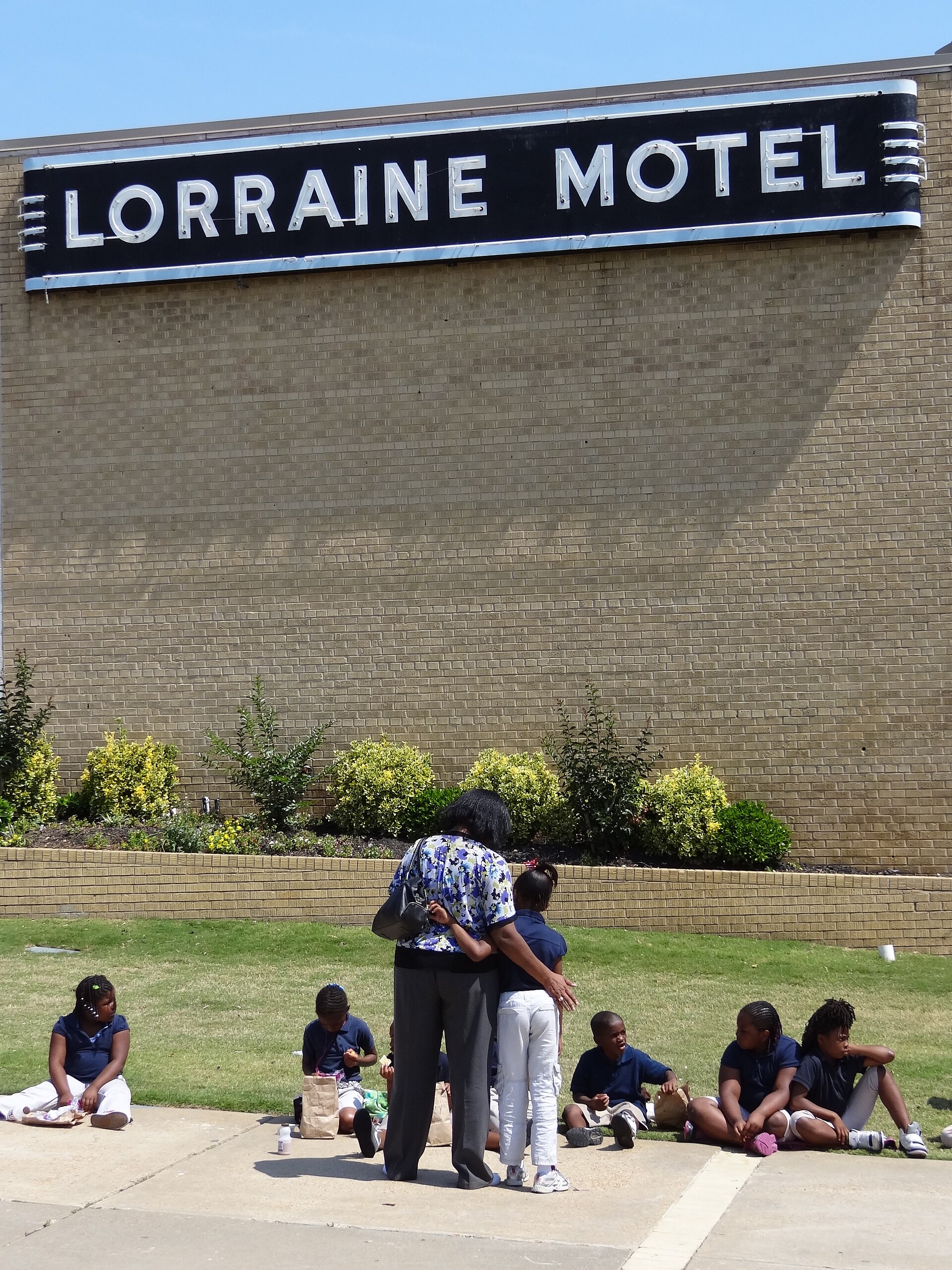
- The National Civil Rights Museum, built around the former Lorraine Motel where Dr. Martin Luther King Jr. was assassinated in 1968 — the museum’s own site describes its exhibits and the preserved motel structure.
- The Beale Street Historic District, which the National Park Service and the National Register of Historic Places both recognize as a listed historic district, not simply a nightlife strip.
- South Main Arts District, a walkable stretch of former warehouse and rail buildings now holding galleries and the trolley’s southern stops, covered in the site’s explanation of the South Main Arts District.
- The riverfront itself, including Tom Lee Park and the pedestrian routes along the bluff, which the city’s own riverfront plan treats as a connected public space rather than a series of separate parks — set out in the site’s account of the Memphis riverfront loop.
A structured route through this exact footprint, stop by stop, is laid out in the site’s walking route through downtown Memphis, which is worth reading before setting out, since it accounts for the actual distances involved rather than assuming they’re all adjacent.

What Is Off Limits Without a Car?
Graceland, in Whitehaven, and Stax in Soulsville sit south of downtown and are not within walking distance of it or of each other. Sun Studio, on Union Avenue, is closer to downtown but still a genuine walk or short ride away, not an extension of the Beale Street footprint.
The distances between these four sites — Beale Street, Sun Studio, Stax and Graceland — are laid out plainly in the site’s breakdown of how far apart they actually are, and the short version is that Graceland and Stax require a car, a taxi, rideshare or a scheduled shuttle service, not a walk. A day built specifically around music history, including how to reach these sites without driving yourself, is covered separately in the site’s account of a Memphis day built around music.
The broader question of whether a car is necessary for a Memphis visit at all — and where the honest line falls between “walkable” and “you’ll need a ride” — is addressed directly in the site’s honest answer on whether you need a car in Memphis.
How Does the Trolley and Bus Fare System Work?
MATA fares are structured around a flat per-ride cost with a pass option for unlimited rides across a day, rather than a distance-based fare system. The specific current amounts should be confirmed on MATA’s own site before travel, since fares and hours are exactly the kind of detail that changes and is wrong within a season if repeated as fixed.
What is durable is the shape of it: single rides, day passes and the trolley operate under the same agency, and a day pass generally makes sense for anyone planning more than two or three rides in a single day, whether by bus or trolley.
What About Getting Downtown From the Airport Without a Car?
Memphis International Airport sits south of downtown, and a car-free day has to start with how that leg is covered, since it is not within trolley or easy walking range. The realistic options — rideshare, taxi and any scheduled shuttle — are laid out in the site’s guide to getting from Memphis airport into the city, which is worth reading before assuming the whole day can be done without any paid ride at all.
Is This a Reasonable Plan for a Resident, Not Just a Visitor?
For someone who lives in or near downtown, a genuinely car-free day is a routine possibility rather than a novelty, since the trolley, MATA buses and a walkable core cover groceries, the riverfront and most errands inside that footprint. It becomes a harder proposition further out.
Midtown, East Memphis, the suburbs of Germantown and Collierville, and most residential neighborhoods were built for driving, and MATA’s bus network, while it reaches these areas, runs on a schedule built around lower frequency than a downtown resident might expect. The practical reality of daily life without a car — what it changes about grocery runs, work commutes and evenings out — is covered more fully in the site’s hub on living in Memphis, and the transport backbone underneath it in the site’s Getting Around section.
What’s the Honest Summary?
A single car-free day in Memphis works cleanly if it stays inside downtown, South Main and the riverfront, using the trolley and walking as the backbone. It stops working the moment the plan reaches for Graceland, Stax or the suburbs in the same twelve hours — at that point, a car, a taxi or rideshare stops being optional and becomes the plan.
Anyone building a longer visit around this constraint should look at how the city’s own itinerary planning handles it across more than one day, covered in the site’s guide to spending two days in Memphis and the wider planning resources at the site’s practical hub for getting around and planning a Memphis visit.
Access Memphis is an independent guide written from published, checkable sources. We have not visited the places described here and we do not publish personal recommendations or invented ‘local favourites’ — where something is singled out as notable, we say who says so. Opening times, fares, closures and prices change at short notice, so treat everything here as a starting point and confirm with the museum, operator or venue directly before building a day around it. We give no advice on visas, insurance, health or safety; use your own government’s official guidance for those.
Featured image: Photo by Adam Jones, Ph.D., source, CC BY-SA 3.0
