What is Victorian Village?
Victorian Village is a small historic district in Downtown Memphis, centered on Adams Avenue, made up of large houses built for the city’s merchant and cotton elite in the second half of the 19th century. It is a residential and institutional street of surviving mansions, not a shopping or entertainment strip, and it is listed on the National Register of Historic Places.
Where is Victorian Village in Memphis?
The district runs along Adams Avenue in Downtown Memphis, roughly between Danny Thomas Boulevard and Manassas Street, a short distance north of the core of downtown and within the area now anchored by the University of Tennessee Health Science Center and the wider Memphis Medical District. It sits close enough to downtown to be reached on foot from Court Square or the riverfront, though the surrounding blocks today are dominated by hospital and university buildings rather than the residential streetscape the mansions were originally built into.
Why do the houses look the way they do?
Adams Avenue was known locally as “Millionaires’ Row” in the decades after the Civil War, when Memphis’s cotton brokers, merchants and bankers built houses there to signal their wealth. The surviving mansions reflect the architectural fashions of that money: Italianate massing, French Second Empire mansard roofs, and later Colonial Revival and Queen Anne detailing, often layered onto a single house as families remodeled to keep up with changing taste across the 1850s to 1890s. The result is not a uniform streetscape but a run of individually grand, individually dated houses standing where dozens once stood.
What buildings are still standing?
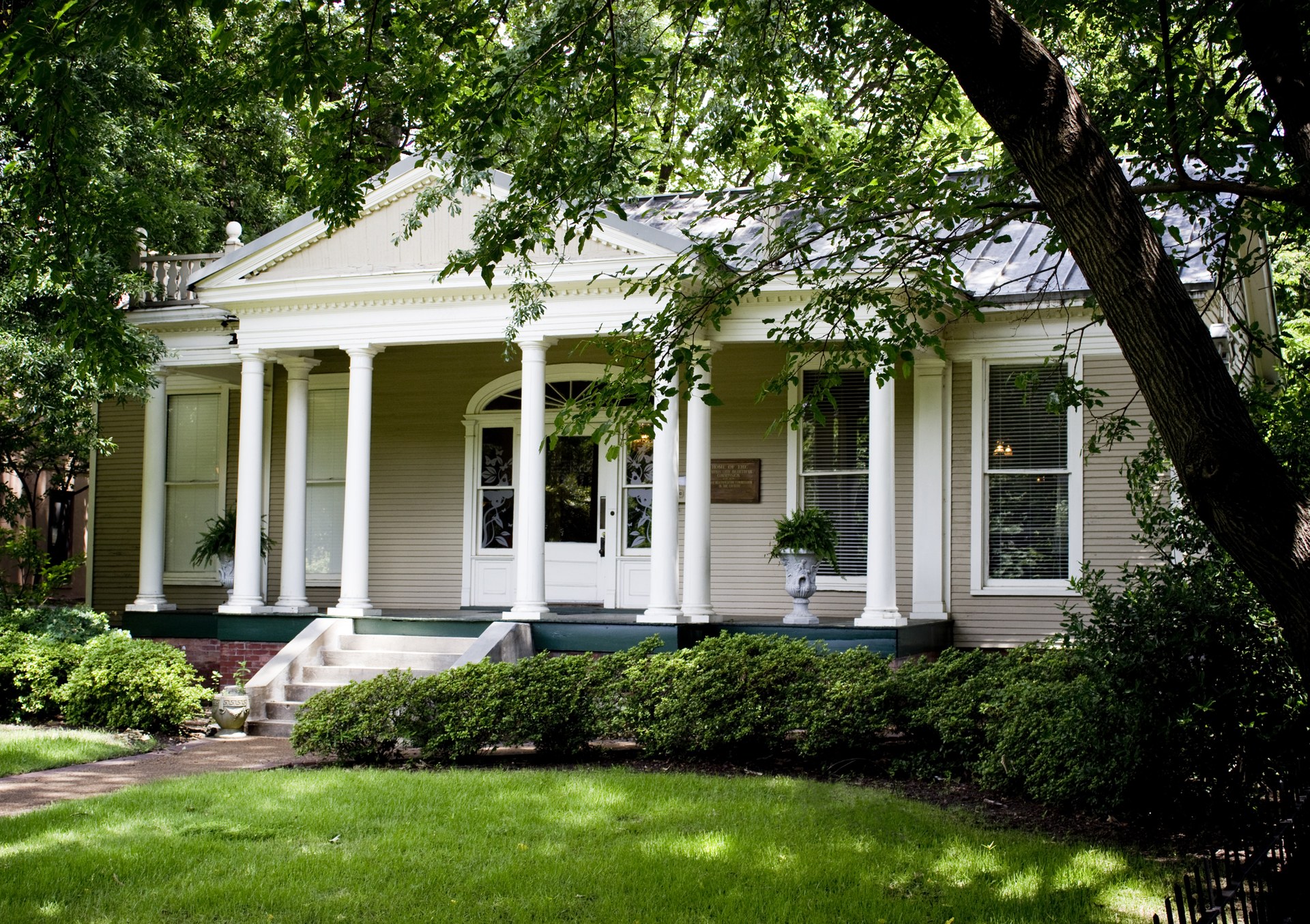
Most of the original Millionaires’ Row has been lost to demolition and to the expansion of the medical district around it. A handful of mansions survive and anchor the district today:
- Mallory-Neely House — an Italianate mansion built in the 1850s and substantially remodeled later in the 19th century by the Mallory and Neely families. It has historically been part of the city’s Pink Palace family of museums; tours have been suspended for extended periods over the years, so current public access should be confirmed on the museum’s own site.
- Woodruff-Fontaine House — a French Second Empire mansion built around 1870, distinguished by its mansard roof and elaborate exterior detailing. It is operated as a house museum by the Association for the Preservation of Tennessee Antiquities, which maintains its own schedule for tours and events.
- James Lee House — one of the older structures on the row, originally built in the mid-19th century and enlarged later. It stood vacant and deteriorating for decades before a private restoration returned it to use; it now operates as a bed-and-breakfast rather than a public museum, so it is worth thinking of as a preserved building rather than a sight to tour.

Can you go inside any of the houses?
Access varies by building and changes over time, which is exactly the kind of detail this site will not pin to a fixed figure. The Woodruff-Fontaine House, run by the Association for the Preservation of Tennessee Antiquities, is the one most consistently set up for public tours; the Mallory-Neely House’s status as a tourable museum has shifted with city budget cycles; the James Lee House functions as private lodging. Anyone planning to see the interiors should check the operating organization’s own site before visiting, rather than relying on a schedule printed elsewhere.
How does Victorian Village fit into the rest of Memphis history?
The wealth that built Adams Avenue came overwhelmingly from cotton — Memphis was the interior cotton market for the Mid-South, and the district’s fortunes track the same trade documented at the Cotton Museum at the Memphis Cotton Exchange. As downtown Memphis grew outward and the medical district expanded around Adams Avenue in the 20th century, most of the row’s houses were demolished for institutional buildings; the small number that remain are what is left of a much larger residential street. That pattern — a grand 19th-century district reduced to a handful of protected structures inside a changed city — is common across Memphis’s landmarks and historic sights, and Victorian Village is one of the clearer surviving examples of it.
Is Victorian Village connected to any other Memphis museums?
The Mallory-Neely House’s link to the city’s Pink Palace museum system connects Victorian Village to the wider Pink Palace Museum of Science and History, which covers Memphis’s broader civic and natural history rather than a single house. For readers building out a fuller picture of the city’s preserved house museums and archival collections, the Museums & Galleries archive covers comparable properties, including the domestic history held at Slave Haven and the Burkle Estate, another surviving 19th-century Memphis house with its own documented record.
What is it like to visit or live near Victorian Village today?
For a visitor, Victorian Village is a short, specific stop rather than a district to wander for an afternoon: a few blocks of Adams Avenue with two or three house museums and a handful of institutional buildings around them. For a resident, the area reads mostly as an extension of the Memphis Medical District — hospitals, university buildings and parking rather than housing — with the surviving mansions functioning as protected landmarks inside a working institutional campus rather than as a residential neighborhood in daily use. Details on how the district sits relative to downtown, transit and the rest of the city’s historic core are covered in the Memphis guide hub, and broader context on what living in the city day to day actually involves is in Living in Memphis.
How do you get to Victorian Village?
Adams Avenue is within walking distance of downtown Memphis, including Court Square and the area around Central Station, which is the city’s rail and regional transit hub. Anyone routing a visit by public transit, rideshare or car should treat parking and street access as changeable around the medical district’s own schedule, and confirm current conditions rather than assume a fixed layout. General notes on moving around downtown and planning a route between sights are covered in Memphis practical planning and in the Getting Around archive.
What should a reader take away from Victorian Village?
Victorian Village is best understood as a fragment: a handful of 19th-century mansions that survive from a much longer row of merchant houses, preserved individually rather than as an intact streetscape, and now surrounded by a modern medical and university campus. What each house is — its architecture, its family history, its operating status as a museum or private property — is documented separately by the National Register of Historic Places and by the organizations that maintain each building, and those are the sources worth checking directly before visiting.
Access Memphis is an independent guide written from published, checkable sources. We have not visited the places described here and we do not publish personal recommendations or invented ‘local favourites’ — where something is singled out as notable, we say who says so. Opening times, fares, closures and prices change at short notice, so treat everything here as a starting point and confirm with the museum, operator or venue directly before building a day around it. We give no advice on visas, insurance, health or safety; use your own government’s official guidance for those.
Featured image: Photo by Thomas R Machnitzki, source, BY