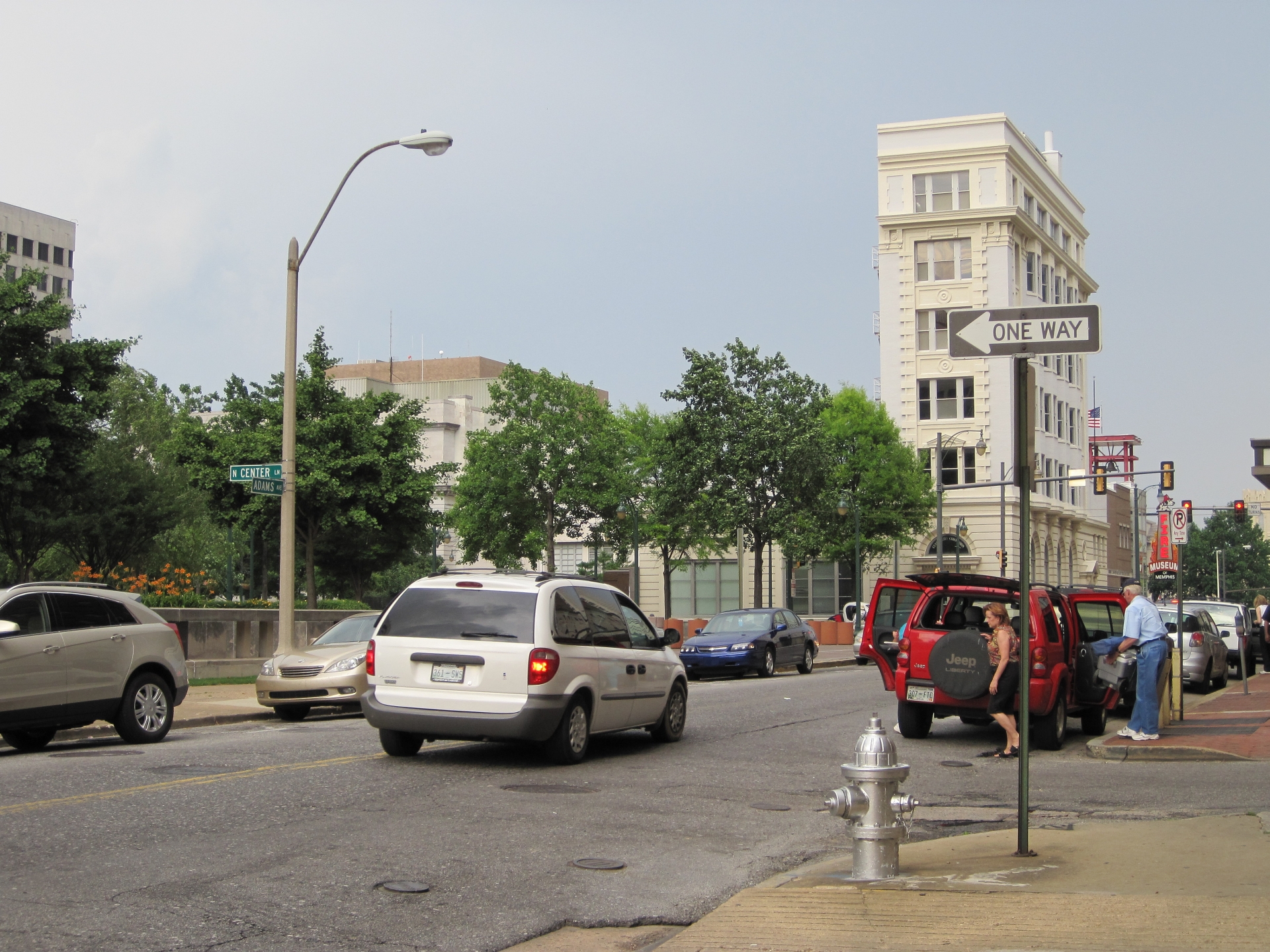
A single walking route can connect downtown Memphis’s core sites in roughly two to two and a half miles: from South Main and the National Civil Rights Museum, north through Beale Street and Court Square, past the Peabody Hotel, to the Mississippi River at the Memphis Pyramid. Most of it runs flat, on sidewalks, with the Main Street Trolley as a backup for tired legs.
How long is this walking route through downtown Memphis?
Point to point, the route covers roughly two to two and a half miles and takes most walkers two to three hours without stopping inside anything. Add museum visits — particularly the National Civil Rights Museum, which typically holds people for over an hour — and a half-day is realistic.
The route is not a loop unless the walker chooses to make it one by returning along Front Street or the riverfront path. Downtown Memphis’s own boundaries are compact enough that this makes sense; the district’s edges and how they’re generally understood are covered in more detail at downtown Memphis’s boundaries, explained.
Where does the route start, and why South Main?
South Main is the logical starting point because it holds both a transit anchor and the route’s most consequential stop. Central Station, the restored early-1900s rail depot, anchors the south end of downtown and now functions as a mixed-use building with an Amtrak platform still in use — background on the building itself is at Central Station, explained.
From there, the walk moves north through the South Main Arts District, a stretch of Main Street lined with converted warehouse buildings, several galleries, and the trolley tracks. What defines the district and how it functions day to day is set out at the South Main Arts District, explained.
What does the route pass at the National Civil Rights Museum?
A few blocks north, the route reaches the former Lorraine Motel, where Dr. Martin Luther King Jr. was assassinated on April 4, 1968. The building is now the National Civil Rights Museum, and its own site describes the museum as built around the preserved motel room and balcony, with exhibits tracing the civil rights movement from the era of enslavement forward. Details on what the museum holds are at the National Civil Rights Museum at the Lorraine Motel; the museum’s own site is the authority for current hours and admission (civilrightsmuseum.org).
Nearby, the I Am A Man Plaza marks the 1968 Memphis sanitation strike, the labor action King had traveled to Memphis to support. What the plaza commemorates and how it’s laid out is covered at I Am A Man Plaza, explained.
How does Beale Street fit into the walk?
Beale Street sits roughly ten minutes’ walk north of the Lorraine Motel, and the route crosses it as a matter of geography rather than as a detour. The National Park Service lists the Beale Street Historic District for its role in the development of blues music and Black commercial life in Memphis from the late 1800s onward. What the street is today — a several-block entertainment district with live music venues, largely under one ownership group — is explained at what Beale Street actually is.
At Beale and Main, the Orpheum Theatre is a rebuilt 1920s vaudeville and movie palace that now hosts touring Broadway productions and concerts; its history and current programming are outlined at the Orpheum Theatre, explained.

What’s at Court Square and the Shelby County Courthouse?
Continuing north on Main Street, the route reaches Court Square, one of the four original public squares laid out in the 1819 plan for Memphis. A block further sits the Shelby County Courthouse, a Beaux-Arts building completed in 1909 that still functions as a working courthouse. Its architectural and historical standing is discussed at the Shelby County Courthouse, explained.
This stretch of Main Street is also where the Main Street Trolley line runs, a heritage streetcar service operated as part of MATA, the Memphis Area Transit Authority. Walkers who want to shorten any leg of the route can pick up the trolley here; how the line is laid out and how fares generally work is covered at the Main Street Trolley, explained.
Why does the Peabody Hotel appear on this route?
The Peabody Hotel, opened in its current building in 1925, sits a short block off Main Street and is one of downtown’s few continuously operating grand hotels. It is best known for its twice-daily duck march through the lobby, a tradition the hotel’s own site documents and maintains (peabodymemphis.com). The route passes it because it is a fixed downtown landmark, not because a reader needs to book a room; the tradition and its origin story as told by the hotel are covered at the Peabody duck march, explained.
Where does the walk end, at the river?
From the Peabody, the route continues roughly six or seven blocks to the Mississippi River, ending at or near the Memphis Pyramid — a 32-story stainless-steel pyramid built in 1991 as an arena and now operating as a Bass Pro Shops megastore with an observation deck. What the building is and how it changed use is set out at the Memphis Pyramid, explained.
From the Pyramid, the riverfront itself opens up: Tom Lee Park runs south along the bluff, named for a Memphis man who saved dozens of people from a 1925 steamboat disaster despite being unable to swim, a history explained at Tom Lee Park and who Tom Lee was. Walkers who want to extend the day along the river rather than turn back inland can pick up the city’s riverfront loop, described at the Memphis riverfront loop, explained.
Is this route walkable year-round?
The route itself — flat sidewalks, short blocks, a working trolley as backup — holds up in any season. What changes is comfort. Downtown Memphis summers run hot and humid enough that mid-afternoon stretches can be genuinely uncomfortable on foot; winter brings occasional cold snaps and, rarely, ice. Seasonal dressing is covered at how to dress for Memphis in each season, and a broader assessment of which parts of the city work well on foot at all is at is Memphis walkable, and which parts.
Severe weather is a real, if occasional, factor in this part of the country in spring; readers planning around it should see what to know about Memphis tornado season and follow official National Weather Service guidance rather than informal advice.
Do you need a car to do this walk?
No. The entire route sits within downtown’s walkable core, and none of it requires driving between stops. Readers arriving from the airport can get downtown first via the guidance at getting from Memphis International Airport into the city. Those who do drive in should expect metered and garage parking rather than free curb space; how that works is covered at how parking works in downtown Memphis.
For a broader sense of how this single walk sits inside a full day or a multi-day visit, see the itineraries at what can you see in Memphis in one day and a Memphis day built around civil-rights history, which covers the Lorraine Motel stop in greater depth than a single walking route allows.
Access Memphis is an independent guide written from published, checkable sources. We have not visited the places described here and we do not publish personal recommendations or invented ‘local favourites’ — where something is singled out as notable, we say who says so. Opening times, fares, closures and prices change at short notice, so treat everything here as a starting point and confirm with the museum, operator or venue directly before building a day around it. We give no advice on visas, insurance, health or safety; use your own government’s official guidance for those.
Featured image: Photo by Thomas R Machnitzki, source, CC BY-SA 3.0
