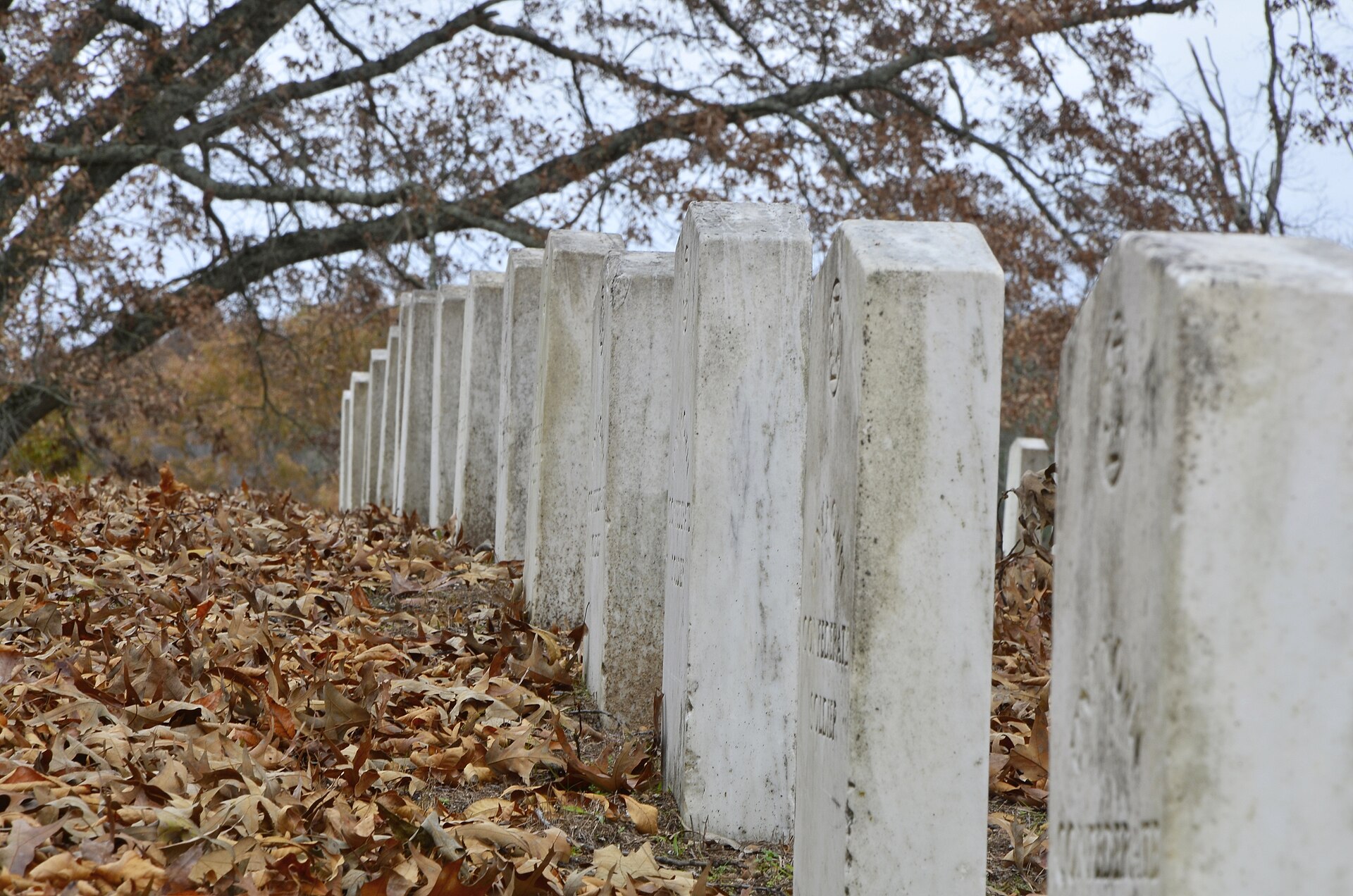
Holly Springs, Mississippi is the seat of Marshall County, roughly 45 miles southeast of Memphis via US-78/I-22, just south of the Tennessee line. It is a small courthouse town built on land taken from the Chickasaw in the 1830s, notable today for a dense concentration of pre-Civil War buildings, a historically Black college, and its ties to journalist Ida B. Wells.
Where is Holly Springs, and how do you get there from Memphis?
Holly Springs sits in the hill country of north Mississippi, on the ridge that gives the town its name, not in the Mississippi Delta to the west. The town is reached from Memphis by US-78/I-22, a drive most sources put at under an hour depending on traffic and route. It has no scheduled passenger rail or bus service from Memphis; visiting means driving. For a fuller sense of the Delta’s own boundary and what makes it distinct from this hill country landscape, see what is the Mississippi Delta, and where does it begin.
Why does Holly Springs have so many antebellum buildings?
Holly Springs was a prosperous cotton and rail town before the Civil War, and unlike many Mississippi towns it was occupied rather than burned during the conflict, which is why a large stock of pre-war houses and commercial buildings survived intact.
The town’s public square and surrounding streets form a historic district recognized on the National Register of Historic Places, with Greek Revival and Italianate homes dating largely to the 1830s–1850s. Notable surviving structures cited in local preservation literature include Walter Place, an Italianate villa with twin octagonal towers, and the Marshall County Courthouse anchoring the square.
What happened here during the Civil War?
Union General Ulysses S. Grant used Holly Springs as a forward supply depot in late 1862 during the Vicksburg campaign. On December 20, 1862, Confederate cavalry under Major General Earl Van Dorn raided the town and destroyed the Union supply depot, a strike documented by the American Battlefield Trust and by Mississippi Department of Archives and History records as a significant setback to Grant’s early advance on Vicksburg. The raid, rather than large-scale destruction of the town itself, is the reason the surviving architecture is so extensive.
What is the Behind the Big House program?
Holly Springs hosts an annual spring pilgrimage of historic homes, run locally through preservation groups, alongside a program called Behind the Big House. That program pairs tours of the main historic houses with the surviving outbuildings — slave dwellings, kitchens and quarters — that stood behind them, and presents both together rather than treating the grand house as the whole story. Organizers describe it as a deliberate corrective to pilgrimage tourism that historically showed only the planter’s house. Exact dates for the spring pilgrimage change year to year and should be checked against current announcements before planning a trip.

What is Rust College?
Rust College is a private, historically Black liberal arts college in Holly Springs, founded in 1866 and affiliated with the United Methodist Church. Its own history places it among a small number of historically Black colleges founded in Mississippi during Reconstruction, and its campus, including several older academic buildings, sits within the town.
Why is Ida B. Wells connected to Holly Springs?
Ida B. Wells, the journalist, educator and anti-lynching campaigner, was born enslaved in Holly Springs in 1862. Her birthplace site in the town operates as a small museum documenting her life and journalism, a fact recorded in state and county historical listings tied to Mississippi’s civil rights and Reconstruction-era history. She is a documented figure of national significance in American press and civil rights history, and Holly Springs is where the biographical record begins, not a stop invented for tourism. Readers building a Memphis trip around civil rights history more broadly can see a Memphis day built around civil-rights history for how that record is presented in the city itself.
What was Graceland Too?
Graceland Too was a private house in Holly Springs that its owner, Paul MacLeod, opened around the clock for decades as an unofficial, self-made Elvis Presley shrine, filled with newspaper clippings, memorabilia and homemade displays. It was widely covered in regional and national press as an eccentric roadside stop rather than a formal museum. MacLeod died in 2014 and the property later ceased operating; anyone researching its current status or condition should check current local news coverage rather than assume it still functions as it did.
Is there a blues connection?
Holly Springs sits within Mississippi’s hill country blues territory, distinct in style and instrumentation from Delta blues associated with towns further west such as Clarksdale. Marshall County was home to hill country blues musicians including R.L. Burnside and Junior Kimbrough, both associated with communities near Holly Springs and both documented extensively in blues scholarship and by the Mississippi Blues Trail, which places markers tied to hill country blues in the county. For a comparison with Delta-style blues tourism further south, see what is Clarksdale, and why do people go for the blues.
What natural sites are near Holly Springs?
Two sites outside town are documented and open to the public:
- Strawberry Plains Audubon Center — a National Audubon Society property on a former plantation estate near Holly Springs, run as a nature sanctuary and known in Audubon’s own materials for hummingbird migration monitoring each autumn.
- Wall Doxey State Park — a Mississippi state park a short drive from town, built around Spring Lake, managed by the Mississippi Department of Wildlife, Fisheries, and Parks.
How does Holly Springs compare to Oxford, Mississippi?
Oxford, about 30 miles south, is a larger university town built around Ole Miss and its downtown square; Holly Springs is a smaller courthouse town with no comparable university-driven economy, and its identity rests more on preserved 19th-century architecture and Reconstruction-era history than on a campus culture. Readers weighing the two as a single north Mississippi day trip from Memphis can compare with what is Oxford, Mississippi. For a different kind of Mississippi day trip closer to the river, see what is Tunica, Mississippi, and what is there now.
Is Holly Springs worth a day trip from Memphis?
That judgment depends on interest: Holly Springs rewards someone specifically drawn to antebellum architecture, Reconstruction-era Black history, or hill country blues, rather than someone looking for restaurants, shopping or a resort-style stop. There is no large commercial visitor infrastructure comparable to Memphis’s own museum district. Anyone planning the drive as part of a broader look at day trips from the city can start from the Access Memphis day trips archive or the wider Memphis guide for context on how the city’s own museums and neighborhoods fit around a trip like this.
Access Memphis is an independent guide written from published, checkable sources. We have not visited the places described here and we do not publish personal recommendations or invented ‘local favourites’ — where something is singled out as notable, we say who says so. Opening times, fares, closures and prices change at short notice, so treat everything here as a starting point and confirm with the museum, operator or venue directly before building a day around it. We give no advice on visas, insurance, health or safety; use your own government’s official guidance for those.
Featured image: Photo by Magnolia677, source, CC BY 4.0
