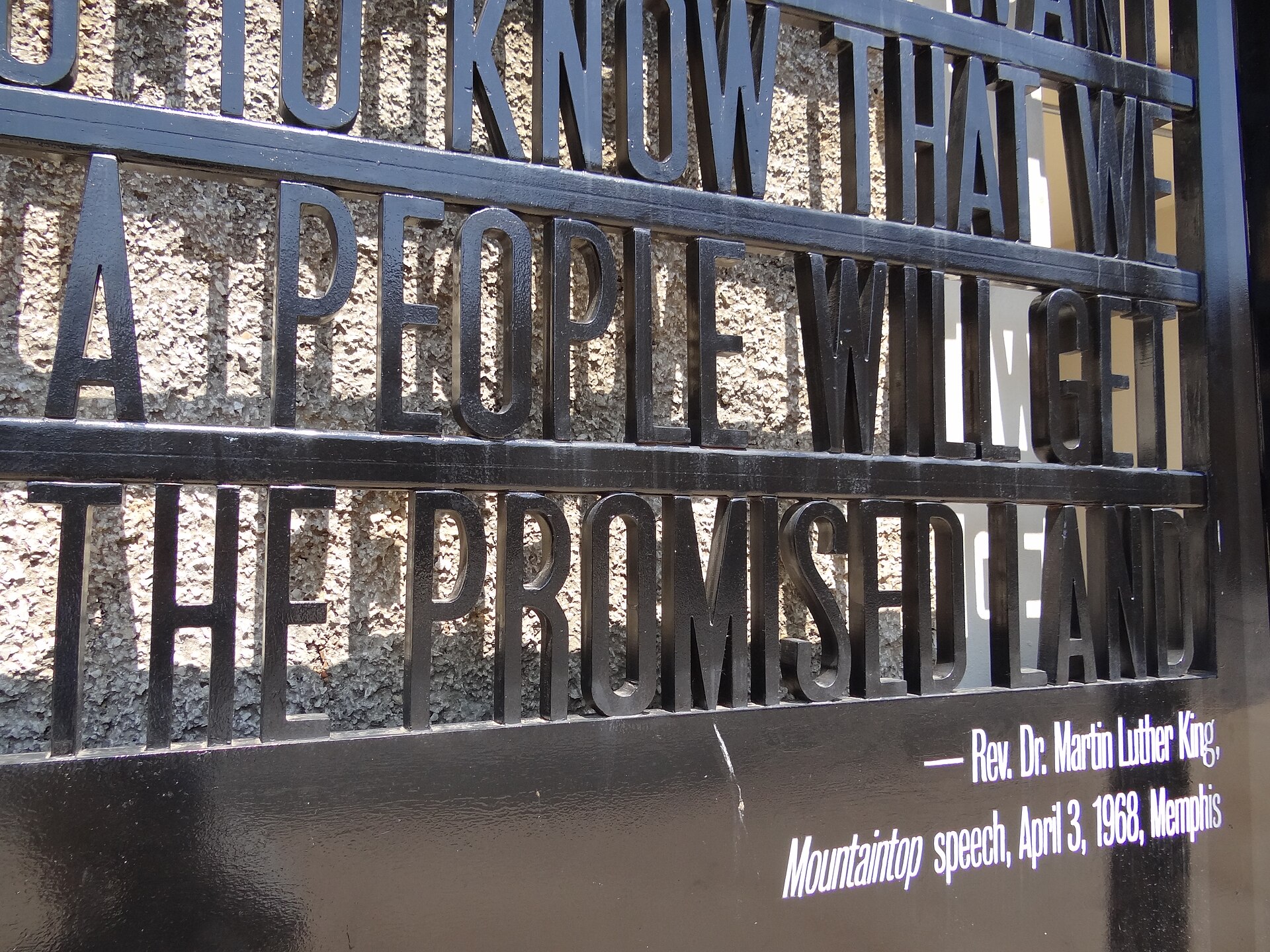
Two days in Memphis works best split by geography, not theme: one day anchored downtown and along the river, covering civil rights history, Beale Street and the South Main Arts District; the other given to Whitehaven and Soulsville for Graceland and Stax, with Midtown in the evening. Both are more compact than they look on a map.
How should the two days be divided?
The clearest split is downtown/river on day one and the southern music sites plus Midtown on day two, because Memphis’s major destinations cluster in two separate pockets rather than spreading evenly across the city. Trying to zigzag between them wastes driving time that could go toward actually seeing something. A guide to how far apart Beale Street, Sun Studio, Stax and Graceland actually are is useful before deciding an order, since Sun Studio sits closer to downtown than either Stax or Graceland.
What does day one downtown actually cover?
Day one centres on the National Civil Rights Museum, built around the Lorraine Motel, plus Beale Street and the South Main Arts District, all within walking distance of each other along the bluff above the Mississippi.
Dr Martin Luther King Jr. was assassinated on the balcony of the Lorraine Motel on April 4, 1968. The National Civil Rights Museum’s own site describes the museum as built around the preserved motel room and the room across the street from which the shot was fired, with exhibits tracing the Black freedom struggle from the 16th century onward. This is not a stop to move through quickly; the museum itself recommends several hours, and its site is the source to check for current hours and admission, which include a reduced-rate window on Mondays.
From there, the Beale Street Historic District, which the National Park Service lists as a National Historic Landmark District tied to the development of blues music, is a short walk northeast. Sun Studio, where Elvis Presley, Johnny Cash and others recorded, sits a further short drive up Union Avenue and operates as a working studio and museum, per its own site. South Main, just south of the Civil Rights Museum, is the city’s South Main Arts District, a National Register historic district of former warehouses now holding galleries and the restored Central Station building. The Main Street Trolley runs along this corridor and is the simplest way to link the pieces without a car.
What does day two in Whitehaven and Soulsville cover?
Day two moves south to Whitehaven for Graceland and to the adjoining Soulsville neighborhood for the Stax Museum, then, time allowing, into Midtown for the afternoon or evening.
Graceland, Elvis Presley’s home, sits in Whitehaven and is operated as a museum and tour site by Elvis Presley Enterprises; its own site is the source for current ticket tiers, which range from a mansion-only pass to fuller package tours, and for hours, which vary seasonally. Graceland is on the National Register of Historic Places.

A short drive away, Soulsville takes its name from Stax Records, the label built at 926 E. McLemore Avenue that produced Otis Redding, Isaac Hayes and Sam & Dave, among others. The Stax Museum of American Soul Music occupies a reconstruction of the original studio building on the site and describes its own collection, including Isaac Hayes’s Cadillac and instruments used on original Stax sessions, on its own site.
From Soulsville, Midtown is a further drive north and works well as an evening stop: it includes Cooper-Young, a National Register historic district of early-20th-century houses and storefronts, and Overton Square, a redeveloped entertainment block near the Memphis Botanic Garden and Brooks Museum of Art. The broader case for Midtown’s role in the city is covered in a piece on what Midtown actually is, and why some residents consider it the real city, as distinct from downtown’s visitor-facing core.
Where do Clayborn Temple and Mason Temple fit in?
Two further sites belong to the same history as the Lorraine Motel and can be added to day one if time allows, though neither operates as a staffed visitor attraction in the way the museum does.
Clayborn Temple served as the organizing base for the 1968 Memphis sanitation workers’ strike, the strike Dr King had come to Memphis to support; the building is documented by the Tennessee Historical Commission and covered in detail on this site’s explainer on Clayborn Temple and 1968. Mason Temple, headquarters of the Church of God in Christ, is where King delivered his final public address, “I’ve Been to the Mountaintop,” on April 3, 1968; the speech and the building’s role are described in the site’s own account and summarized in this site’s piece on Mason Temple and the Mountaintop speech. Both are standing buildings with a documented record, not stops to visit for atmosphere.
How do you actually get between the two days’ worth of places?
Downtown is walkable enough on its own that day one needs no car, but day two — Whitehaven, Soulsville and Midtown — is spread across distances that make a car, rideshare or MATA bus route necessary. The honest answer to whether a car is required overall is covered in this site’s assessment of whether you need a car in Memphis; for many two-day visitors, the answer is: not for day one, but effectively yes for day two unless a rideshare budget covers several longer trips. Anyone arriving by air should also check how to get from Memphis International Airport into the city, since the airport sits south of downtown, roughly between it and Whitehaven.
Parking downtown is metered and garage-based rather than informal; how parking works in downtown Memphis is worth reading before day one if driving in from elsewhere in the metro area, including from Germantown or Collierville.
What should the food plan across two days look like?
Memphis barbecue is closely associated with dry-rub ribs and pulled pork “plates,” but this site does not name or rank specific restaurants, since that judgment belongs to people who have actually eaten there. What can be said with confidence is that both the South Main/downtown corridor and Midtown have established, long-running barbecue and Southern food businesses, and that this site’s Food & Drink coverage is the place to look for how the city’s food culture is structured rather than a single recommended stop. Tennessee’s alcohol rules also shape where and when a drink is available; how Tennessee alcohol laws work in Memphis covers the basics, and how tipping works in Memphis is useful for anyone unfamiliar with US norms.
Does the season change any of this?
It changes crowding and heat more than it changes the plan itself. Summer is hot and humid, covered in what a Memphis summer is actually like, which affects how much walking is comfortable on day one’s outdoor stretches. May brings Memphis in May, a month-long civic festival with barbecue and music events that can affect downtown traffic and hotel demand, and August brings Elvis Week, which concentrates crowds specifically around Graceland. Neither cancels a two-day plan, but both are worth checking against exact dates on this site’s guide to the best time of year to visit before booking.
Is two days actually enough?
Two days covers the two clusters — downtown/civil rights history and Whitehaven/Soulsville music history — reasonably well, with Midtown as a bonus rather than a full third stop. Anyone with only a single day should look instead at this site’s realistic one-day plan, which necessarily drops one of the two clusters. Anyone staying longer, or considering what the city is like beyond its landmarks, is better served by the Living in Memphis hub and the wider Memphis guide, both of which go into neighborhoods, museums and transport in more depth than a two-day plan can hold.
Access Memphis is an independent guide written from published, checkable sources. We have not visited the places described here and we do not publish personal recommendations or invented ‘local favourites’ — where something is singled out as notable, we say who says so. Opening times, fares, closures and prices change at short notice, so treat everything here as a starting point and confirm with the museum, operator or venue directly before building a day around it. We give no advice on visas, insurance, health or safety; use your own government’s official guidance for those.
Featured image: Photo by Adam Jones, Ph.D., source, CC BY-SA 3.0
